Industrial Photovoltaic Circuit Protection Solutions
Factory-direct, VDE/TÜV-certified lightning arresters, DC surge protective devices, high-capacity gPV fuses, and heavy-duty switchgear engineered for utility-scale and commercial solar infrastructure.
The Engineering Dynamics of Photovoltaic Lightning Protection & Overvoltage Mitigation
Photovoltaic (PV) plants, commercial rooftop installations, and Battery Energy Storage Systems (BESS) are uniquely vulnerable to atmospheric electrical discharge and transient overvoltage surges. Due to their vast physical surface footprint, exposed outdoor positioning, and complex long-distance Direct Current (DC) cabling networks, solar arrays act as effective primary antennas for both direct lightning strikes and galvanically coupled electromagnetic surges.
As a leading China PV lightning arrester manufacturer and exporter, Luck (Zhejiang) New Energy Co., Ltd. produces high-performance surge protection devices (SPDs), metal oxide varistors (MOVs), and DC isolation switches designed specifically to withstand the extreme dielectric stresses inherent to renewable energy networks. Standard Alternating Current (AC) protection devices fail catastrophically when deployed in DC environments due to the absence of a natural zero-crossing point for electrical arc extinction. Therefore, PV-specific lightning protection demands specialized engineering topologies, thermal disconnector mechanisms, and arc-quenching technologies.
Transitioning utility-scale solar arrays from 1000V DC to 1500V DC system voltages increases power generation efficiency but escalates insulation dielectric stress by 50%. High continuous DC voltage accelerates Metal Oxide Varistor (MOV) thermal degradation. Modern PV SPDs must incorporate heavy-duty internal copper busbars, flame-retardant polyamide housings (UL 94-V0), and dynamic thermal tripping disconnectors to prevent destructive thermal runaway.
Understanding Waveform Characteristics: 8/20µs vs 10/350µs Impulses
Specifying the correct category of PV lightning arrester requires a rigorous understanding of impulse current testing profiles established under IEC 61643-31 and EN 50539-11 standards:
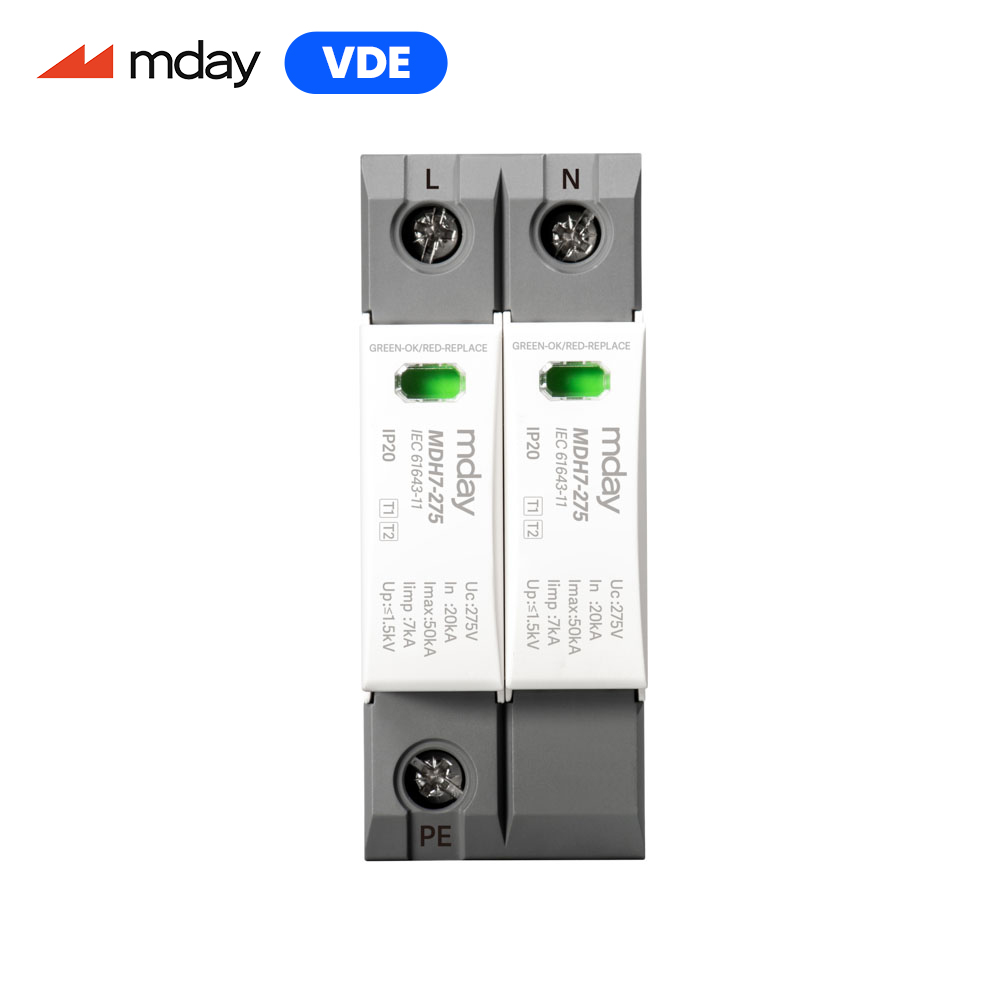
- Type 1 (Class I) / T1+T2 Combined SPDs: Tested with the 10/350 µs waveform. This simulates direct lightning flash currents characterized by enormous charge transfer and peak impulse current ($I_{imp}$). These units are mandatory for PV combiner boxes and central inverters mounted on buildings equipped with external Lightning Protection Systems (LPS).
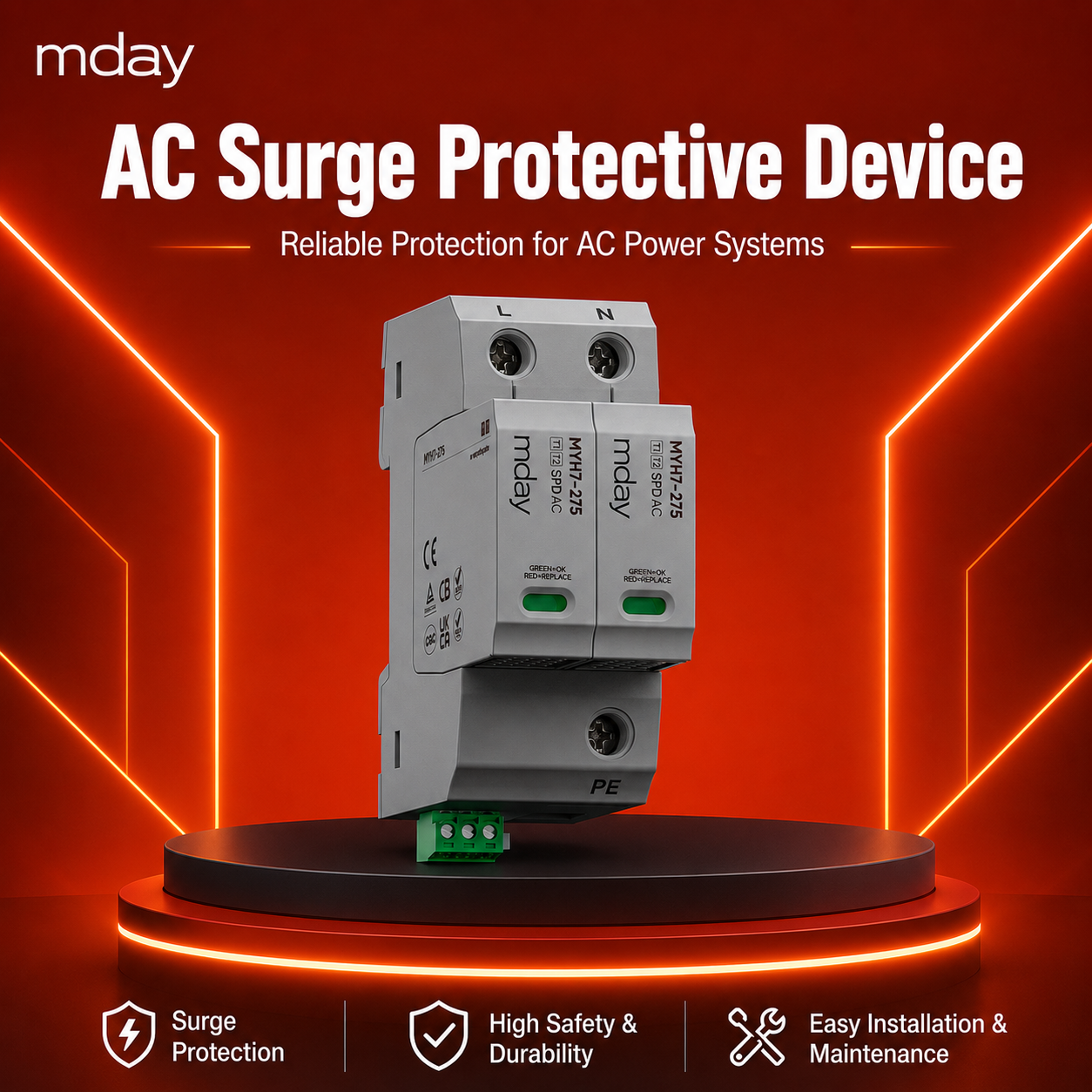
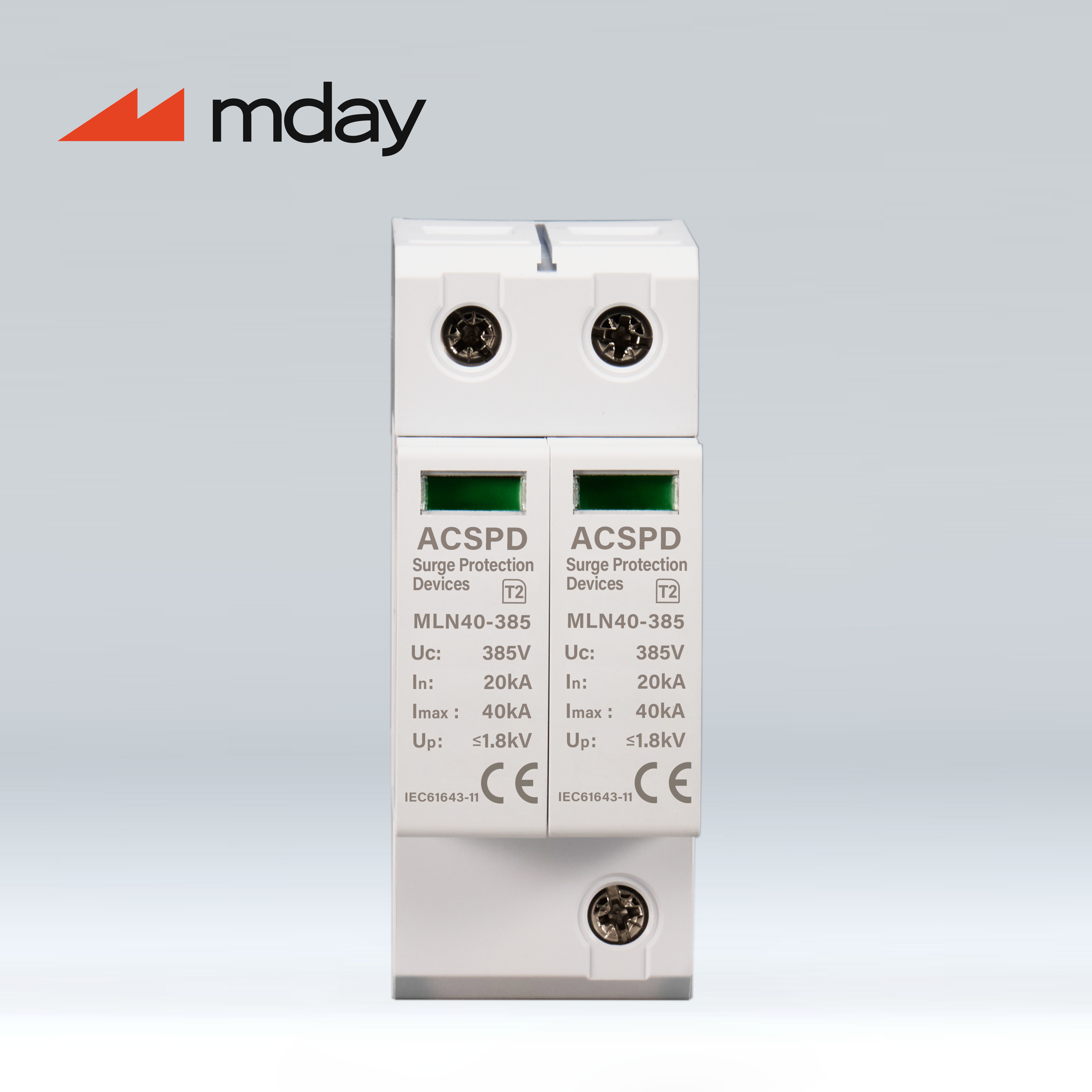
- Type 2 (Class II) DC & AC SPDs: Tested with the 8/20 µs waveform. Designed to clamp indirect lightning surges, induced overvoltages from nearby flashes, and grid switching transients. Measured by nominal discharge current ($I_n$) and maximum discharge current ($I_{max}$ up to 40kA).
PV Circuit Protection Parameters & Standard Compliance Matrix
| Component Type | Core Standard Compliance | Key Performance Ratings | Primary Application Point |
|---|---|---|---|
| DC Solar Surge Protector (T2 SPD) | IEC 61643-31 / EN 50539-11 | $U_{cpv}$: 600V–1500V DC | $I_{max}$: 40kA | $U_p$: ≤ 2.8kV | PV Combiner Box, Inverter DC Input String |
| AC DIN Rail SPD (T1+T2 / T2) | VDE / IEC 61643-11 | $U_c$: 275V–440V AC | $I_{imp}$: 7kA | $I_{max}$: 40kA | Main AC Distribution Board, On-Grid Inverter AC Output |
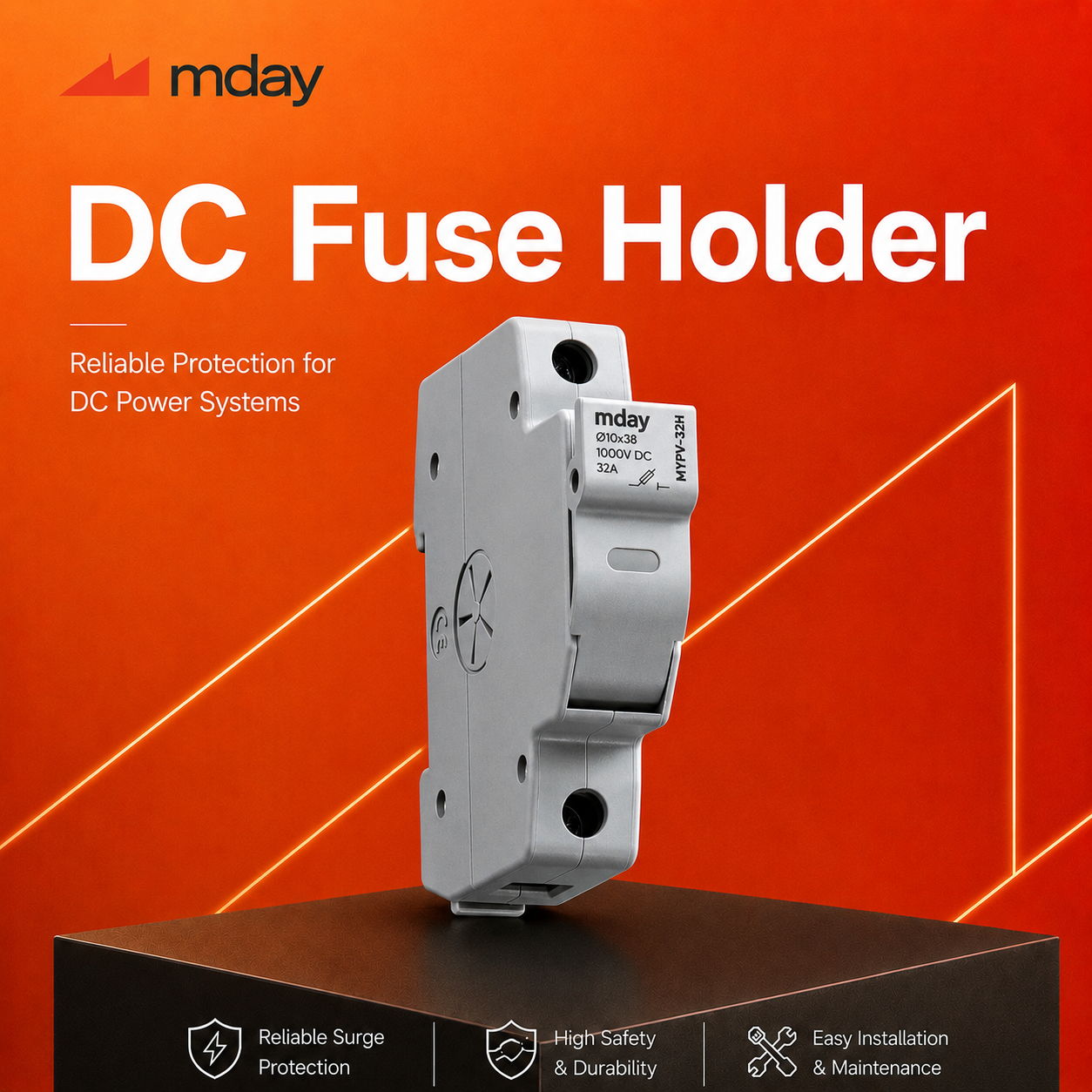
| gPV DC Fuses & Copper Holders | UL 248-19 / IEC 60269-6 | Voltage: 1000V/1500V DC | Rating: 2A–32A | Breaking: 20kA–33kA | PV String Positive/Negative Overcurrent Protection |
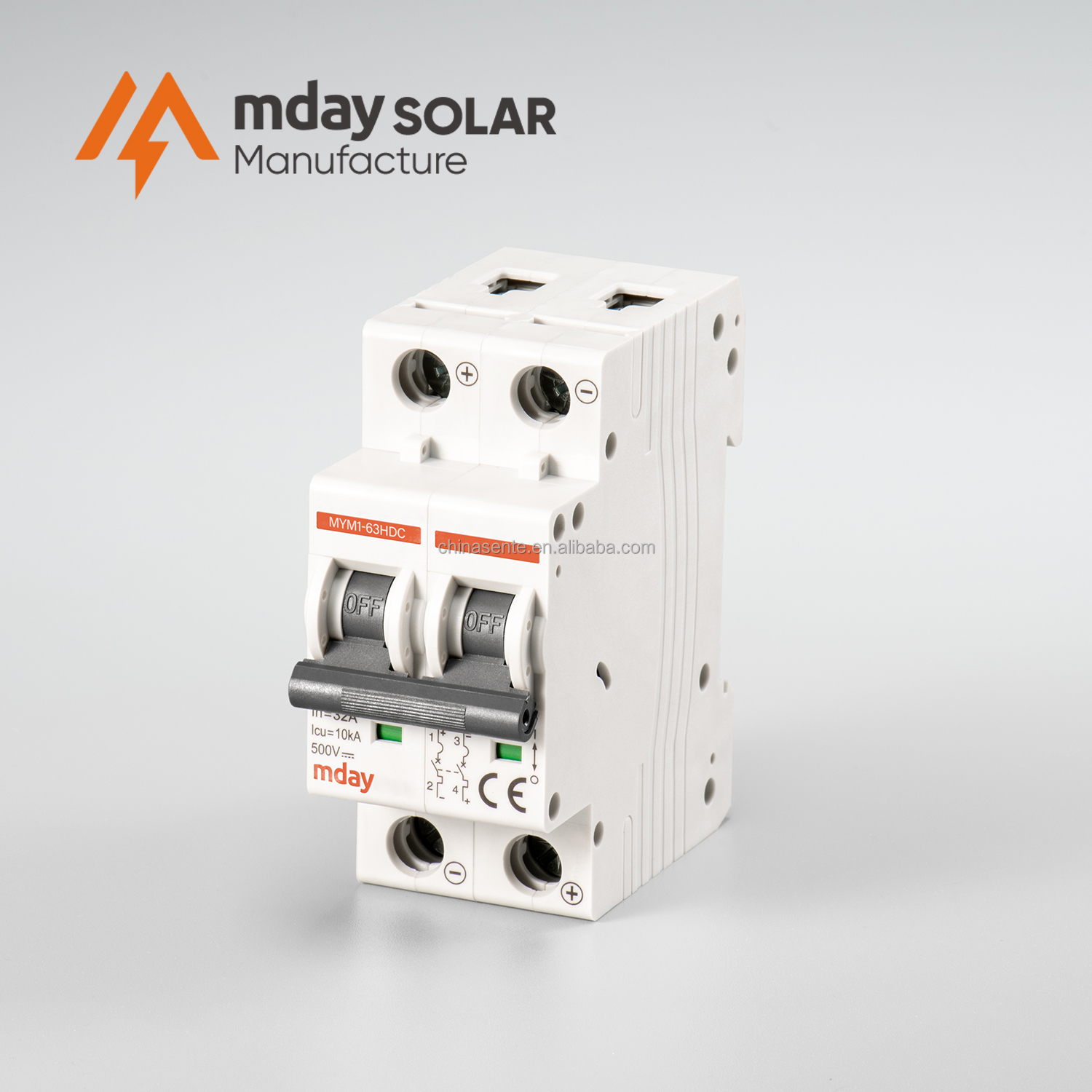
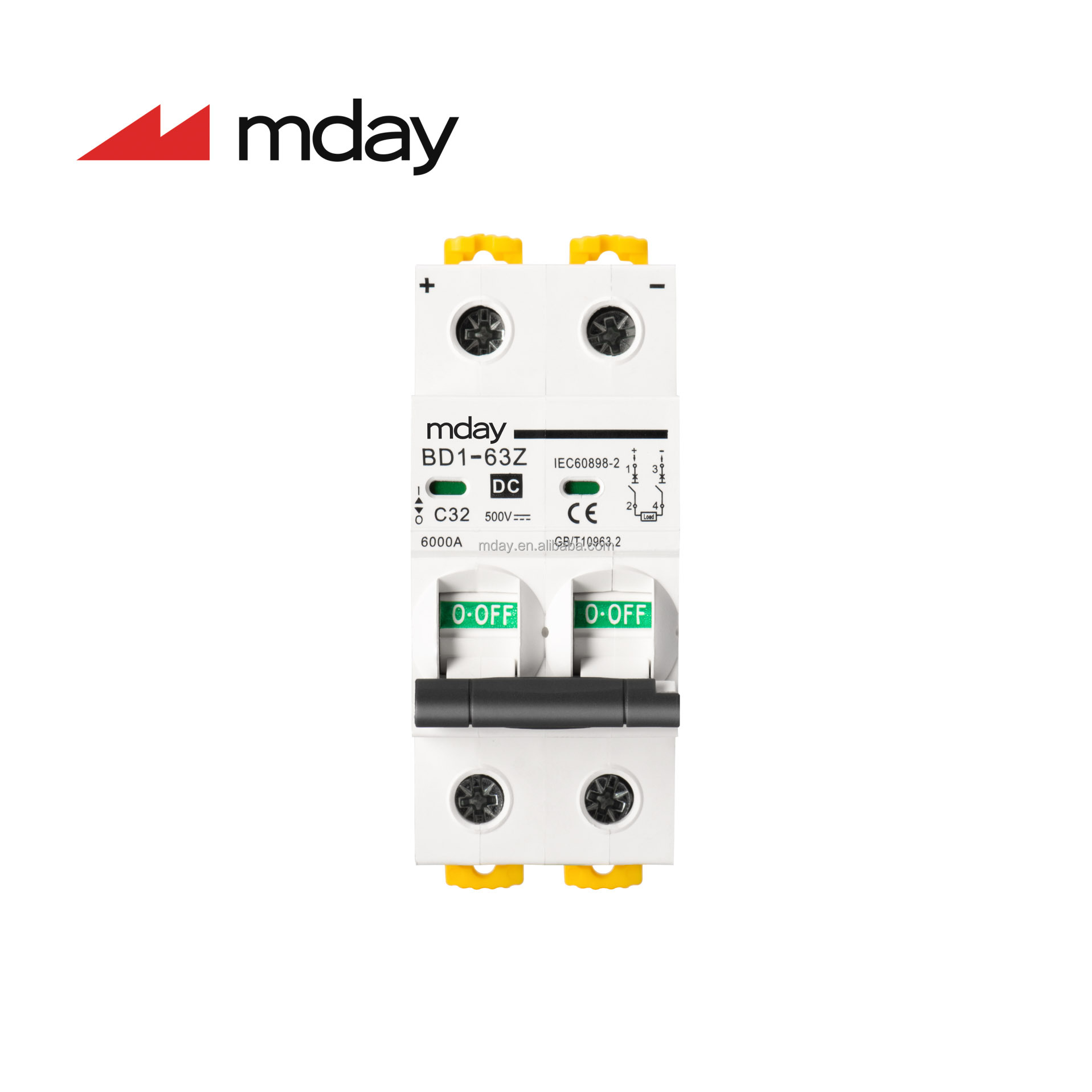
| DC Moulded Case Circuit Breaker | IEC/EN 60947-2 / CE | Voltage: 250V–1000V DC | Rating: 63A–250A | Breaking: 6kA–20kA | Battery Energy Storage (BESS), Central Inverter DC Isolator |
| Square Metal Oxide Varistor (MOV) | TÜV / UL 1449 5th Ed | Dimension: 34mm x 34mm | Peak Surge: 40kA (8/20µs) | Internal SPD Core Module & High-Energy Surge Suppression |
Future Procurement Trends for Solar & Energy Storage Protection (2025–2030)
As global decarbonization accelerates, PV component buyers, EPC contractors, and OEM panel builders face evolving regulatory, environmental, and technological requirements.
1. High-Voltage 1500V DC Standardization
Utility-scale PV procurement is moving rapidly from legacy 1000V systems toward 1500V DC topologies. Procurement managers must source SPDs, fuse holders, and circuit breakers with enhanced arc-extinction chambers, elevated insulation creepage distances, and verified 1500V DC continuous operating limits ($U_{cpv}$).
2. Smart SPD Modules with Remote Status Telemetry
Modern commercial PV installations require real-time health monitoring of protective components. Future-proof procurement dictates SPDs fitted with auxiliary floating changeover contacts (dry contacts) to transmit degradation alerts directly to SCADA systems, preventing unprotected downtime.
3. Integrated Energy Storage (BESS) Protection
The rapid convergence of solar PV with lithium battery energy storage systems requires protection devices capable of handling bi-directional power flows, extremely low short-circuit time constants, and heavy DC breaking currents up to 250A MCCBs and 33kA breaking capacity fuses.
Why Partner with Luck (Zhejiang) New Energy Co., Ltd.?
Located in Yueqing Economic Development Zone, Wenzhou — the world's capital of low-voltage electrical equipment — our factory delivers fully integrated OEM/ODM capabilities backed by third-party audit credentials.
TÜV Rheinland Onsite-Verified Factory
Our manufacturing premises, verified workforce of 55 specialized personnel, production lines, and quality assurance workflows undergo rigorous onsite assessments by TÜV Rheinland. We maintain strict compliance with ISO 9001 management systems, guaranteeing 100% batch consistency.
In-House Injection Moulding & 9 Testing Instruments
From raw PC/PA66 plastic resin to finished components, we control precision injection moulding in-house. Our dedicated testing laboratory operates 9 high-voltage instruments to conduct surge impulse tests, thermal stability checks, contact resistance verification, and dielectric strength validation.
7+ Years Global OEM/ODM Customization Experience
We offer full custom engineering support for international buyers — including laser-etched private branding, custom voltage/current ratings, specialized housing color schemes, pre-wired IP65 combiner box assemblies, and tailored bulk export packaging.
Fast Turnaround & Agile Supply Chain
Operating 3 modern production lines, we guarantee short lead times: standard catalog models dispatch within 2 to 7 business days. Around 70% of our annual production output serves international markets across Europe, South America, and Southeast Asia.
Frequently Asked Questions (FAQ) for B2B Importers & Engineers
Clear technical and commercial answers regarding solar lightning protection components, factory standards, and export logistics.
Direct Current (DC) arcs do not pass through a natural zero-voltage point like Alternating Current (AC) sine waves. When a DC varistor fails or experiences thermal breakdown under overvoltage, maintaining a continuous DC arc can cause fire hazards. Consequently, DC SPDs feature specialized internal arc-extinction barriers, wider contact separation distances, and thermal disconnectors rated specifically for high DC voltages ($U_{cpv}$ up to 1500V DC).
Our product lines comply with major global standards. Our SPD line features VDE-certified models and TÜV-certified MOV components. Our DC fuse holders are built in compliance with UL 248-19 and IEC 60269-6, while our DC miniature circuit breakers (MCBs) carry CE certification under IEC/EN 60947-2. Additionally, our factory is audited onsite by TÜV Rheinland.
According to IEC 62548 guidelines, solar PV string fuse rated nominal current ($I_n$) should be calculated as: 1.56 × $I_{sc\_mod}$ (where $I_{sc\_mod}$ is the short-circuit current of the PV module at STC). The fuse continuous rating voltage must equal or exceed the maximum string open-circuit voltage ($U_{oc\_stc}$) adjusted for minimum expected ambient temperature.
Our MOQs are buyer-friendly, ranging between 5 to 200 units depending on component specification and customization depth. Standard products ship within 2 to 7 days, whereas full custom OEM orders (custom enclosure colors, private branding, custom wiring) ship upon sample sign-off within agreed schedules.
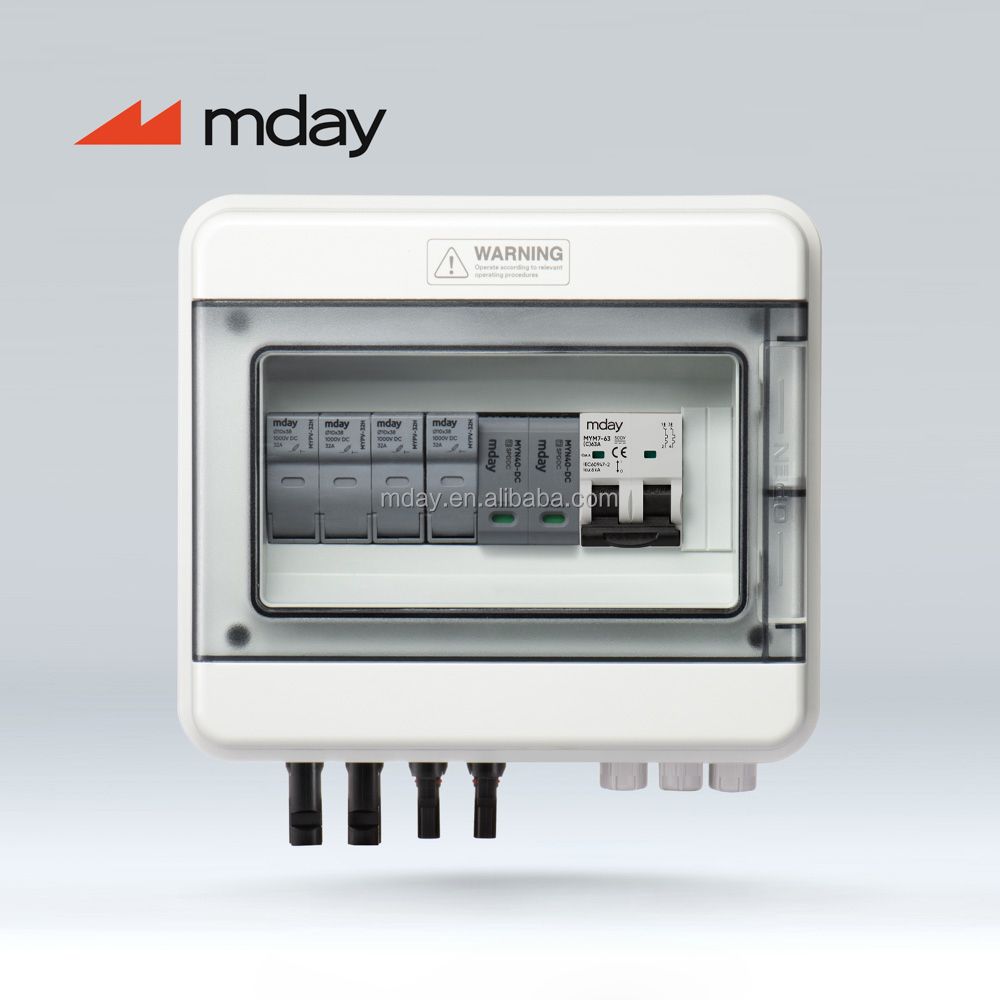
Yes. We engineer and manufacture complete IP65 waterproof solar combiner boxes (ranging from 2-in-1-out to 18-way arrays). Enclosures are pre-wired in-house with VDE/TÜV certified SPDs, gPV fuses, and DC breakers according to your exact single-line diagram (SLD) requirements.
We support flexible global payment methods including T/T (Telegraphic Transfer), L/C (Letter of Credit at sight), D/P, Western Union, PayPal, and Cash. Goods can be shipped FOB Ningbo/Shanghai, CIF, CIP, or via air express depending on urgency.
Request Factory-Direct Quotations & Technical Specifications
Partner directly with China's leading PV lightning arrester manufacturer. Send your project single-line diagram, technical specifications, or OEM branding request to receive engineering proposals within 24 hours.
