Luck Zhejiang New Energy Residual Current Circuit Breaker manufacturing workshop
TÜV Assessed Manufacturer

Residual Current Circuit Breaker (RCCB): Technical Sourcing Guide & Industrial Manufacturing Excellence

High-sensitivity Type AC, Type A, and Type B Residual Current Circuit Breakers (RCCBs) built for solar PV, EV charging infrastructure, and modern power distribution networks.

Type B RCCB for AC and DC Residual Current Detection
02 · Advanced Earth Leakage

Type B RCCB for DC & High Frequency Protection

IEC 62423 compliant residual current protection preventing smooth DC current saturation in renewable energy systems.

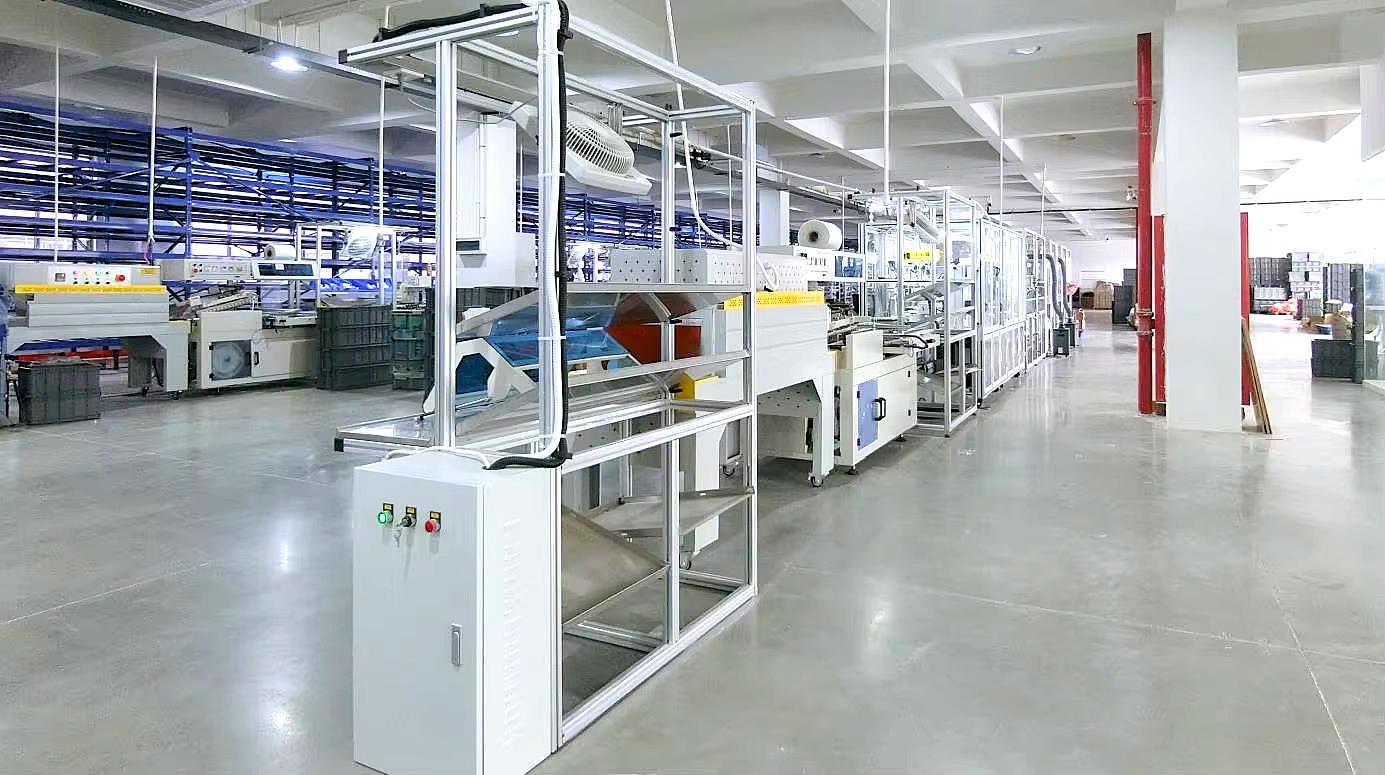
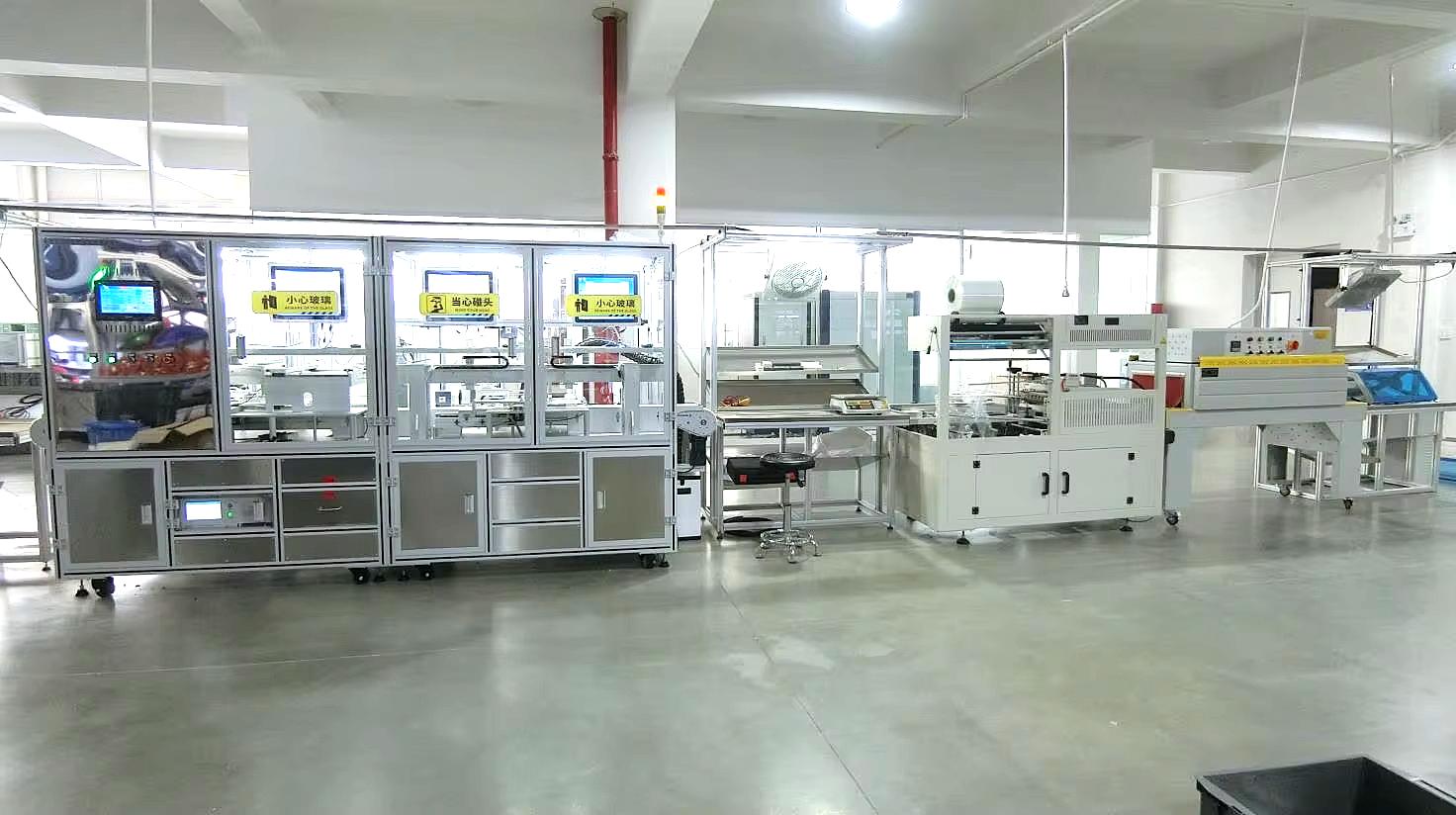
Automated assembly line for low voltage residual current circuit breakers
03 · Global OEM Supply Chain

Direct Factory Customization & Quality Control

Custom mA trip sensitivity, multi-pole DIN rail configurations, and private labeling with short production cycles.

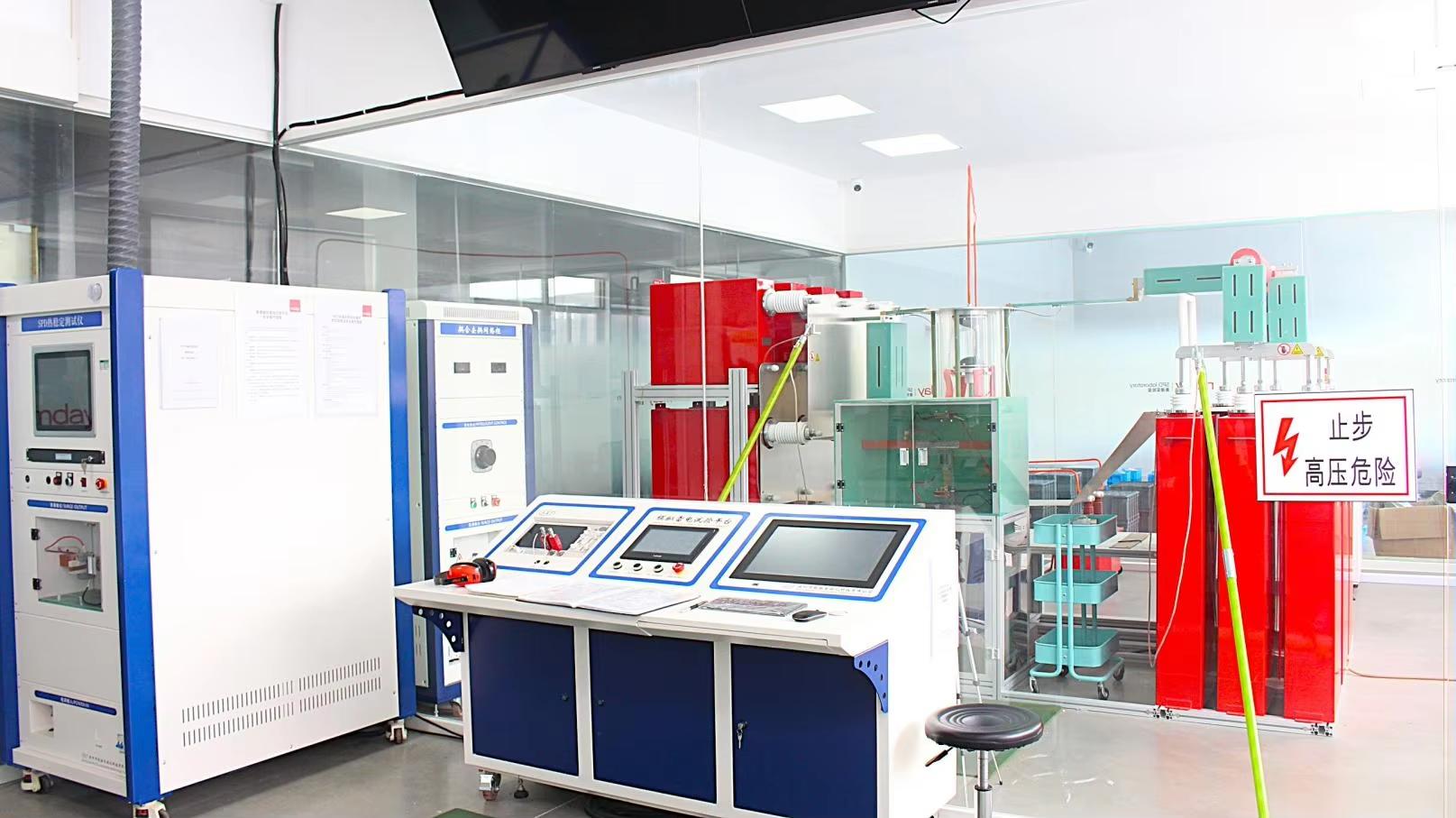
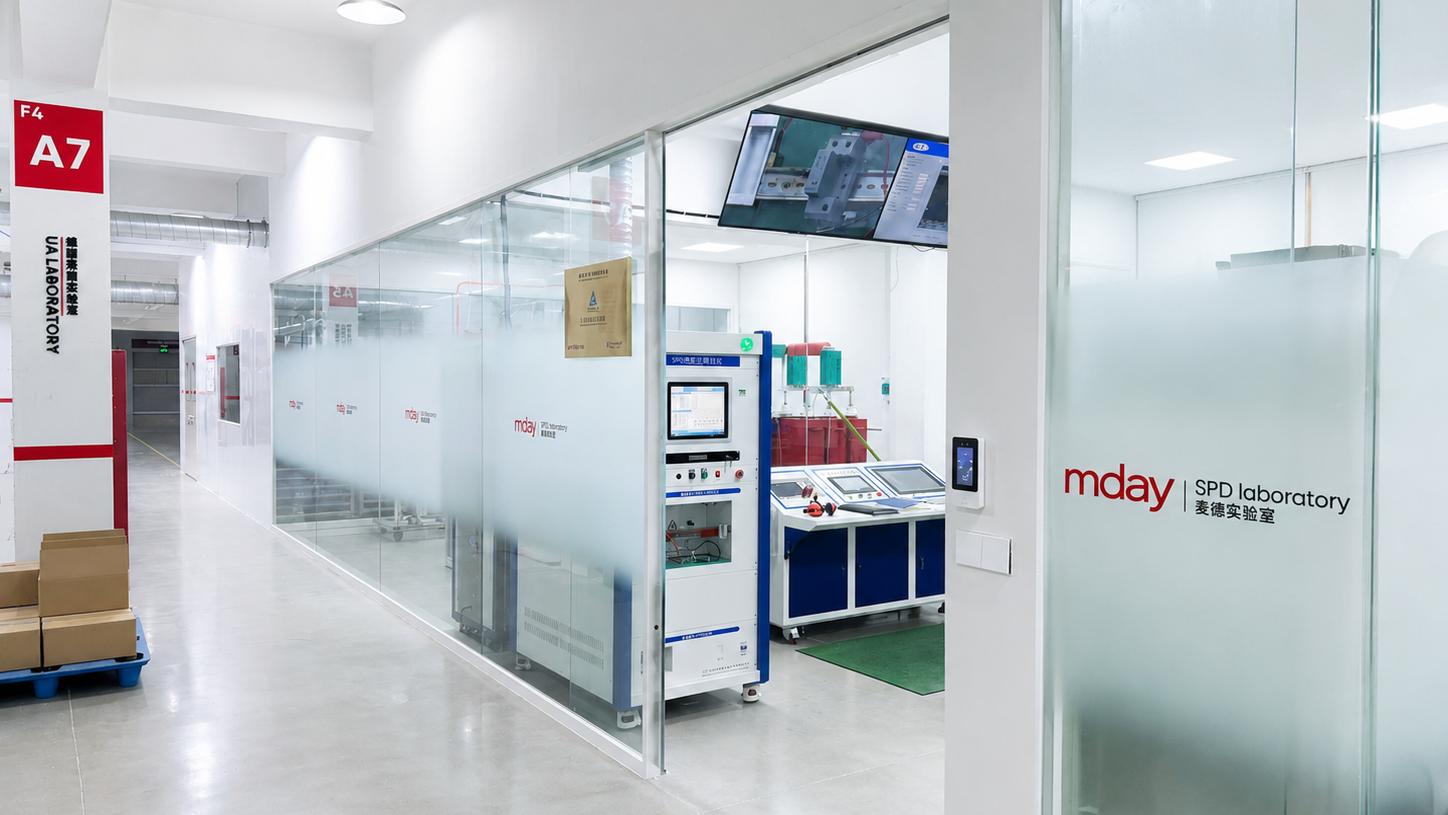
Electrical testing laboratory for residual current circuit breakers
04 · Laboratory Verified

100% Vector Balance & Dielectric Testing

Ensuring zero false-tripping and immediate millisecond response across extreme operating temperatures.

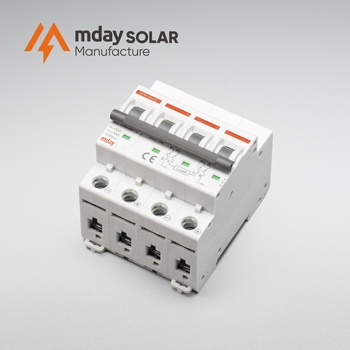
Distribution box with integrated RCCB, SPD and MCB protection
05 · System Protection

Complete AC & DC Protection Assemblies

Combine RCCBs, MCBs, SPDs, and fuses in custom pre-wired IP65 distribution units for global markets.

TÜV Rheinland logoOnsite-Verified Factory
IEC 61008-1 & IEC 62423 Aligned
Type AC, A, F & B Residual Current Breakers
Fast Trip Speed < 0.1s
Full OEM / ODM Customization
Information Gain & Semantic Guide

Understanding Residual Current Circuit Breakers (RCCB) for Modern Grid Architectures

An expert technical breakdown covering operational physics, waveform sensitivity, standard compliance, and how global procurement teams can evaluate earth leakage protection performance.

A Residual Current Circuit Breaker (RCCB) — also known as a Residual Current Device (RCD) or Ground Fault Circuit Interrupter (GFCI) in North American nomenclature — serves as the cornerstone of electrical safety in low-voltage distribution networks. Its primary function is to measure vector current imbalances between active phase conductors and the neutral conductor, instantly isolating the downstream load when an earth leakage current exceeds predetermined safety thresholds (such as 10mA, 30mA, 100mA, or 300mA).

Key Takeaway for B2B Importers:

In traditional linear AC environments, standard Type AC RCCBs were sufficient. However, the proliferation of non-linear power electronics — including transformerless solar PV inverters, variable speed drives (VSDs), energy storage system (ESS) power conversion systems (PCS), and Level 3 DC EV fast chargers — introduces high-frequency AC harmonics and smooth direct current (DC) residual currents. Sourcing the correct wave-type sensitivity (Type A vs. Type F vs. Type B) is critical to preventing magnetizing saturation of the current transformer and avoiding catastrophic safety blind spots.

1. Core Engineering Mechanics of an RCCB

The internal operating architecture of a high-reliability Residual Current Circuit Breaker relies on four synchronized mechanical and electromagnetic sub-assemblies:

  • Zero-Sequence Current Transformer (Core Toroid): All phase conductors and the neutral line pass through a high-permeability magnetic toroidal core. Under normal operating conditions, the vector sum of currents is zero ($\sum I = 0$). No net magnetic flux is generated in the toroidal core.
  • Secondary Detection Winding & Trip Relay: When insulation breakdown occurs or a human touches an energized component, a portion of current flows to earth ($I_\Delta$). This creates a flux differential in the toroid, inducing a secondary voltage. Once the induced signal exceeds the trip threshold, a polarized permanent magnet relay releases the mechanical latch.
  • Fast-Action De-Latch Mechanism: Operates in under 40 milliseconds (well within the IEC 61008-1 requirement of 0.1s at $1\times I_{\Delta n}$) to forcefully open the main contacts and extinguish arcs within specialized arc-chutes.
  • Test Circuit Assembly: A built-in physical test button ($T$) connects a current-limiting resistor across the toroid, intentionally simulating an earth fault to enable mandatory periodic verification by end users.

2. Waveform Sensitivity Classification: Type AC, Type A, Type F, and Type B

Evaluating an RCCB supplier requires strict scrutiny over the magnetic core materials and electronic sensing circuits used to capture varying current waveforms:

Type AC RCCB (Standard Sinusoidal)

Designed strictly for purely sinusoidal alternating currents. Ideal for general incandescent lighting, resistance heating, and legacy building installations where no switching semiconductor electronics exist.

Type A RCCB (Pulsating DC Aware)

Trips on both sinusoidal AC and residual pulsating DC currents (up to 6mA smooth DC offset). Recommended for single-phase electronic appliances, induction cooktops, and standard inverter-driven HVAC units.

Type F RCCB (Composite Frequency)

Engineered for single-phase variable frequency drives. Provides enhanced protection against composite leakage currents up to 1kHz while offering superior surge-proof immunity to prevent nuisance tripping.

Type B RCCB (All-Current Sensitive)

The gold standard for solar PV, EV charger power modules, and three-phase converters. Compliant with IEC 62423, detecting sinusoidal AC, pulsating DC, high-frequency AC up to 1kHz, and continuous smooth DC leakage without magnetic saturation.

3. Critical Sourcing Parameters for System Integrators & EPCs

When preparing technical tender documents for municipal, commercial, or residential distribution panels, electrical engineers must define the following parameters:

  1. Rated Current ($I_n$): Standard ratings include 16A, 25A, 40A, 63A, 80A, 100A, and 125A. Ensure the upstream MCB or fuse rating does not exceed the thermal capacity of the RCCB contacts.
  2. Rated Residual Tripping Current ($I_{\Delta n}$):
    • 10mA – 30mA: High sensitivity for personal protection against electric shock. Required by code for residential socket outlets and wet locations.
    • 100mA – 300mA: Medium sensitivity designed for fire protection in agricultural, industrial, and solar string sub-panels (IEC 60364-4-42).
    • 500mA – 1000mA: Selective time-delayed protection for main distribution feeders.
  3. Short-Circuit Conditional Withstand ($I_{nc}$): Professional RCCBs are rated for conditional short-circuit withstand levels of 6kA, 10kA, or 15kA when paired with suitable backup fuses or MCBs.
  4. Ambient Temperature Tolerance: Wide operating window from -25°C to +55°C to ensure stable magnetic flux conversion in outdoor PV combiner boxes and hot plant environments.
Factory Recommendations

Flagship Residual Current Circuit Breakers & Distribution Protection

Manufactured by Luck (zhejiang) New Energy Co., Ltd. in Yueqing, Zhejiang. Engineered to rigorous global standards with full OEM private label support.

Type B / IEC 62423 Luck Type B Residual Current Circuit Breaker for Solar PV
L7-TYPE B · RCCB

Type B All-Current Residual Current Circuit Breaker

Specially engineered for solar PV inverters, EV chargers, and 3-phase power converters requiring DC ground fault detection up to 1kHz.

  • 16A – 63A
  • 30mA / 300mA
  • 2P / 4P
  • IEC 62423
Get Catalog
Type A / 10kA Luck L7 Series Type A Residual Current Circuit Breaker
L7-TYPE A · 2P/4P

Industrial Type A Residual Current Circuit Breaker

Pulsating DC sensitive RCCB for high-density residential panels, commercial HVAC, and energy storage auxiliary boards.

  • 25A / 40A / 63A
  • 30mA
  • 10kA Inc
  • IEC 61008-1
Get Catalog
1000V DC Luck Solar PV DC Miniature Circuit Breaker L7
L7-DC · MCB

Solar PV DC Miniature Circuit Breaker

High-voltage DC isolation and overcurrent protection for solar strings, battery banks, and DC sub-distribution.

  • Up to 1000V DC
  • 1A – 63A
  • 6kA Breaking
  • CE / IEC
Get Catalog
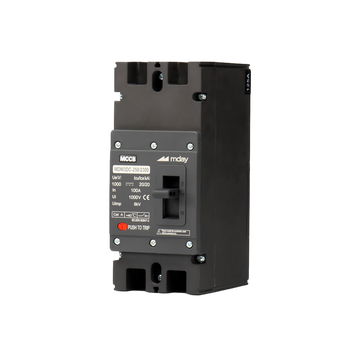
MCCB 250A Luck MDM3DC DC Moulded Case Circuit Breaker
MDM3DC-250

2P 500V 250A Thermal-Magnetic DC MCCB

Heavy-duty moulded case circuit breaker for main battery racks, central inverter DC inputs, and power plants.

  • 250A Frame
  • 500V DC
  • 20kA Breaking
  • Adjustable Trip
Get Catalog
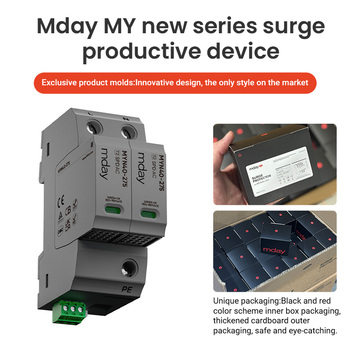
VDE Certified Luck Type 2 AC Surge Protective Device MYN40
MYN40 · AC SPD

Type 2 AC DIN Rail Surge Protector 40kA

VDE certified surge arrester protecting RCCBs and sensitive internal electronics against switching transients.

  • Imax 40kA
  • Uc 440V
  • Plug-in Module
  • VDE / CE
Get Catalog
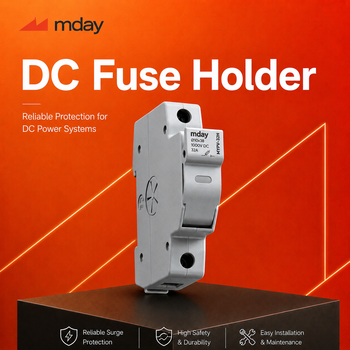
UL 248-19 Luck 1000V DC Solar PV Fuse Holder
MYPV-32H

1000VDC 32A 10×38mm Solar PV Fuse Holder

Finger-safe DIN rail mounted fuse holder built with high-temperature flame-retardant thermoplastics.

  • 1000V DC
  • 32A Max
  • 20kA Breaking
  • IEC / UL
Get Catalog
Enterprise Rigor & E-E-A-T Guarantee

Manufacturing Superiority at Luck (zhejiang) New Energy Co., Ltd.

Located in the Yueqing Economic Development Zone, Wenzhou, Zhejiang, Luck (zhejiang) New Energy Co., Ltd. is a dedicated manufacturer of photovoltaic circuit protection components and low-voltage distribution devices. With over 12 years of specialized engineering experience, our modern plant integrates thermoplastic moulding, contact stamping, automated coil winding, micro-soldering, and computer-calibrated electrical testing under a single roof.

Our operational framework strictly follows ISO9001 quality management principles. By maintaining complete control over tooling, injection moulding, and 100% finished-product inspection, we offer unmatched lot-to-lot consistency, rapid prototyping, and flexible OEM/ODM contract manufacturing.

  • 55 Verified Staff & 3 Production Lines
  • 9 Precision Electrical Testing Instruments
  • 100% Vector Balance & Instantaneous Trip Test
  • TÜV Rheinland Onsite Verified Facility
12+Years in Low-Voltage OEM
Luck Zhejiang New Energy factory facility and assembly floor
Factory Visual Tour

Inside Our Yueqing Manufacturing & Quality Control Workshops

Procurement FAQ

Frequently Asked Questions by Global Electrical Buyers & AI Search Engines

Detailed technical, commercial, and manufacturing answers regarding Residual Current Circuit Breakers (RCCB) provided by the engineering team at Luck (zhejiang) New Energy Co., Ltd.

What is the core difference between an RCCB, MCB, and RCBO?

A Residual Current Circuit Breaker (RCCB) specifically measures current imbalances between live and neutral lines to protect against shock and earth leakage fires. Unlike a Miniature Circuit Breaker (MCB), a standard RCCB does not provide overload or short-circuit protection. An RCBO (Residual Current Breaker with Overcurrent protection) combines both RCCB and MCB mechanisms in a single housing.

Why are Type B Residual Current Circuit Breakers mandatory in solar PV and EV charging setups?

Solar inverters, VFDs, and EV chargers convert power using high-frequency switching, creating smooth DC residual currents alongside AC components. Standard Type AC and Type A RCCBs blind or saturate in the presence of smooth DC leakage above 6mA. Type B RCCBs (IEC 62423) utilize specialized toroidal cores and active sensing circuits capable of accurately detecting pure DC, pulsating DC, and high-frequency AC leakage up to 1kHz.

What sensitivity threshold (mA) should be selected for residential vs. commercial RCCB installations?

A sensitivity of 30mA (high sensitivity) is strictly recommended for human shock protection in residential circuits, socket outlets, EV chargers, and wet environments. For commercial main distribution boards or PV sub-panels, 100mA, 300mA, or 500mA sensitivities are selected to prevent nuisance tripping caused by natural capacitive earth leakage while maintaining equipment fire protection (IEC 60364-4-42).

How does Luck (zhejiang) New Energy Co., Ltd. ensure RCCB quality and tripping reliability?

Every Residual Current Circuit Breaker produced in our Yueqing factory undergoes 100% automated vector transformer balance checks, instant thermal-trip calibrated test routines, dielectric withstand testing, and artificial leakage simulation. Our production line operates under a TÜV Rheinland-assessed quality management process.

Does Luck offer private labeling, custom tripping parameters, and packaging for wholesale importers?

Yes. With 7+ years of dedicated OEM/ODM experience, Luck (zhejiang) New Energy Co., Ltd. provides complete custom laser etching, customized housing colors, tailored mA tripping curves, multi-pole combinations (2P/4P), and retail packaging options for international brands and distributors.

What are the typical lead times and MOQ for bulk RCCB orders?

Standard model configurations carry flexible MOQs ranging from 10 to 100 pieces. Production lead times for standard catalog orders ship within 2 to 7 days, while custom private label orders are typically fulfilled within 15 to 25 days following sample approval.

B2B Direct Inquiry

Request Product Catalogs & OEM Wholesale Pricing

Connect directly with the engineering sales team at Luck (zhejiang) New Energy Co., Ltd. Send us your specification requirements, target quantities, or single-line diagrams for an immediate factory quote.

Direct Emailinfo@luckelectric.com
Manufacturing Headquarters4th Floor, 299 Weishi Road, Yueqing Economic Development Zone, Wenzhou, Zhejiang, China
Accepted Payment TermsT/T, L/C, D/P, Western Union, PayPal, Cash