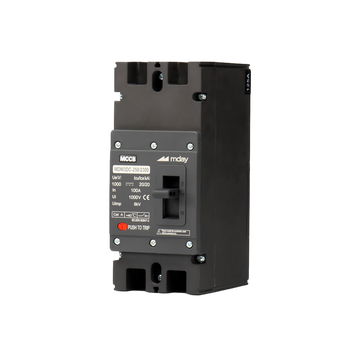
2P 500V 250A Thermal-Magnetic DC MCCB
Heavy-duty 2-pole DC breaker designed for inverter inputs and battery bank protection.
- Icu: 20kA
- Rated: 250A
- 500V DC
- IEC 60947-2
Providing global procurement directors, electrical system engineers, and panel builders with verifiable technical facts, arc quenching physics, and clear selection criteria for DC MCCBs.
As utility-scale solar photovoltaic (PV) installations and commercial battery energy storage systems (BESS) transition rapidly from standard 1000V DC up to 1500V DC operational thresholds, selecting the correct electrical protection devices becomes paramount. Standard AC circuit breakers cannot be substituted for DC circuits due to a fundamental physical difference: direct current does not possess a natural periodic "zero-crossing" voltage point. When contacts open under load, a direct current electric arc is continuous, intensely hot, and capable of melting switchgear components if not extinguished rapidly.
A specialized DC Moulded Case Circuit Breaker (DC MCCB) is designed specifically to conquer these operational challenges. Utilizing high-strength, arc-resistant glass-reinforced polyester cases, permanent magnetic blow-out coils, and extended multi-grid arc chute assemblies, high-quality DC MCCBs safely rupture high short-circuit currents up to 20kA–50kA at system voltages reaching 1500V DC.
In alternating current (AC) systems, the current crosses zero twice every cycle (50Hz/60Hz), offering a natural point for arc de-ionization. In contrast, DC arc quenching relies entirely on forced physical elongation and thermal cooling. When a fault occurs in a 1000V or 1500V DC array, the DC MCCB must instantly create an arc voltage higher than the source voltage ($U_{arc} > U_{system}$).
Luck (zhejiang) New Energy Co., Ltd. accomplishes this by arranging 2-pole, 3-pole, or 4-pole contact systems in series, dividing the total system DC voltage into manageable increments (e.g., 250V to 375V per pole). Integrated permanent magnets apply a Lorenz force ($\vec{F} = I\vec{L} \times \vec{B}$) to pull the plasma column off the main contacts and shoot it into de-ionizing arc plates within milliseconds.
When engineering and sourcing DC Moulded Case Circuit Breakers for utility or commercial projects, procurement engineers must evaluate five vital technical parameters:
Engineered for maximum reliability, thermal stability, and breaking performance in extreme environments.
Heavy-duty 2-pole DC breaker designed for inverter inputs and battery bank protection.
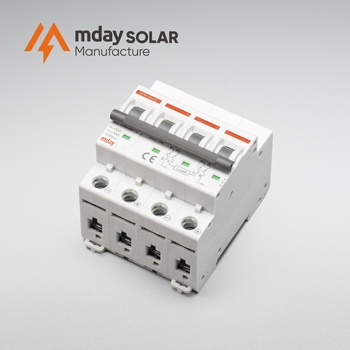
4-Pole series connected high-voltage isolator for commercial PV combiner boxes.
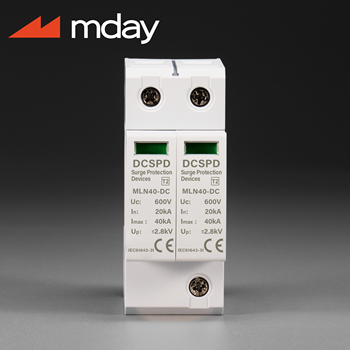
Matches DC MCCBs in combiner boxes to prevent atmospheric surge damage.
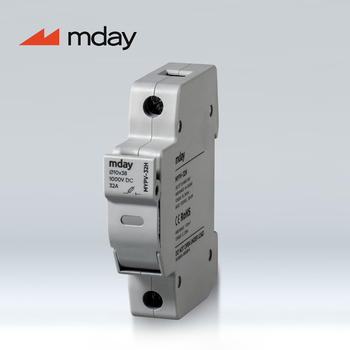
Fast-acting string protection component paired with main DC MCCBs.
Analyzing global procurement shifts through 2030 to help buyers make resilient purchasing decisions.
Utility scale solar farms and large commercial Energy Storage Systems (BESS) have largely migrated from 1000V to 1500V DC line operating levels to reduce copper cabling losses and inverter count. Buyers are shifting procurement specifications toward DC MCCBs with higher impulse withstand voltages ($U_{imp} \ge 12\text{kV}$) and multi-pole series arc chutes designed for 1500V DC environments.
With battery energy storage systems taking center stage globally, current flows back and forth between charging cycles (grid-to-battery) and discharge cycles (battery-to-grid). Procurement managers are phasing out polarized DC breakers, which can suffer thermal runaways under reverse fault currents, in favor of non-polarized DC MCCBs that guarantee breaking performance in both current directions.
Modern EPCs demand DC MCCBs featuring auxiliary status contacts, shunt trips, and RS485/Modbus communication modules. Real-time telemetry reporting breaker temperature, trip events, and contact erosion rates allows predictive maintenance in remote solar installations without requiring expensive physical site dispatches.
Global distributors are bypassing pure trading intermediaries to partner directly with audited manufacturers like Luck (zhejiang) New Energy Co., Ltd. Direct access to on-site laboratories, custom thermal-magnetic trip calibration, and third-party certified factories ensures compliance with rigorous international import regulations.
How technical innovations in material science and solid-state electronics are redefining DC protection.
The rapidly evolving requirements of modern DC distribution grids are accelerating innovation in DC MCCB design. Over the next decade, three key technological breakthroughs will redefine how high-capacity direct currents are switched and protected:
Traditional mechanical DC MCCBs rely on air gaps and physical arc chutes to dissipate electrical energy, resulting in trip times between 10ms and 30ms. Solid-state DC breakers utilize wide-bandgap semiconductors (such as Silicon Carbide, SiC, or Gallium Nitride, GaN) to break fault currents in microsecond timescales ($\le 100\mu\text{s}$) with zero physical arc. Hybrid models combine ultra-low conduction loss mechanical contacts with solid-state commutation paths to achieve energy efficiency during normal operation and ultra-fast fault isolation during short circuits.
The moulded case frame forms the primary mechanical and dielectric backbone of the DC MCCB. Next-generation enclosures leverage halogen-free, bio-based thermosetting polymers offering superior comparative tracking indices (CTI > 600V), higher dielectric strength under extreme humidity, and complete recyclability at end-of-life—aligning with strict ESG (Environmental, Social, and Governance) purchasing guidelines.
While traditional thermal-magnetic trip mechanisms rely on bimetallic strips and magnetic solenoids, advanced DC MCCBs are increasingly incorporating Electronic Trip Units (ETU). These microprocessors provide precise, user-configurable settings for long-time delay overload protection ($L$), short-time delay short-circuit protection ($S$), and instantaneous short-circuit protection ($I$), allowing exact selectivity matching across complex multi-tier DC networks.

Direct factory expertise backed by rigorous quality control, modern automated production lines, and verified international standards.
Luck (zhejiang) New Energy Co., Ltd. operates as a specialized, custom manufacturer dedicated exclusively to low-voltage photovoltaic protection and energy distribution equipment. Located in the Yueqing Economic Development Zone, Wenzhou, Zhejiang, China, our facilities sit at the world's premier cluster for electrical engineering and component manufacturing.
Spanning multiple functional workshops, our factory houses 3 automated assembly lines, an in-house precision plastic injection workshop, and 9 advanced testing instruments. Every DC Moulded Case Circuit Breaker, DC Surge Protector, DC Fuse, and PV Combiner Box is engineered to withstand severe outdoor operational conditions—including extreme temperature fluctuations (-40°C to +85°C), high humidity, and continuous electrical stress.
▶ Factory Operations & Assembly Tour
Direct technical answers addressing high-volume search and AI queries submitted by global B2B buyers and electrical engineers.
While DC Miniature Circuit Breakers (MCB) typically handle currents up to 63A or 125A with limited interrupting capacity for string level protection, a DC Moulded Case Circuit Breaker (DC MCCB) is engineered for higher current ratings (63A up to 800A+) and high short-circuit interrupting capacities (up to 25kA or 50kA). DC MCCBs feature robust glass-reinforced polyester frames, advanced arc chute systems, and configurable thermal-magnetic or electronic trip units designed to isolate high-energy DC main feeders, inverters, and battery energy storage systems (BESS).
Unlike AC currents which naturally pass through zero voltage 100 or 120 times per second, direct current (DC) maintains constant voltage and current, making DC arcs extremely persistent and destructive. Luck DC MCCBs utilize permanent magnetic blow-out coils and multi-chamber arc chutes. The magnetic field forces the electric arc off the silver-alloy contacts and drives it rapidly into the splitter plates, elongating and cooling the arc until the arc voltage exceeds the system voltage, causing swift extinction.
Luck offers both polarized and non-polarized DC MCCB configurations. Non-polarized DC MCCBs are critical for solar photovoltaic and energy storage applications where current direction can reverse during battery charging/discharging or under array fault conditions, ensuring reliable bidirectional protection without risk of breaker destruction.
Proper selection requires evaluating Maximum Operating DC Voltage (Ue), Continuous Current Rating (In), Short-Circuit Breaking Capacity (Icu/Ics), Ambient Temperature Derating, and Pole Configuration (2-Pole, 3-Pole, or 4-Pole series connection to distribute arc voltage). Engineering recommendations advise sizing the rated continuous current at a minimum of 125% of the maximum continuous load current.
Our DC Moulded Case Circuit Breakers are manufactured in accordance with IEC/EN 60947-2 for low-voltage switchgear, CE marking requirements, and GB/T 14048.2 standards. Factory quality controls are certified under ISO9001 and verified on-site by TÜV Rheinland.
Yes. Backed by 7 years of OEM/ODM expertise and 3 dedicated production lines, we support custom rating calibrations, housing colors, custom terminal arrangements, and private labeling. Standard catalog models ship within 2 to 7 days, while custom OEM orders are scheduled promptly after sample validation.
Connect with our technical engineering team to receive full product specifications, CAD drawings, test reports, and customized OEM solutions for your high-voltage DC protection projects.