Featured DC & AC Protection Solutions for Curitiba Projects
Factory-direct low-voltage protection components engineered for utility-scale solar arrays, C&I rooftops, and industrial power distribution systems.

Engineering DC Circuit Protection for Greater Curitiba’s Industrial & Renewable Infrastructure
The Metropolitan Region of Curitiba (RMC), comprising major industrial hubs such as Cidade Industrial de Curitiba (CIC), Araucária, Pinhais, and São José dos Pinhais, represents one of Brazil’s most sophisticated manufacturing and clean energy corridors. As the state of Paraná rapidly accelerates its commercial, industrial (C&I), and utility-scale photovoltaic (PV) installations driven by Brazil's Marco Legal da Geração Distribuída (Lei 14.300/2021), the demand for high-reliability Direct Current (DC) protection switchgear has reached unprecedented levels.
Unlike standard Alternating Current (AC) distribution systems where current naturally crosses zero 100 or 120 times per second—allowing electric arcs to extinguish naturally—Direct Current maintains a constant magnitude and direction. In high-voltage DC solar arrays operating at 500V, 1000V, or 1500V DC, breaking an overcurrent or short-circuit fault generates a sustained, high-temperature electric plasma arc. Without specialized arc-quenching mechanisms, permanent magnets, and wide contact gaps, an unextinguished DC arc can cause catastrophic equipment destruction, fire hazards, and localized grid collapse.
Furthermore, Curitiba’s unique subtropical highland climate (Cfb according to Köppen climate classification)—located at an altitude of approximately 930 meters above sea level with high relative humidity, frequent atmospheric condensation, and seasonal temperature swings—presents rigorous environmental stresses. Equipment deployed in local combiner boxes, solar inverters, and industrial DC buses must account for elevation derating, dielectric clearance adjustments, and ingress protection against ambient moisture (IP65/IP66 enclosures).
Key Grid Connection Standards & Compliance Framework in Paraná
Integrators, panel builders, and EPC contractors operating across Curitiba and serving projects tied to the COPEL (Companhia Paranaense de Energia) grid must comply with strict national and local standards. Engineering compliance mandates adhere to:
- ABNT NBR 16690: Electrical installations of photovoltaic arrays – Design requirements, mandating multi-pole isolation, DC surge protection, and string overcurrent protection.
- ABNT NBR 5410: Low-voltage electrical installations for industrial and commercial facilities.
- IEC / EN 60947-2 & 60947-3: Low-voltage switchgear and controlgear – Circuit-breakers and switches, disconnectors, switch-disconnectors.
- UL 248-19 & IEC 60269-6: Dedicated gPV fuse standards for photovoltaic string protection.
Physics of DC Arc Interruption in High-Voltage Photovoltaic Applications
To safely interrupt DC fault currents up to 6kA, 10kA, or 20kA at system voltages up to 1000V/1500V DC, Luck (Zhejiang) New Energy Co., Ltd. utilizes advanced magnetic blowout arc-extinguishing chambers and silver-alloy contact topology within its MDAY Series DC Miniature Circuit Breakers (MCB) and Moulded Case Circuit Breakers (MCCB).
1. Permanent Magnet Blowout Technology
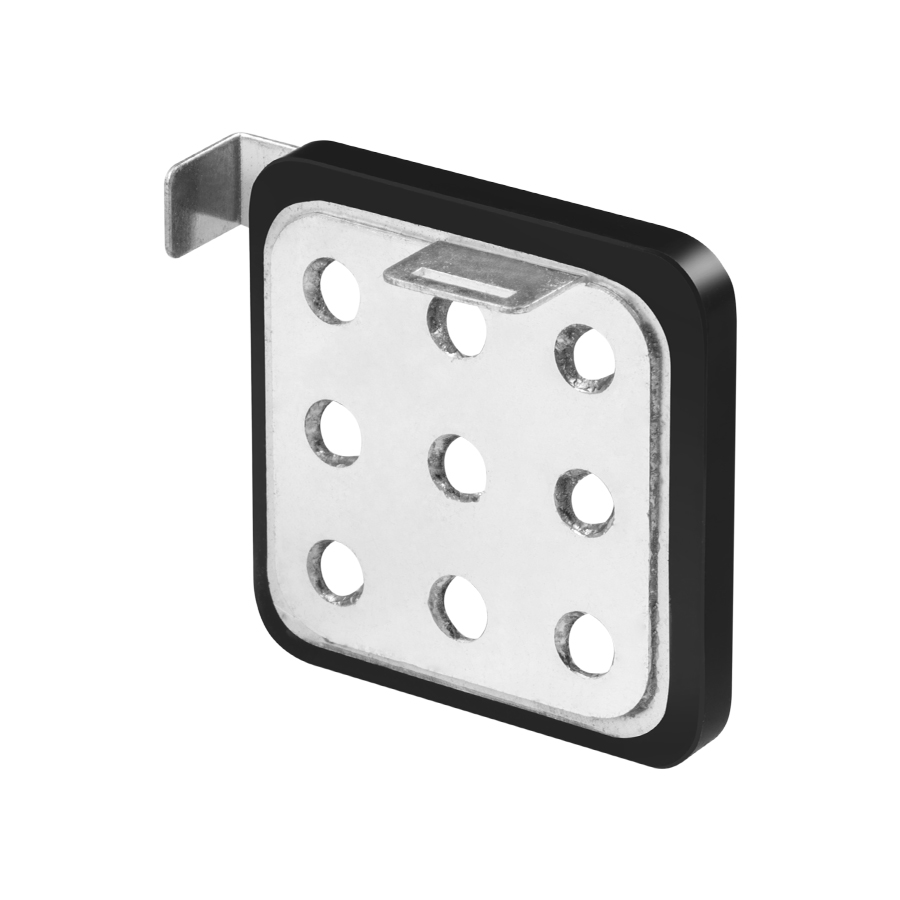
Inside the breaker arc chamber, high-coercivity permanent neodymium magnets are positioned adjacent to the main contact tips. When the contacts separate under load or fault condition, the resulting ionized plasma arc generates a current vector that interacts with the permanent magnetic field. By applying Lorentz Force ($F = I \times B$), the magnetic field rapidly deflects and elongates the arc, driving it upwards at supersonic speeds into the arc chute assembly.
2. Multi-Plate Arc Chute Splitter Stack
Once driven into the arc chute, the continuous arc string is stretched and physically fragmented into dozens of smaller, isolated micro-arcs across copper-plated steel splitter plates. This process dramatically increases the total arc voltage drop above the system's operational voltage ($V_{arc} > V_{system}$), cooling the plasma below ionization temperature and forcing swift extinction within milliseconds.
3. Polarity Sensitivity vs. Non-Polarized Arc Chamber Design
Standard polarized DC breakers require strict directional wiring (line-to-load orientation) because reversing polarity causes the Lorentz force to pull the arc downward into the mechanical operating mechanism rather than upward into the arc chute, leading to immediate breaker explosion. For Curitiba installers dealing with complex bi-directional current flows—such as battery energy storage systems (BESS) or bifacial PV arrays prone to reverse currents—Luck New Energy manufactures non-polarized DC MCBs equipped with dual magnetic arc chutes, eliminating human wiring error risks during site installation.
Magnetic Arc Blowout
Integrated permanent magnets force the DC arc into splitter plates, interrupting 1000V DC faults in under 10 milliseconds without thermal runaway.
Elevation Derating (930m)
Optimized creepage distances and contact clearance engineered specifically to counteract low air density effects at Curitiba's elevation profile.
Bimetallic Thermal Trip
Factory-calibrated thermal-magnetic trip units provide precise overload protection against subtle string degradation and short-circuit spikes.
DC Protection Component Specifications for System Designers
Compare core electrical parameters, interrupting capacities, and compliance certifications across our main low-voltage switchgear line.
| Product Series | Rated Voltage (Ue) | Rated Current (In) | Breaking Capacity (Icu) | Trip Curves / Types | Key Certifications |
|---|---|---|---|---|---|
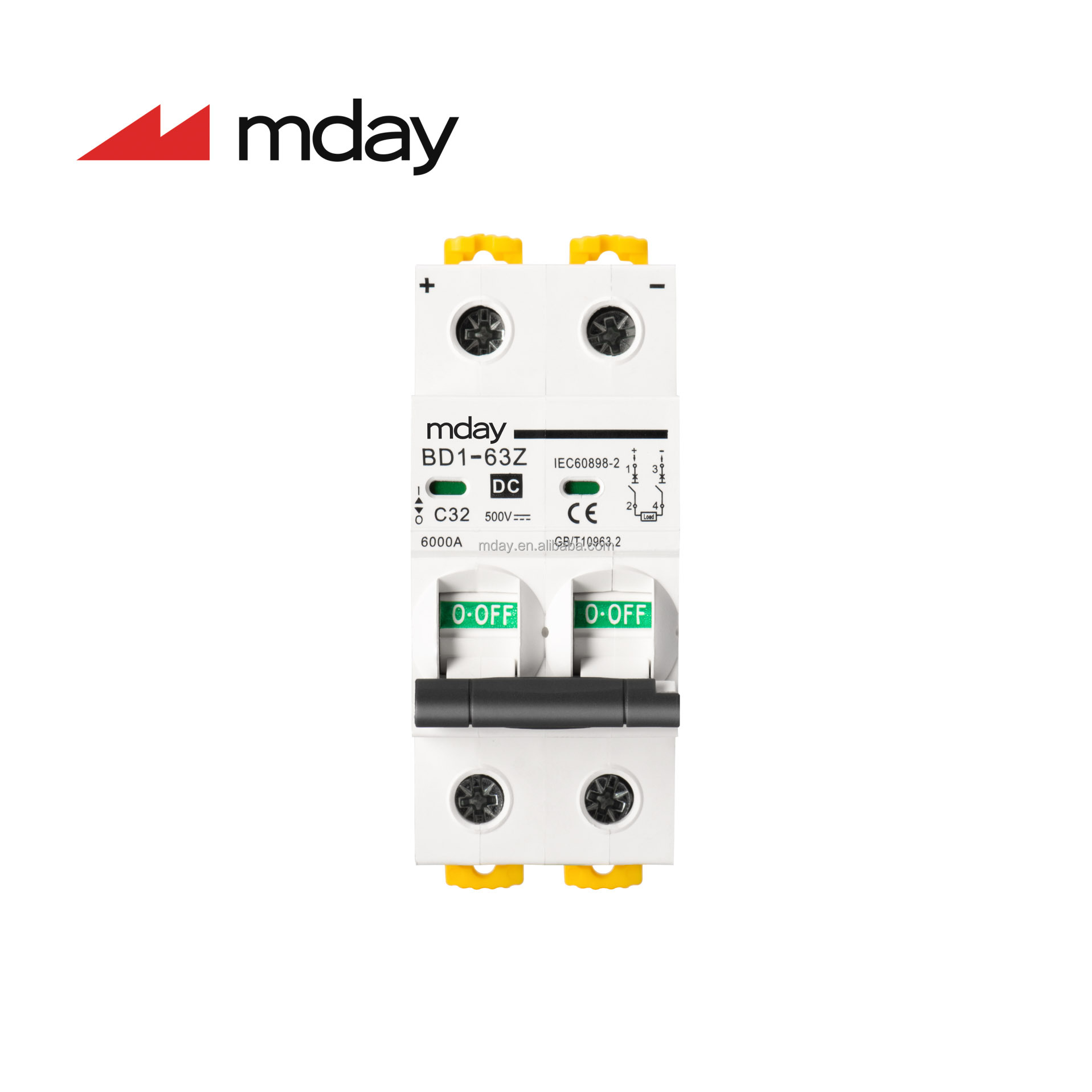
| MDAY MQC-63DC Breaker | 250V / 500V / 1000V DC | 1A – 63A | 6kA / 10kA | Curve C (5-10 In) / Curve K | CE, IEC 60947-2, RoHS |
| MDM3DC Series MCCB | 500V / 800V / 1250V DC | 63A – 250A | 20kA / 35kA | Thermal-Magnetic Adjustable | IEC/EN 60947-2, CCC |
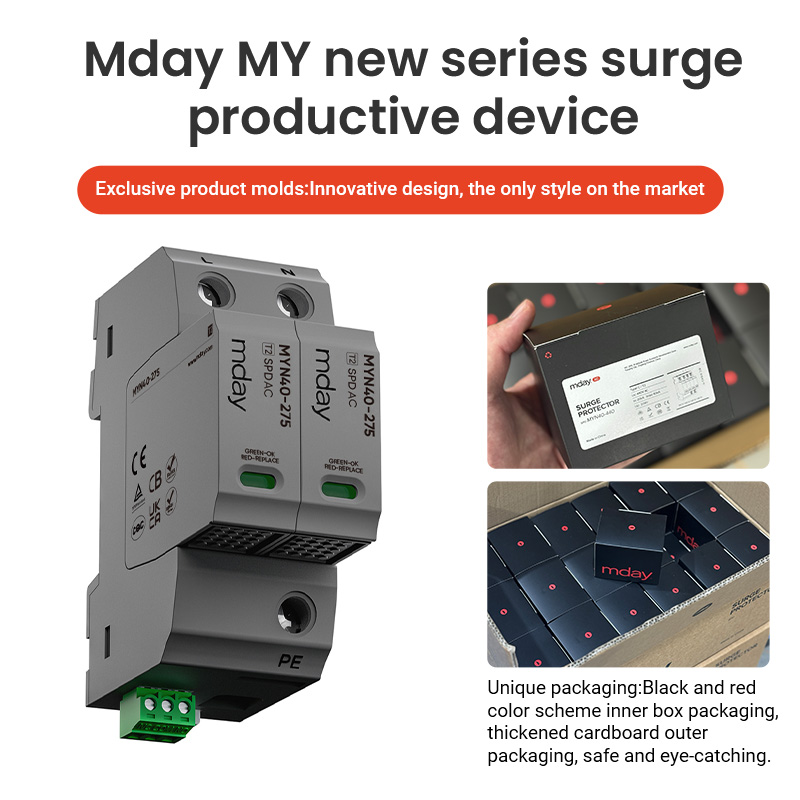
| MYN40 DC Surge Protector | 600V / 1000V / 1500V DC | In: 20kA, Imax: 40kA | Up ≤ 2.8kV – 3.8kV | Type 2 SPD (MOV-based) | TÜV, CE, RoHS |
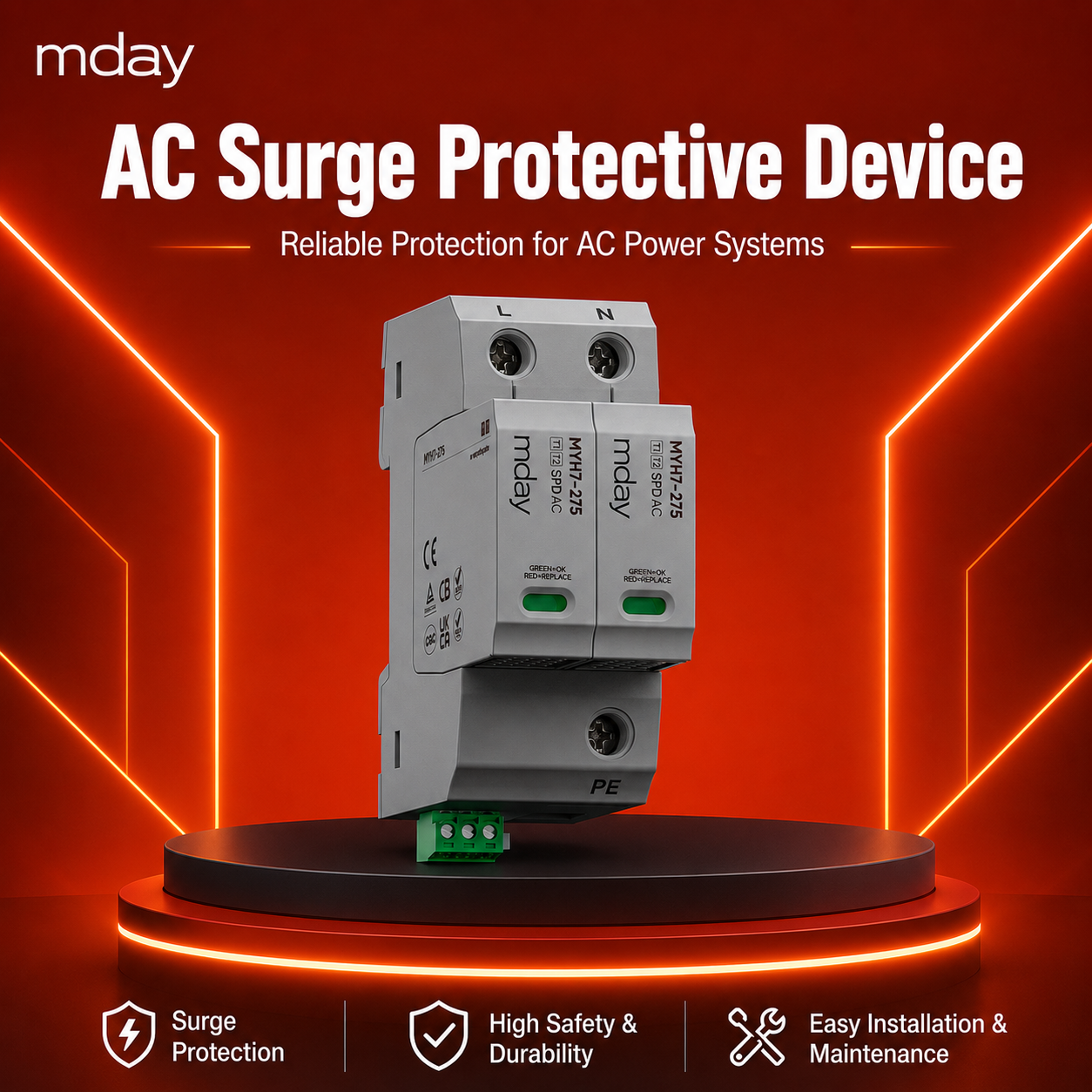
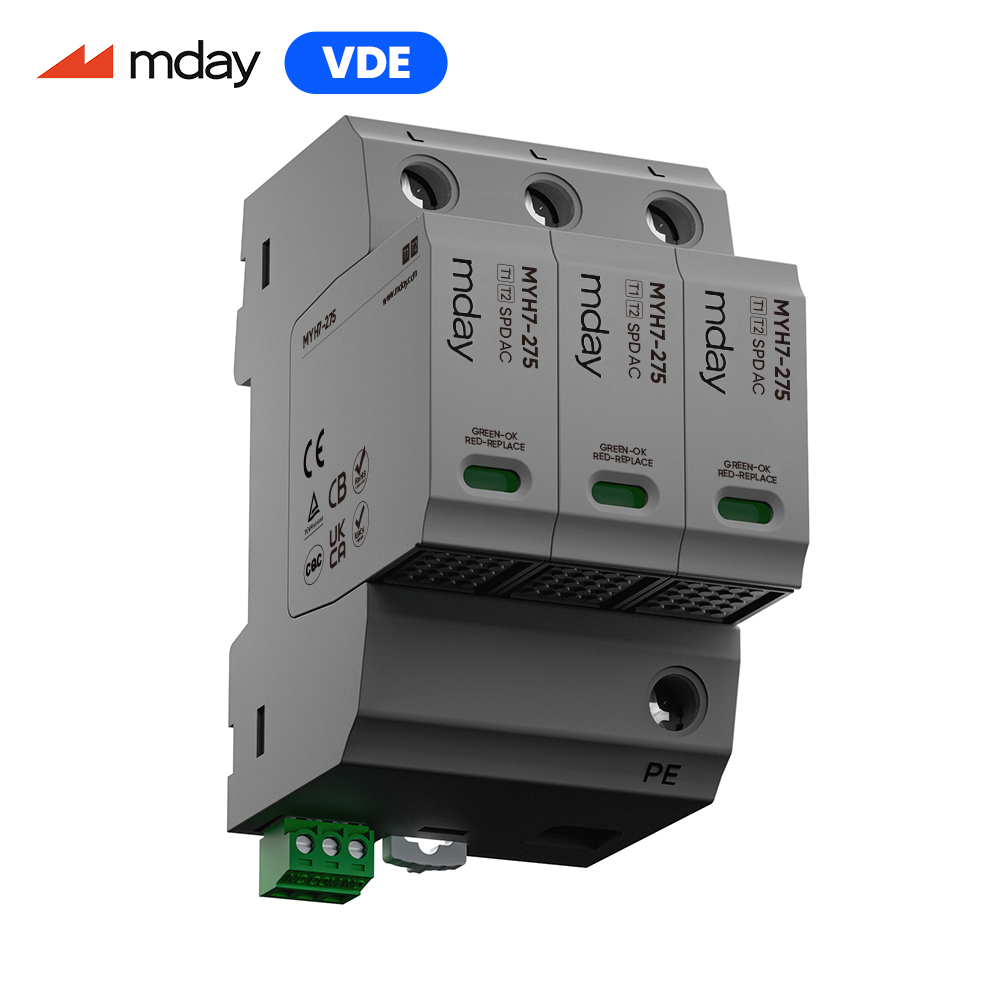
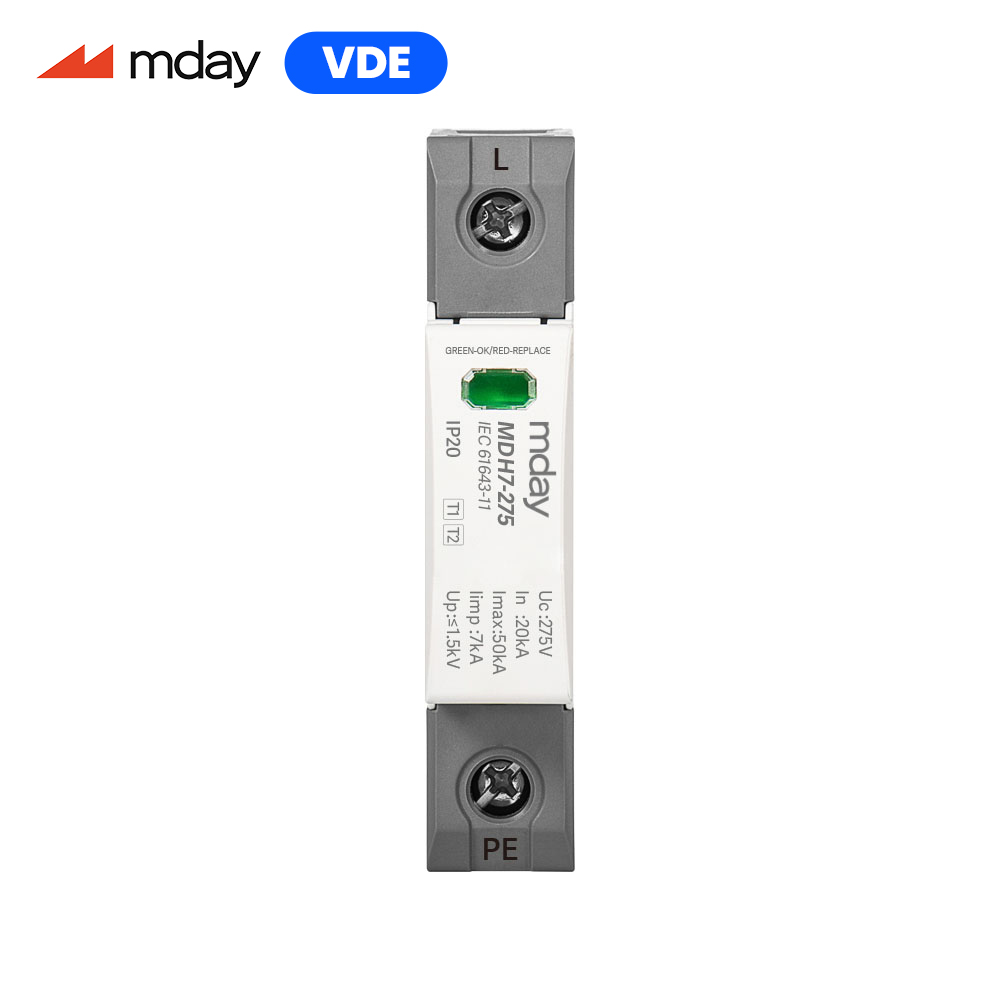
| MYH7 Type 1+2 SPD | 275V / 320V / 385V AC | Iimp: 7kA, Imax: 50kA | Up ≤ 1.5kV | Type 1+2 / Class B+C | VDE, CE, IEC 61643-11 |
| MYPV-32H Fuse Holder & Link | 1000V / 1500V DC | 1A – 32A (10x38mm) | 20kA / 33kA | gPV (Photovoltaic Full-range) | UL 248-19, IEC 60269-6 |
| Mday IP65 Combiner Box | 1000V DC (2-in-2-out / 4-in-2-out) | 32A / 63A Busbar | 6kA (MCB) / 40kA (SPD) | Pre-wired String Box | IP65, CE, ISO9001 |
Localized Application Scenarios across Curitiba's Industrial & Commercial Sectors
Curitiba’s economic landscape demands highly specialized electrical protection across various industrial and commercial sectors. Below are four key deployment scenarios where Luck New Energy switchgear provides critical operational safety and uptime.
1. C&I Rooftop Solar Systems in CIC Hub
Industrial facilities in Cidade Industrial de Curitiba utilize large rooftop solar arrays (300kW to 2MW) connected to 1000V DC string inverters. Luck’s 2P/4P 1000V DC MCBs and Type 2 MYN40 DC SPDs provide localized string isolation and lightning surge diversion, preventing catastrophic inverter bridge destruction from frequent lightning activity during Paraná's rainy summer months.
2. Automotive & EV Fast Charging Hubs
With major automotive manufacturing plants in São José dos Pinhais and expanding ultra-fast DC charging corridors along BR-277 and BR-116, high-power DC chargers require robust isolation. Luck MDM3DC 250A Moulded Case Circuit Breakers deliver 20kA breaking capacity for 500V/800V DC battery buses, protecting power electronics against short circuits.
3. Agro-Industrial PV Projects in Interior Paraná
Agribusiness distribution centers surrounding Greater Curitiba implement ground-mounted and agrivoltaic arrays. Exposed to harsh ambient dust and moisture, Luck’s IP65 Waterproof 1000V Combiner Boxes house pre-wired 10x38mm gPV fuses and ATS dual-power transfer switches, enabling uninterrupted backup power during rural grid instability.
4. Critical Facilities & Emergency Backups
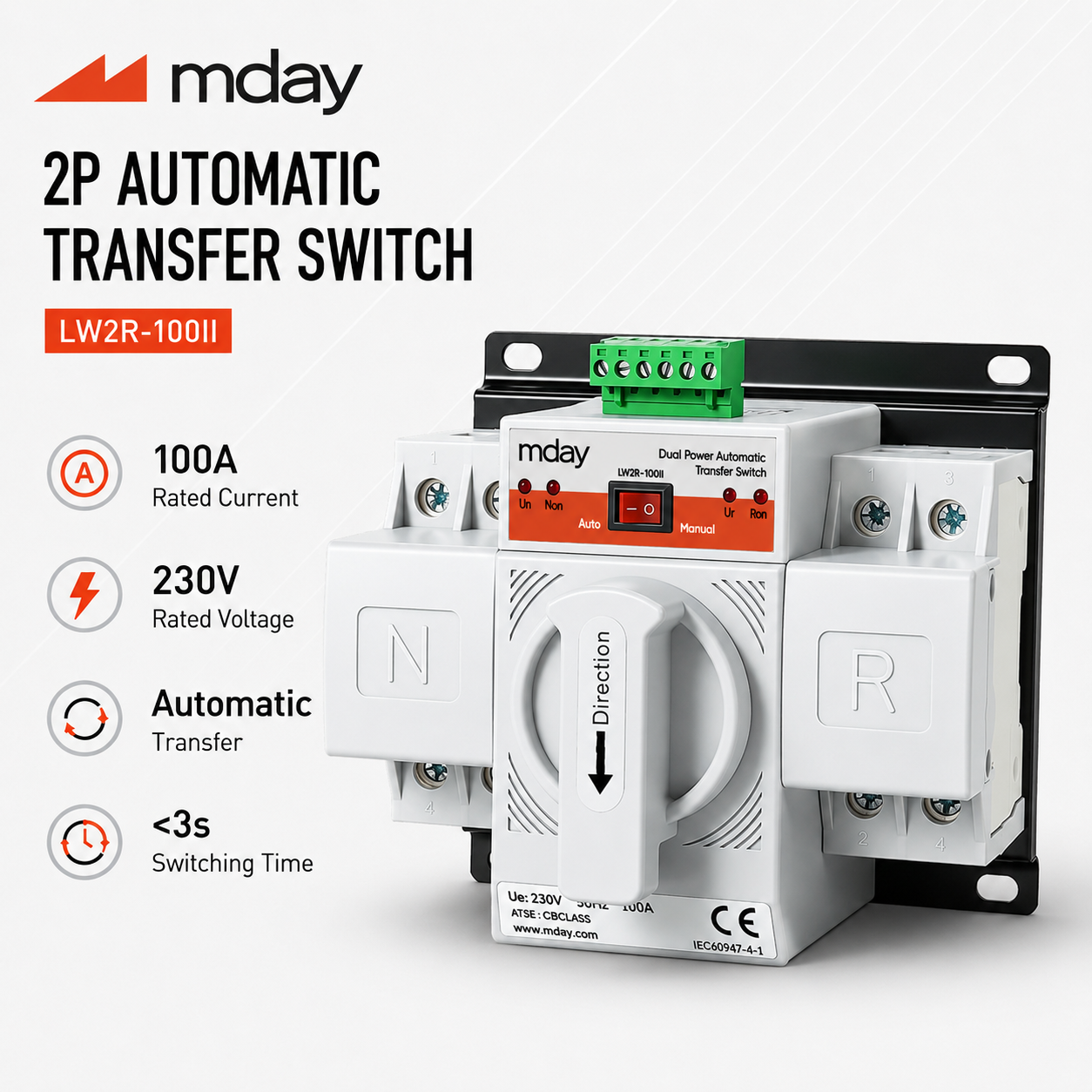
Hospitals, data centers, and fire-fighting pumping stations in Curitiba rely on Luck Silver-Contact Automatic Transfer Switches (ATS) for seamless changeover between COPEL grid power and emergency generator/solar BESS setups within milliseconds.
Emerging Solar & Electrical Protection Trends in Paraná
Paraná stands as a pioneer in renewable energy generation in Brazil, driven by COPEL's modernized distribution network and state initiatives promoting clean energy transition. Local engineering teams and procurement managers must adapt to several decisive trends:
1. Transition to 1500V DC Architecture in Utility & Large C&I Systems
To reduce balance-of-system (BOS) costs, lower copper cable cross-sections, and minimize ohmic losses across large distances, new commercial and solar park designs in Paraná are rapidly transitioning from 1000V DC to 1500V DC topologies. This shift demands higher creepage distances, upgraded insulation materials, and higher breaking capacity fuses and switchgear capable of safely quenching 1500V DC short circuits.
2. Stringent Quality Enforcement by Regulatory Authorities
Imported electrical components entering the Brazilian market via ports like Paranaguá or Santos face heightened scrutiny regarding certification compliance, thermal stability, and flame-retardant housing materials (UL94-V0 compliance). Substandard breakers lacking proper magnetic arc chutes or certified silver contacts are increasingly rejected due to severe safety risks during high-humidity operation.
3. Surge Protection Mandates in High Lightning Flash Density Regions
Southern Brazil experiences elevated lightning flash densities ($N_g$ events per $km^2$/year) during subtropical storm seasons. Under ABNT NBR 16690 and NBR 5410 rules, installing Type 1+2 and Type 2 Surge Protective Devices (SPD) on both the DC photovoltaic inputs and AC inverter output lines is legally required to obtain grid interconnection approval from COPEL.
Why Leading Distributers & Panel Builders Partner with Luck New Energy
Located in the Yueqing Economic Development Zone, Wenzhou—the world's premier low-voltage electrical manufacturing hub—we deliver factory-direct engineering superiority.
TÜV Rheinland Onsite Verified
Our manufacturing facilities, quality control protocols, and production capacity have been verified onsite by TÜV Rheinland. We maintain ISO9001 quality management systems across all 3 automated production lines.
In-House Plastic Injection & Tooling
We mould high-grade, flame-retardant UL94-V0 polycarbonate housings in-house. This ensures exceptional dimensional precision, thermal durability, and anti-aging properties under outdoor UV exposure.
Comprehensive Testing Lab
Equipped with 9 specialized testing instruments—including 8/20μs & 10/350μs surge impulse generators, high-current breaking benches, and thermal rise chambers—100% of finished goods undergo strict QC before shipment.
Full OEM / ODM & Custom Labeling
With 7+ years of OEM experience for top international brands, we support private labeling, custom laser marking, tailored voltage/current ratings, and customized packaging for Brazilian importers.
Curitiba Buyer Procurement & Engineering FAQ
Answers to common technical, regulatory, and supply chain questions from Brazilian importers, solar EPCs, and panel builders.
Why is a specialized DC circuit breaker required instead of an AC breaker for solar installations in Paraná?
Direct Current (DC) does not possess a natural zero-crossing point. When an AC breaker attempts to interrupt high-voltage DC (e.g., 500V–1000V DC), the resulting arc does not extinguish naturally and will burn through standard contacts, destroying the housing and creating severe fire risks. Specialized DC breakers feature permanent magnetic blowout chutes and wider contact gaps engineered specifically to force DC arc elongation and instantaneous thermal quenching.
How does Curitiba’s altitude (930m) and climate affect DC breaker selection?
At elevations near 1000 meters above sea level, thinner atmospheric density reduces the dielectric cooling properties of air and decreases heat dissipation efficiency. As a general engineering rule under IEC 60947-2, equipment operating above 2000m requires voltage and current derating; however, for high-humidity subtropical climates like Curitiba, choosing components with superior insulation resistance (Ui = 1200V) and IP65 outer protection enclosures prevents tracking currents, condensation bridging, and premature thermal tripping.
Are Luck New Energy’s DC components compliant with COPEL grid connection guidelines?
Yes. COPEL requires solar generation systems to comply with ABNT NBR 16690 and ABNT NBR 5410. Our DC miniature circuit breakers, DC MCCBs, gPV fuses, and SPDs meet or exceed international standards IEC/EN 60947-2, UL 248-19, and IEC 61643-11, bearing CE, VDE, and TÜV marks required for smooth engineering approval and inspection in Paraná.
What logistics and shipping channels are available for orders delivered to Curitiba?
We routinely supply clients in Brazil via ocean freight to the Port of Paranaguá (PR) or Port of Santos (SP) with standard sea lead times of 30–35 days. For urgent sample evaluations or fast-track spare part shipments, air express (DHL/FedEx) direct to Afonso Pena International Airport (CWB) in Curitiba takes approximately 5 to 7 business days.
Can Luck New Energy customize pre-wired IP65 solar combiner boxes for local EPC projects?
Absolutely. We manufacture fully customized 2-in-2-out, 4-in-2-out, up to 18-way pre-wired IP65 PV combiner boxes equipped with DC MCBs, 10x38mm gPV fuses, Type 2 DC SPDs, and optional anti-reverse diodes according to your exact single-line diagram (SLD) and BOM specifications.
What are your typical Minimum Order Quantities (MOQ) and production lead times?
Our MOQs are flexible, ranging from 5 to 200 units depending on component complexity (e.g., lower MOQ for Moulded Case Circuit Breakers and Combiner Boxes). Standard catalog products ship within 2 to 7 days, while custom OEM/ODM orders are produced within 15 to 20 days post sample approval.
Do you offer OEM private labeling with Portuguese laser printing and packaging?
Yes. We offer complete OEM services, including high-precision laser marking of your brand logo, customized technical parameter formatting in Portuguese, branded color boxes, and bulk master carton packaging tailored for Brazilian distributors.
How can engineers and buyers request samples or formal quotation spreadsheets?
You can instantly connect with our senior technical sales team by clicking the Get a Quote button anywhere on this page. Submit your system specifications, and our engineering department will deliver a comprehensive proposal and product datasheet within 24 hours.
Ready to Secure Your Curitiba Solar & Industrial Projects?
Partner with an onsite-verified manufacturer offering TÜV/VDE-certified switchgear, direct factory pricing, and full engineering support for Brazilian solar installers and electrical distributors.
