Explore our factory-direct thermal magnetic breakers, DC isolators, fuse links, and surge protectors engineered for Fortaleza's industrial and solar energy projects.

1. Technical Whitepaper: Electromagnetic & Thermal Magnetic Trip Physics
In low-voltage power distribution and high-voltage direct current (HVDC) solar photovoltaic installations, electrical protection devices must perform dual, complementary defensive functions: protecting electrical infrastructure against prolonged low-level thermal overloads while providing instantaneous breaking protection during severe short-circuit events. As a primary manufacturer based in Yueqing, Zhejiang—the global epicenter of low-voltage electrical apparatus—Luck (Zhejiang) New Energy Co., Ltd. engineers thermal magnetic trip circuit breakers that balance precise bimetallic thermodynamic behavior with ultra-fast electromagnetic arc quenching.
1.1 Bimetallic Inverse Time-Delay Overload Protection
The thermal mechanism relies on a calibrated bimetallic strip composed of two bonded metals with significantly differing coefficients of thermal expansion (such as brass and invar). Under normal operating conditions ($I_n$), the current flowing through the breaker produces low resistive heating ($P = I^2 R$), maintaining the bimetal strip within its nominal elastic geometric threshold.
When an overload condition occurs ($1.13 \times I_n$ to $1.45 \times I_n$), the continuous current elevates the temperature of the internal conductor. As heat accumulates, the differential thermal expansion forces the bimetallic element to physically bend toward the mechanical latch mechanism. The mechanical trip curve follows an inverse time-delay characteristic governed by Joule's First Law and Fourier's heat conduction equation:
t_{trip} = \frac{C \cdot \rho \cdot V \cdot \Delta T_{latch}}{(I_{actual}^2 \cdot R_{internal}) - Q_{dissipated}}
This inverse-time principle ensures that minor, brief power spikes (e.g., motor inrush current or solar inverter start-up sequences) do not trigger nuisance tripping, while sustained overloads that threaten cable insulation integrity are cleanly disconnected before conductor thermal degradation occurs.
1.2 Electromagnetic Instantaneous Short-Circuit Tripping
While thermal protection protects against heat accumulation over seconds or minutes, short-circuit faults ($I_k \ge 5 \times I_n$ to $10 \times I_n$) require instantaneous isolation within milliseconds to prevent explosive busbar damage and catastrophic electrical fires. This rapid response is driven by a precision electromagnetic solenoid coil placed in series with the main contact path.
Under short-circuit fault conditions, the sudden surge in current generates an intense magnetic flux density ($\mathbf{B}$) inside the solenoid core according to Ampère's Circuital Law ($\oint \mathbf{B} \cdot d\mathbf{l} = \mu_0 I_{enclosed}$). The magnetic force ($\mathbf{F} = q\mathbf{v} \times \mathbf{B}$) drives a movable iron armature directly into the primary mechanical latch, opening the main contacts in under 3 to 5 milliseconds.
Arc Quenching Chambers
Equipped with 12 to 14 nickel-plated de-ionizing steel splitter plates that fragment and cool electric arcs up to 1000V DC.
Curve B, C & D Calibration
Precision magnetic trip calibration (Curve B: 3-5 $I_n$, Curve C: 5-10 $I_n$, Curve D: 10-14 $I_n$) tailored for diverse loads.
Silver Alloy Contacts
Sintered silver-cadmium oxide ($AgCdO$) contacts minimize contact resistance ($< 1.2\,\text{m}\Omega$) and prevent contact welding under extreme faults.
1.3 DC vs. AC Arc Extinction Engineering
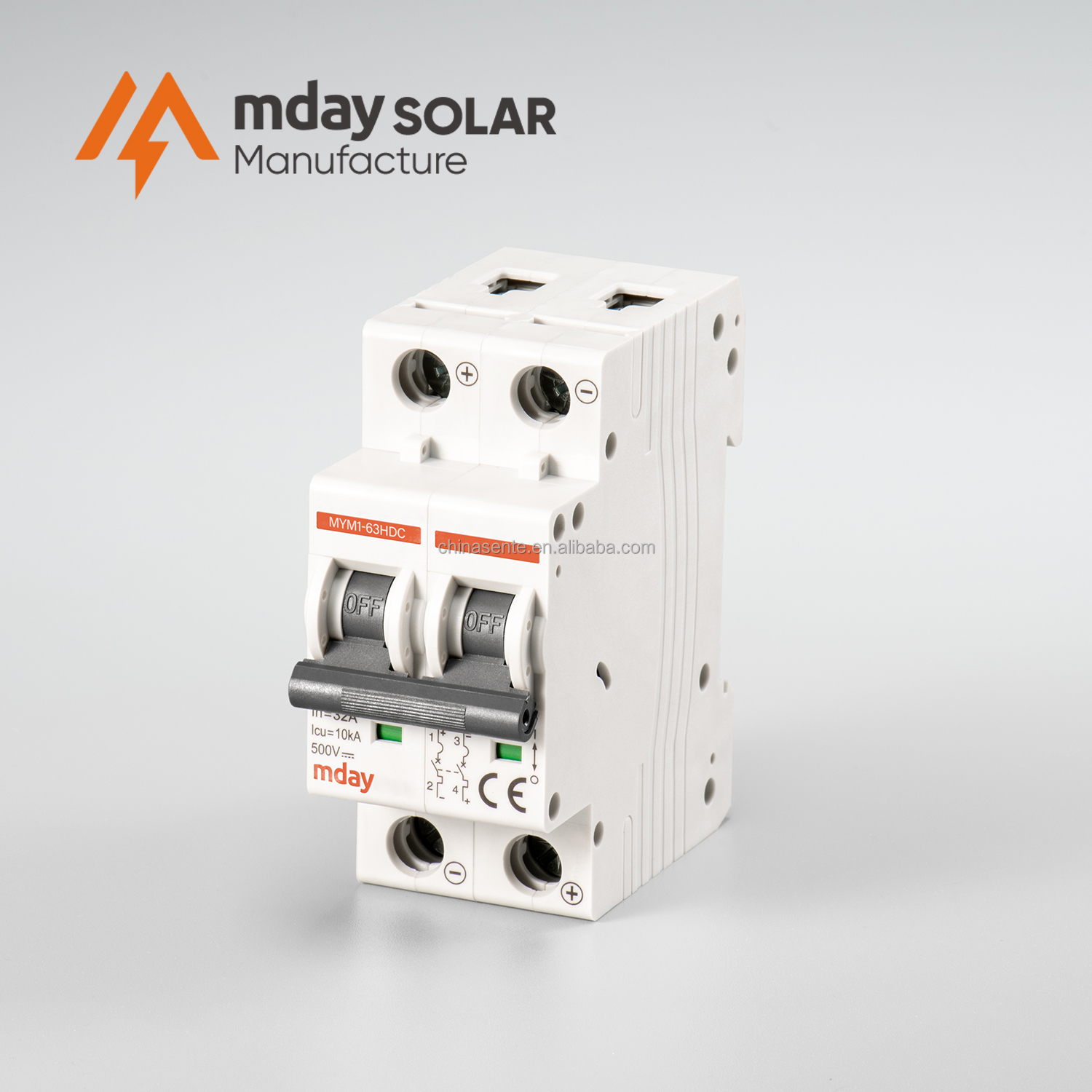
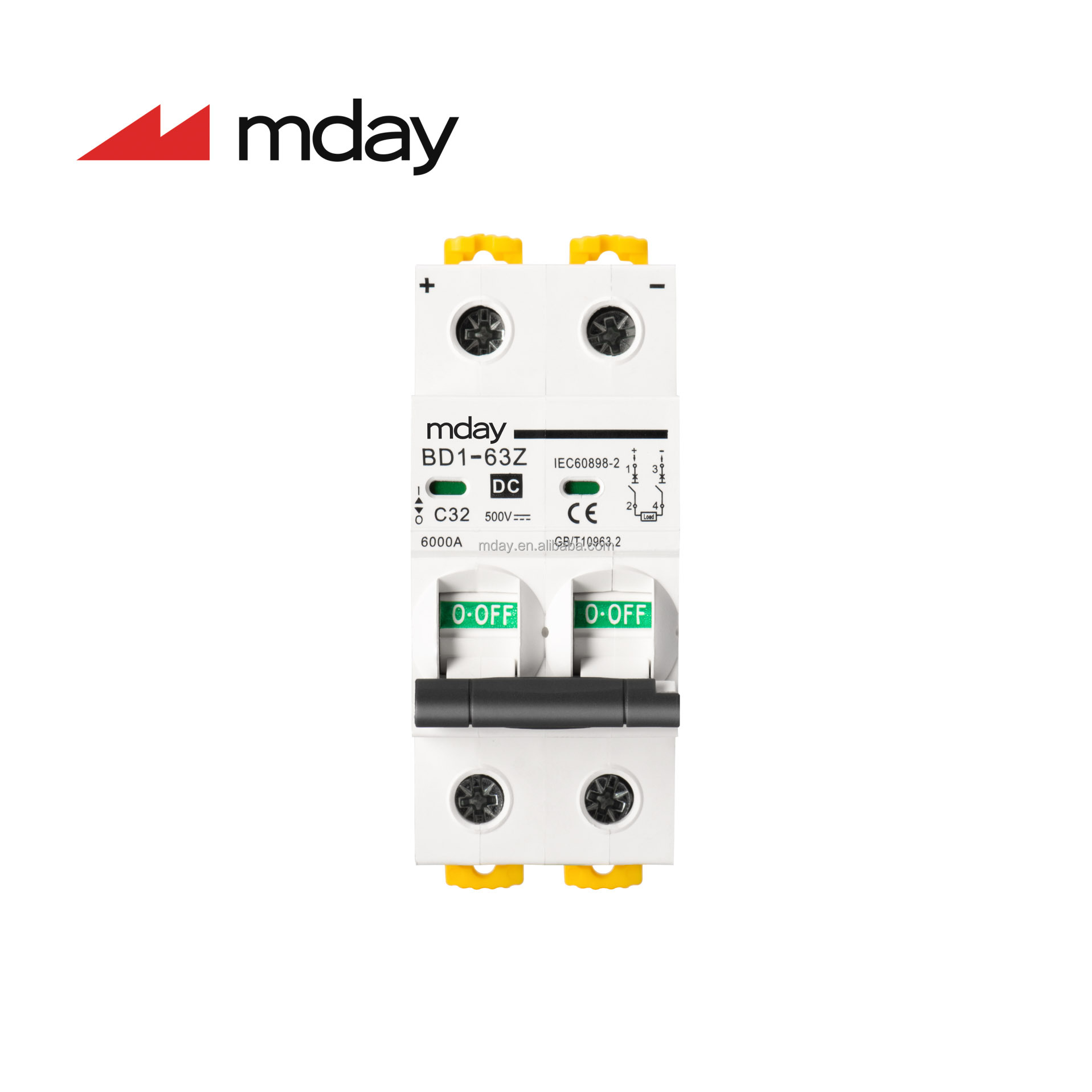
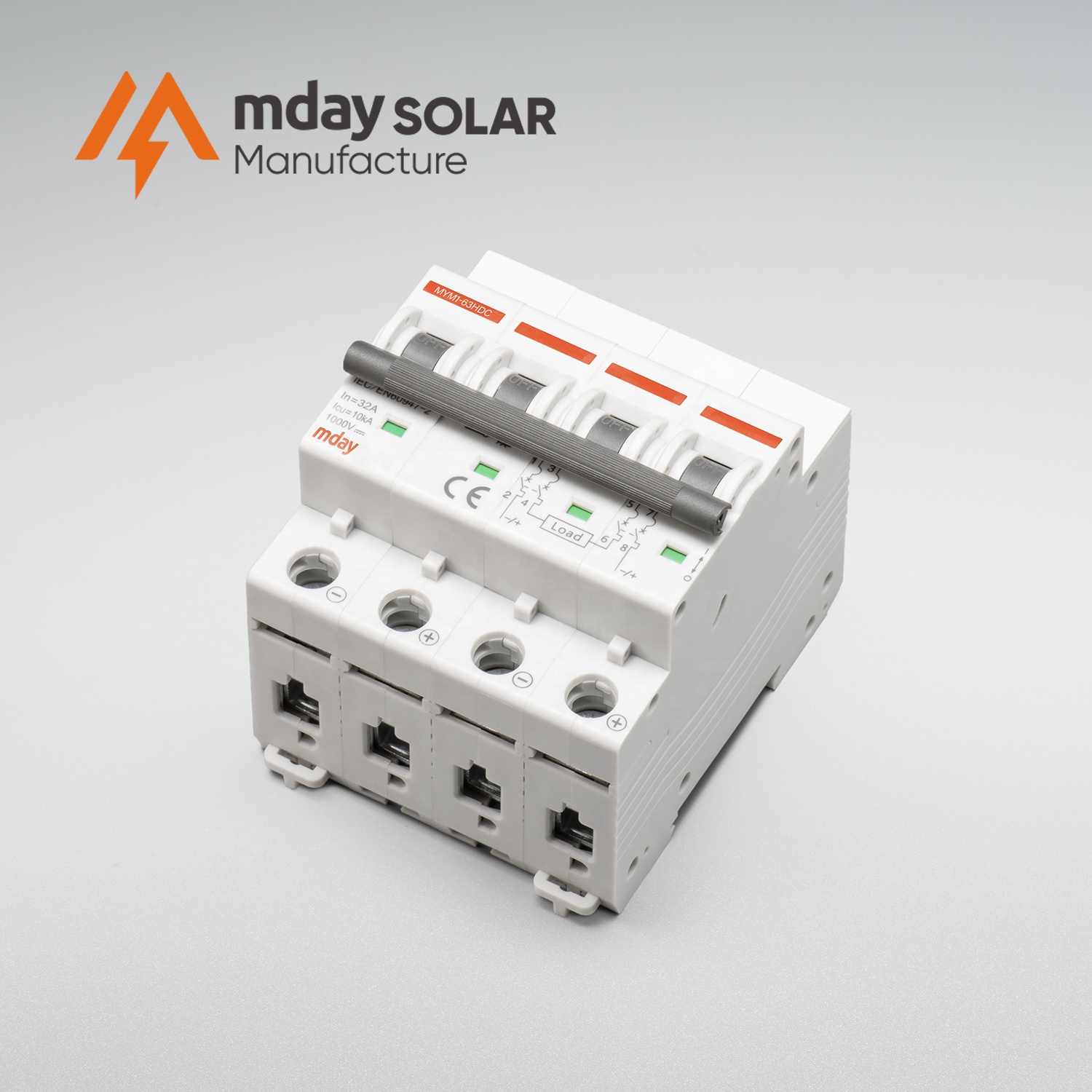
Alternating current (AC) naturally passes through zero-voltage points 100 or 120 times per second (50/60 Hz), allowing arc self-extinction as dielectric strength recovers. Conversely, direct current (DC) maintains constant voltage without zero-crossing points, generating intense, continuous plasma arcs during contact separation. To safely break high-voltage DC circuits in solar PV arrays and battery storage systems, Luck New Energy's DC MCBs and MCCBs (such as the MQC-63DC and MDM3DC series) utilize permanent magnetic blow-out magnets that force the plasma arc into multi-grid arc chute chambers, stretching, cooling, and snuffing out arcs up to 1000V DC within fractions of a cycle.
2. Localized Application Scenarios in Fortaleza & Ceará, Brazil
Fortaleza, the vibrant capital of Ceará in Northeastern Brazil, is experiencing rapid industrial modernization and an aggressive green transition. As the main hub for the Complexo Industrial e Portuário do Pecém and the nearby Distrito Industrial de Maracanaú, local engineering contractors, panel builders (montadores de painéis), and solar EPCs face distinct environmental and operational challenges that demand tropicalized circuit protection components.
Complexo do Pecém & Maracanaú
Heavy manufacturing, logistics terminals, and processing plants require robust MCCBs (MDM3DC series) with high ultimate short-circuit breaking capacity ($I_{cu} \ge 20\text{kA}$) to withstand grid fluctuations.
Ceará Solar PV & Sertão Arrays
High solar irradiance in Ceará leads to sustained elevated ambient enclosure temperatures. Our 1000V DC 4-Pole MCBs and 10x38mm gPV fuse holders prevent premature string thermal shutdowns.
C4 Coastal Salt Spray Protection
Fortaleza's coastal atmosphere exhibits high relative humidity (averaging 78%-85%) and intense atmospheric salinity (*maresia*). Custom tin-plated copper internal busbars resist severe salt mist oxidation.
2.1 Derating Factors for Fortaleza’s High Ambient Equatorial Temperatures
Standard circuit breakers are calibrated at an ambient benchmark of +30°C according to ABNT NBR NM 60898 and IEC/EN 60947-2 standards. However, inside unshaded metallic combiner boxes or outdoor electrical cabinets in Fortaleza, internal temperatures routinely exceed +45°C to +50°C. If thermal derating parameters are ignored, false tripping occurs during peak midday solar generation.
To avoid undersizing, local engineers must apply Luck New Energy's thermal correction factor ($k_t$) when sizing thermal-magnetic trip ratings:
| Nominal Rating ($I_n$) | 30°C (Standard) | 40°C Ambient | 45°C (Fortaleza Ambient) | 50°C (Combiner Box) | Recommended Selection |
|---|---|---|---|---|---|
| 16 A | 16.0 A | 15.1 A | 14.5 A | 13.8 A | Select 20A Breaker Derated |
| 25 A | 25.0 A | 23.8 A | 22.9 A | 21.8 A | Select 32A Breaker Derated |
| 32 A | 32.0 A | 30.4 A | 29.1 A | 27.8 A | Select 40A Breaker Derated |
| 63 A | 63.0 A | 59.8 A | 57.3 A | 54.8 A | Select 80A MCCB Derated |
| 250 A (MCCB) | 250.0 A | 237.5 A | 228.0 A | 217.5 A | Select 250A Frame adjusted to 225A load |
By engineering housing materials with heat-resistant V-0 flame-retardant polycarbonate and optimizing contact pressure springs, Luck Zhejiang New Energy guarantees thermal stability up to +70°C inside sealed IP65 solar enclosure boxes installed across Ceará.
3. Technical Specification Comparison: MCB, MCCB, RCCB & Solar DC Protection
Selecting the optimal low-voltage protection topology requires a comprehensive understanding of electrical parameters, breaking capacity ratings, frame sizes, and target regulatory standards. Below is a engineering matrix comparing our core product series supplied to distributors and contractors in Fortaleza:
| Model Series | Device Type | Rated Voltage ($U_e$) | Current Range ($I_n$) | Breaking Capacity ($I_{cu}$) | Standard Compliance |
|---|---|---|---|---|---|
| L7 Series | AC/DC Miniature Breaker (MCB) | 230V / 400V AC, 500V DC | 1A – 63A (1P, 2P, 3P, 4P) | 6.0 kA / 10.0 kA | IEC/EN 60898-1, CE |
| MQC-63DC | Solar PV DC MCB | 250V DC – 1000V DC | 10A – 63A (2-Pole) | 6.0 kA DC | IEC/EN 60947-2, CE |
| MDM3DC-250 | DC Moulded Case Breaker (MCCB) | 250V DC – 1000V DC | 63A – 250A (2P, 4P) | 20.0 kA DC | IEC/EN 60947-2, TÜV |
| L7 RCCB | Residual Current Breaker | 240V / 500V AC | 25A – 63A (2P, 4P) | 30mA Sens. / 10kA | IEC/EN 61008-1, CE |
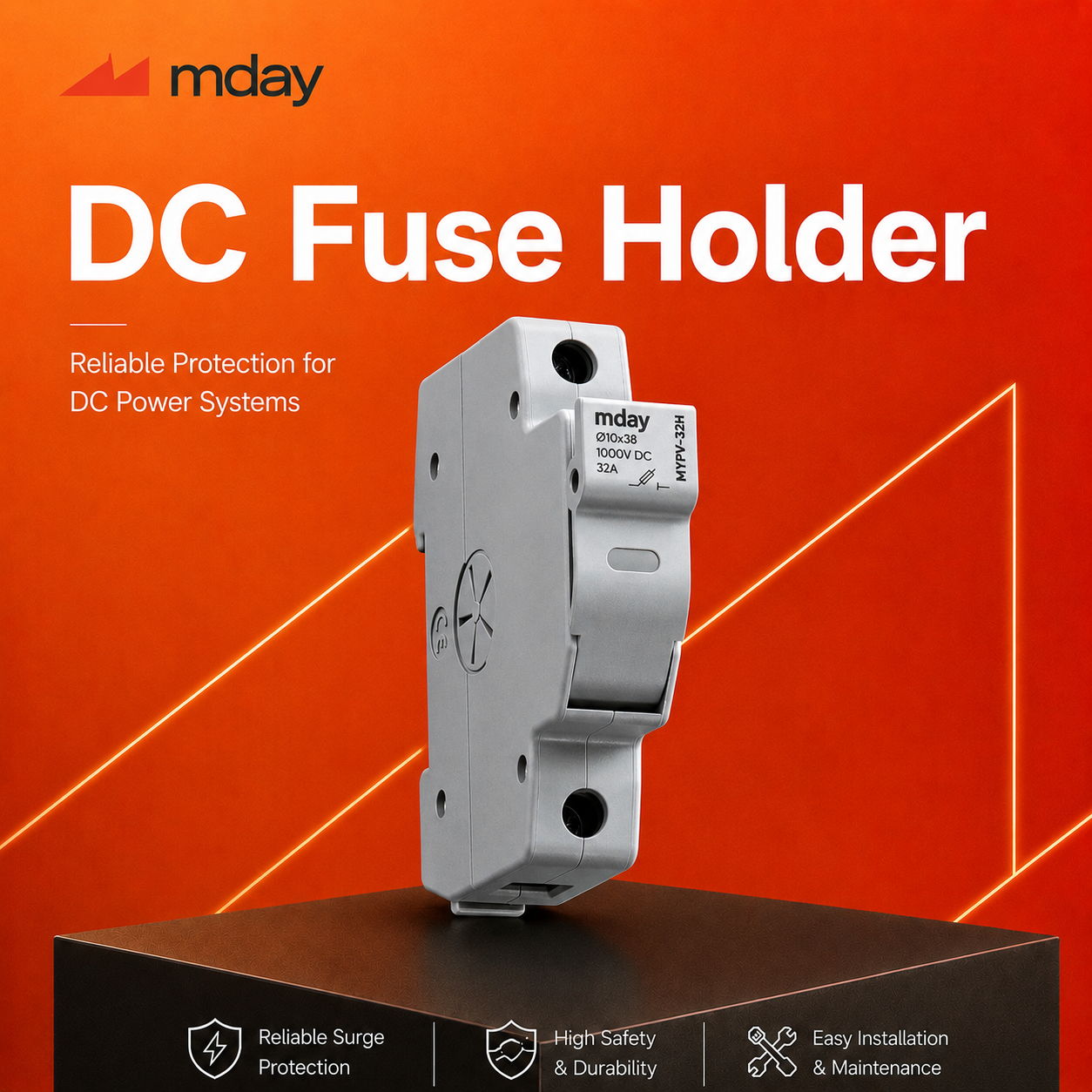
| MYPV-32H | Solar DC Fuse Holder + Link | 1000V DC / 1500V DC | 1A – 32A (10x38mm) | 20.0 kA / 33.0 kA | UL 248-19, IEC 60269-6 |
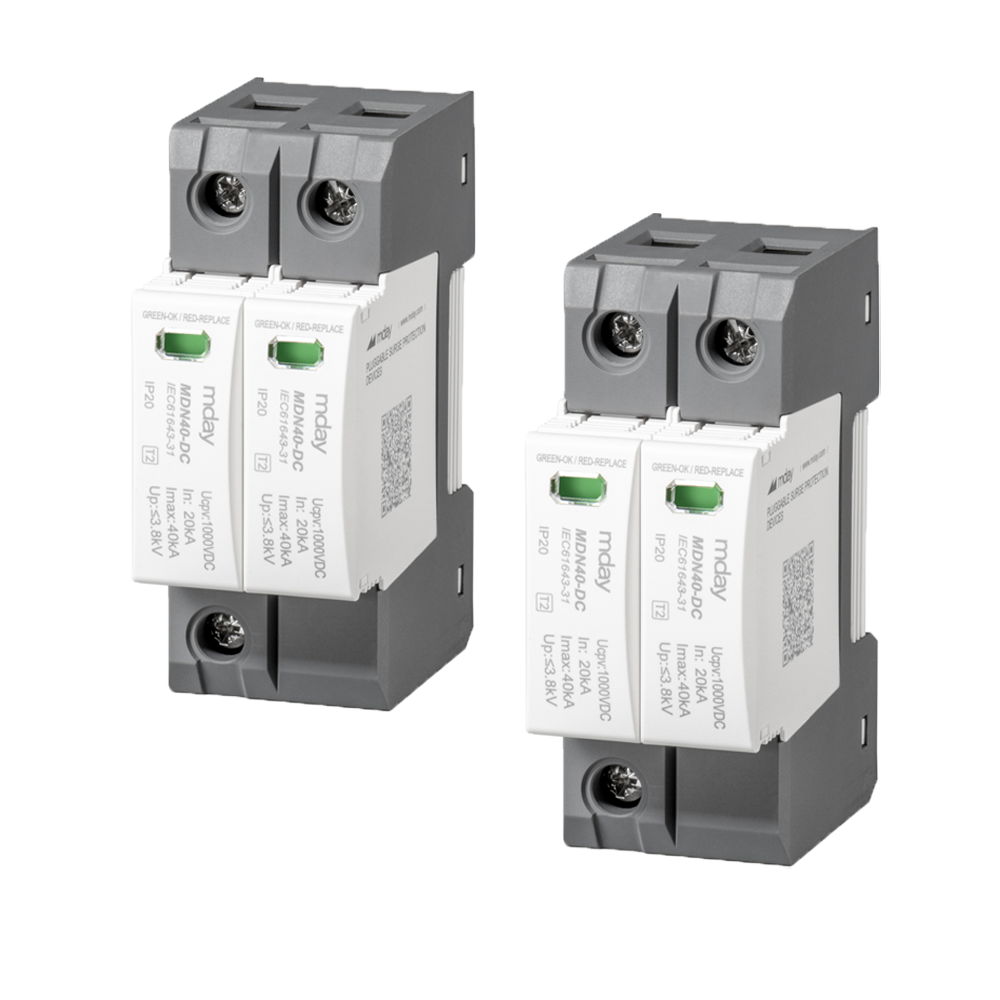
| MLN40-DC | Type 2 PV DC Surge Protector | 600V DC – 1000V DC | $I_n$: 20kA, $I_{max}$: 40kA | Up < 2.8 kV | EN 50539-11, VDE |
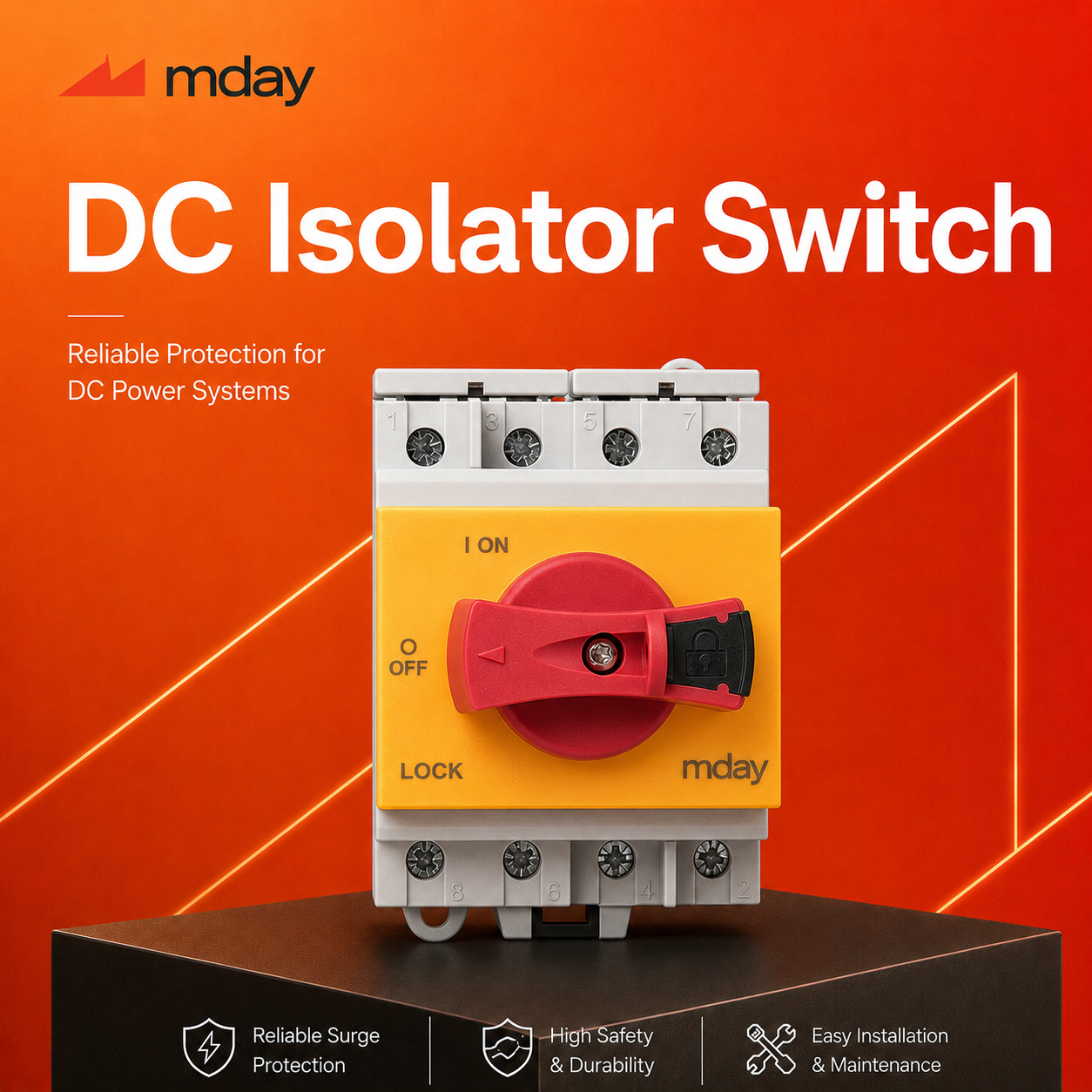
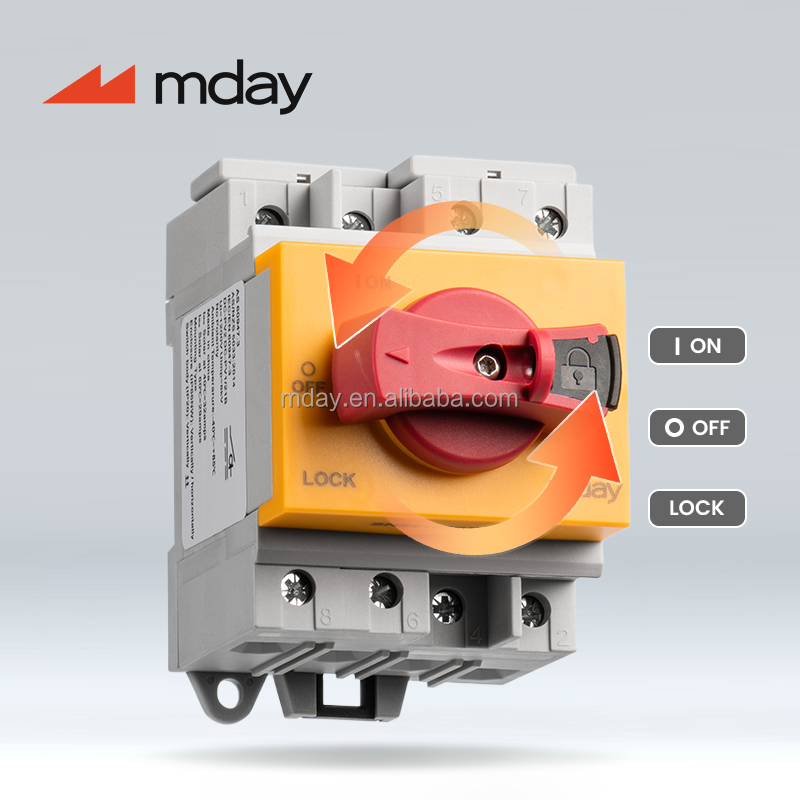
| MYPV32-L2 | IP66 Rotary DC Isolator | 1000V DC – 1200V DC | 16A – 32A (4-Pole) | DC-PV2 Category | IEC/EN 60947-3, CE |
4. Enterprise Strengths: Why Import Directly from Luck (Zhejiang) New Energy?
For Brazilian importers, panel assemblers, and electrical wholesalers in Fortaleza and the broader Northeast region (Nordeste), selecting a Chinese supply partner requires rigorous verification of manufacturing capability, technical quality assurance, export compliance, and supply chain transparency.
4.1 Onsite TÜV Rheinland Verified Manufacturing Facility
Located in the Yueqing Economic Development Zone, Wenzhou, Zhejiang, our factory spans modern production facilities housing 3 high-speed automated assembly lines and specialized plastic injection molding workshops. Our plant has undergone rigorous onsite evaluation by TÜV Rheinland, confirming our status as a authentic primary manufacturer rather than a trading intermediary.
4.2 In-House Quality Assurance Laboratory (9 Advanced Testing Instruments)
Every batch of thermal magnetic circuit breakers leaving our factory undergoes 100% factory acceptance testing (FAT). Our quality control department operates 9 dedicated testing instruments including:
- Automated Bimetallic Thermal Tripping Calibration Benches: Ensuring exact compliance with $1.13 I_n$ non-trip and $1.45 I_n$ trip thresholds.
- High-Current Instantaneous Magnetic Trip Testers: Verifying magnetic solenoid response curves across Type B, C, and D limits.
- Short-Circuit Arc Generation & Breaking Capacity Chambers: Testing breaking resilience up to 20kA DC.
- Salt Mist Corrosion Simulation Chambers: Testing silver contacts, copper terminals, and enclosure screws against accelerated salt spray equivalent to years of exposure along Fortaleza's coast.
- Glow-Wire & Flame-Retardancy Resistance Testing apparatus ($960^\circ\text{C}$): Ensuring plastic enclosures self-extinguish under severe thermal fault conditions.
4.3 B2B Freight Logistics: Ningbo/Shanghai to Pecém & Fortaleza Ports
We provide comprehensive export support tailored to Brazilian import regulations (Siscomex, RADAR license clearance, and NCM tariff classification):
Direct Maritime Shipping Routes
Convenient container dispatch from Ningbo or Shanghai directly to the Porto do Pecém or Porto do Mucuripe (Fortaleza) with typical transit times of 32-38 days.
OEM / ODM Custom Labeling
Laser etching of brand logos, customized tripping curves, custom current ratings ($I_n$), and specialized outer carton box branding for Brazilian regional distributors.
Full Technical Dossier & Certificates
Provision of complete TÜV, VDE, CE test reports, material safety data sheets (MSDS), and CAD dimension files required for local panel certification in Brazil.
5. Frequently Asked Questions (FAQ) for Procurement & Engineering Teams in Fortaleza
Here are clear engineering and commercial answers to common questions raised by electrical panel builders, EPCs, and importers in Ceará:
How do Luck's thermal magnetic circuit breakers perform under Fortaleza’s high ambient humidity and salt mist?
Are your circuit breakers compliant with Brazilian standards (ABNT NBR IEC 60947-2 / NBR NM 60898)?
What trip curves (Curve B, C, D) are recommended for solar PV string vs. motor industrial installations?
What is your Minimum Order Quantity (MOQ) and production lead time for orders shipped to Brazil?
Can you manufacture private label circuit breakers with our company logo and custom amperage ratings?
What payment terms do you support for Brazilian B2B importers?
Why should we choose DC MCCB over DC MCB for solar storage battery isolation?
Request Custom Quotations & Technical Dossiers for Fortaleza Projects
Looking for a direct factory supplier in China for high-performance thermal magnetic circuit breakers, DC fuse holders, or IP65 combiner boxes? Contact our engineering team today to receive complete technical datasheets, factory test reports, and competitive FOB/CIF Pecém pricing.
