High-Reliability DC & PV Protection Components
Engineered for extreme environmental conditions, high voltage withstand (up to 1500V DC), and strict international safety compliance (IEC/EN, UL, TÜV, VDE).



Engineering Excellence from Wenzhou's Low-Voltage Manufacturing Hub
Operating as Luck (Zhejiang) New Energy Co., Ltd., we deliver direct-from-factory reliability, TÜV Rheinland onsite verified production lines, and comprehensive OEM/ODM custom solutions.
In-House Tooling & Plastic Injection
We maintain end-to-end control over component geometry and thermal tolerance. Our automated plastic injection workshop produces high-grade flame-retardant housings (UL94-V0) for DC MCBs, MCCBs, and fuse holders, guaranteeing structural integrity under prolonged thermal stress.
100% Multi-Stage Quality Inspection
Equipped with 9 specialized testing instruments across 3 automated assembly lines, every batch undergoes thermal calibration, dielectric withstand testing, instantaneous magnetic tripping verification, and 100% finished product quality checks before shipment.
Full OEM / ODM Customization Capacity
Backing global brands with over 7 years of pure OEM export experience, we offer private labeling, custom rated currents (1A–250A), specialized voltage calibration (600V, 1000V, 1500V DC), custom enclosure colorways, and tailored pre-wired combiner box designs.
Engineering Fundamentals of DC Circuit Breaker Sourcing & Arc Suppression
In modern renewable energy architectures—specifically utility-scale Photovoltaic (PV) power plants, commercial & industrial rooftop arrays, and Battery Energy Storage Systems (BESS)—direct current (DC) electrical protection presents fundamentally different physical challenges than conventional alternating current (AC) distribution grids. Understanding these engineering nuances is critical for EPC contractors, OEM procurement leads, and electrical panel manufacturers evaluating high-volume DC circuit breaker suppliers.
1. Direct Current Arc Extinction Mechanics in Modern DC Breakers
When contact tips separate inside a DC miniature circuit breaker (MCB) or DC molded case circuit breaker (MCCB) under load or fault conditions, ionization creates an intense plasma bridge with temperatures exceeding 5,000 Kelvin. Top-tier DC circuit breaker factories mitigate this thermal force through three synchronized design mechanisms:
- Permanent Magnet Blowout Fields: High-coercivity Neodymium magnets positioned adjacent to the main breaker contacts exert a powerful Lorentz force ($F = q(E + v \times B)$). This force physically drives the ionized electric arc laterally away from the contact pads directly into the arc-quenching chute.
- Multi-De-Ion Arc Chute Assemblies: Comprising a stack of nickel-plated steel splitter plates, the arc chute splits the single continuous high-voltage arc into dozens of shorter series arcs. This rapid segmenting elevates the combined arc voltage drop ($V_{arc}$) above the system supply voltage ($V_{sys}$), forcing the fault current to zero ($I \to 0$).
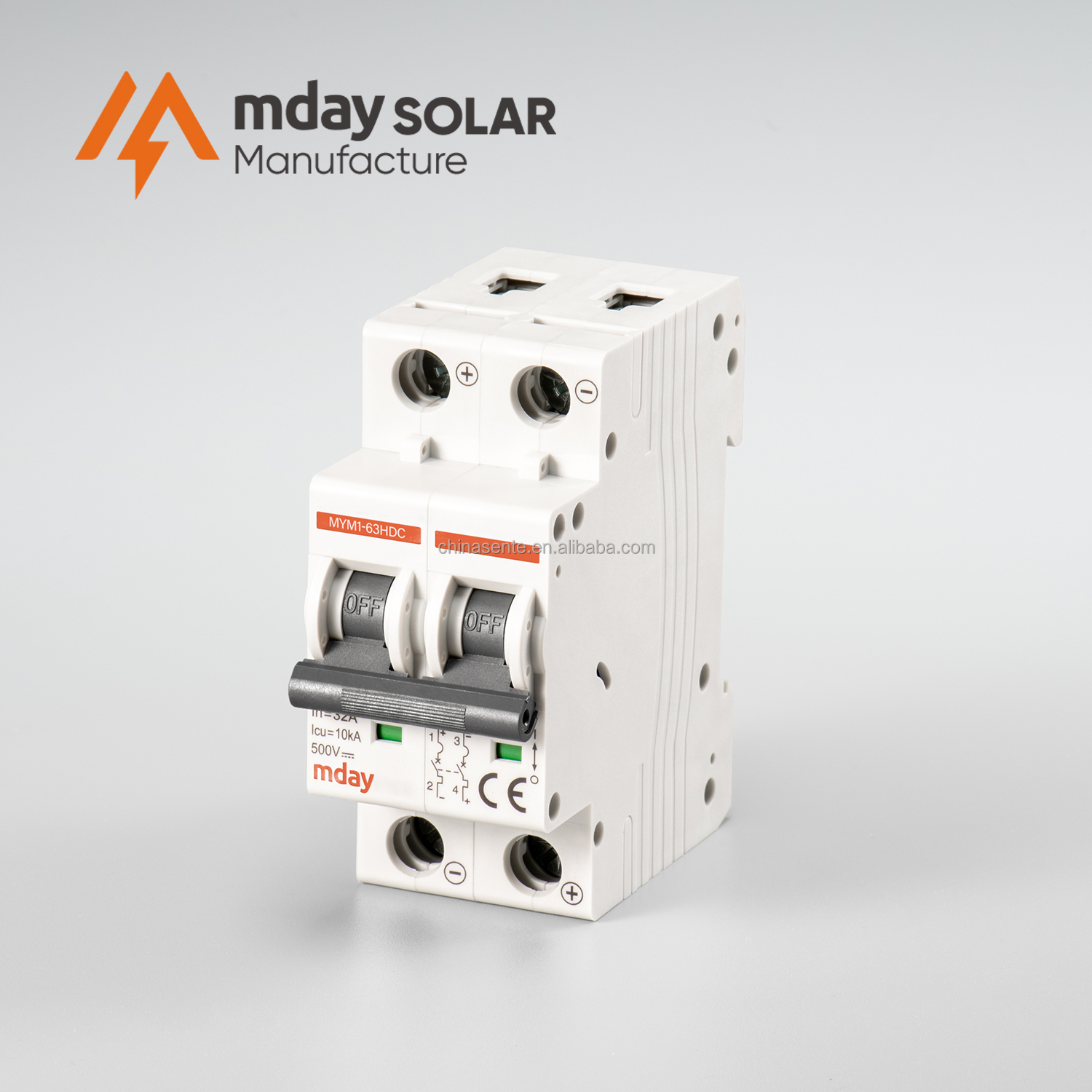
- Polarity Sensitivity vs. Non-Polarized Arc Runners: Traditional DC MCBs feature strict directional polarity (+ and - marking) due to unidirectionally oriented internal blowout magnets. However, next-generation PV installations with hybrid battery charging and bi-directional power flows demand non-polarized DC circuit breakers. Leading exporters incorporate dual-direction magnet arrangements or specialized mechanical arc splitters to ensure safe interruption regardless of current flow direction.
2. Selecting Sizing Parameters: Icu, Ics, and Voltage Scaling (1000V vs. 1500V DC)
The transition from 1000V DC to 1500V DC string architectures in utility-scale solar projects allows longer string lengths and reduces copper wiring losses. However, it severely increases the short-circuit current density available at the combiner box level. Procurement professionals must scrutinize breaking capacity ratings according to IEC 60947-2 standards:
| Breaker Parameter | Standard Definition | Engineering Sourcing Recommendation |
|---|---|---|
| Rated Voltage ($U_e$) | Maximum continuous operational DC voltage across contacts. | Match or exceed open-circuit voltage ($V_{oc}$) adjusted for minimum ambient site temperature ($V_{oc} \times 1.25$). |
| Ultimate Breaking ($I_{cu}$) | Maximum short-circuit current the breaker can interrupt once safely. | Must exceed maximum prospective array short-circuit current ($I_{sc\_array}$) at the junction point. |
| Service Breaking ($I_{cs}$) | Fault current level the breaker can interrupt repeatedly without degradation. | Opt for tier-1 manufacturers offering $I_{cs} = 100\% \, I_{cu}$ or $I_{cs} = 75\% \, I_{cu}$ to avoid post-fault replacements. |
| Trip Characteristics | Instantaneous response curves (Curve B, C, D for MCBs). | Utilize Curve C (5–10 $I_n$) for general string protection; Curve D for inductive motor loads or inverter inrush conditions. |
3. Complementary Protection: Fuses, SPDs, and MOV Integration
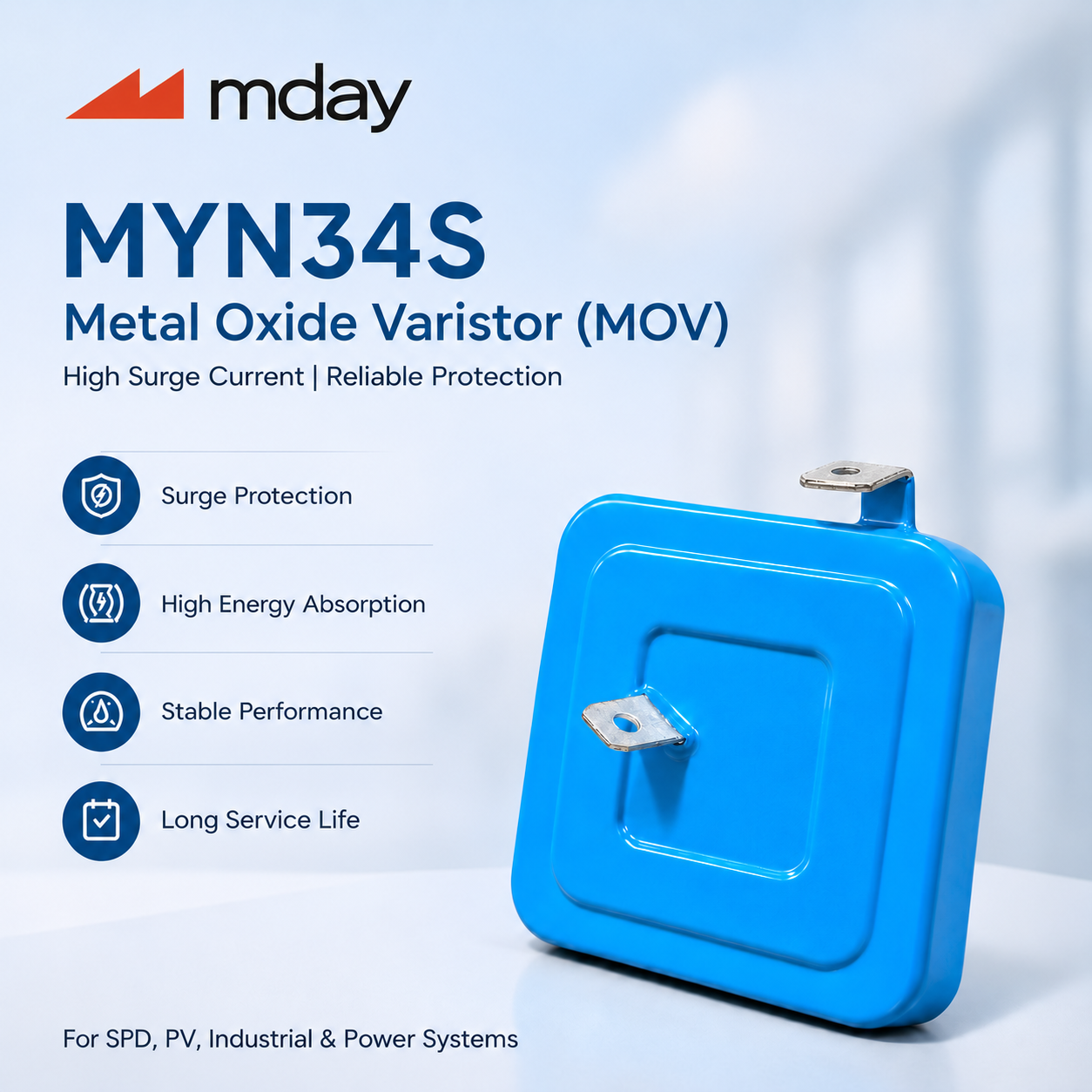
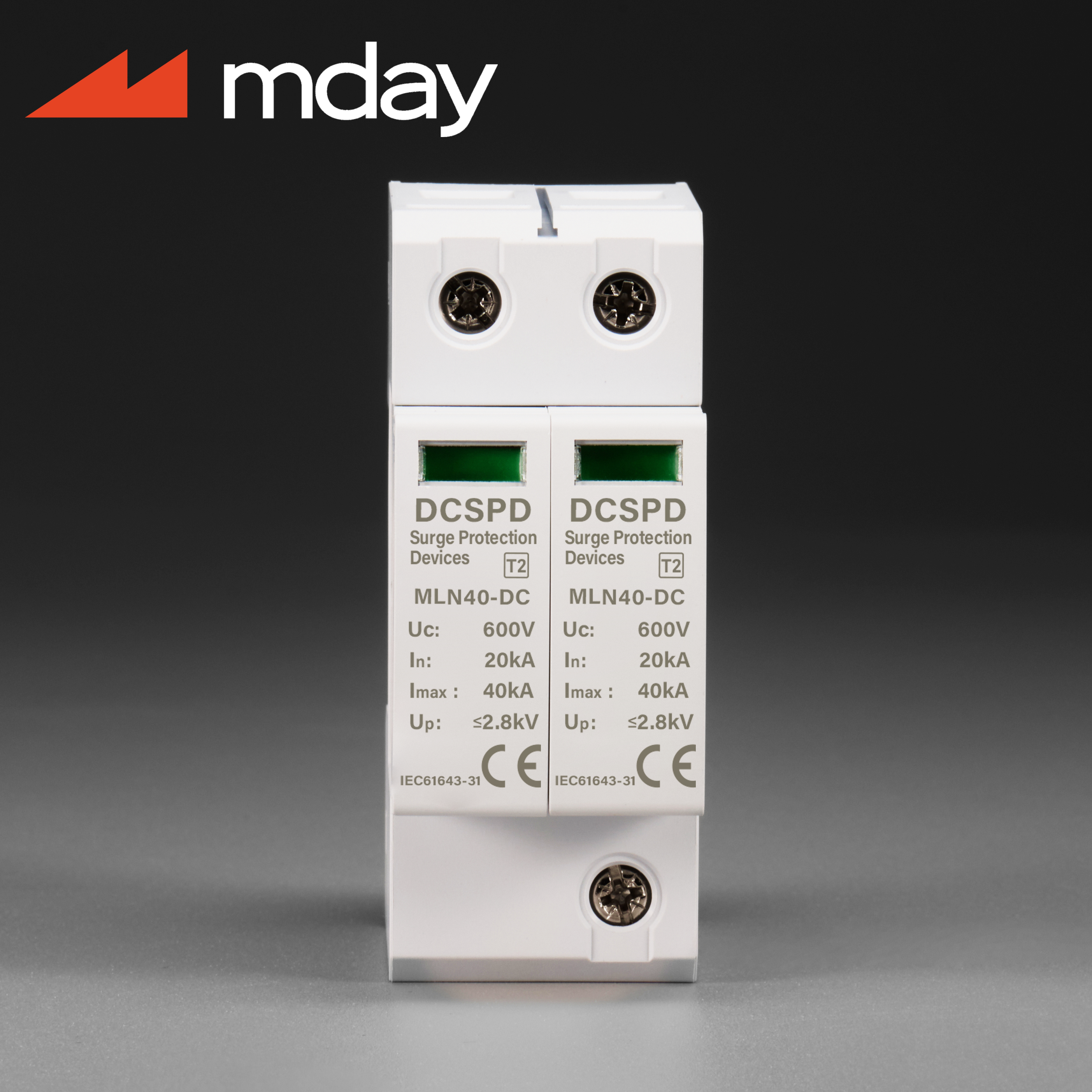
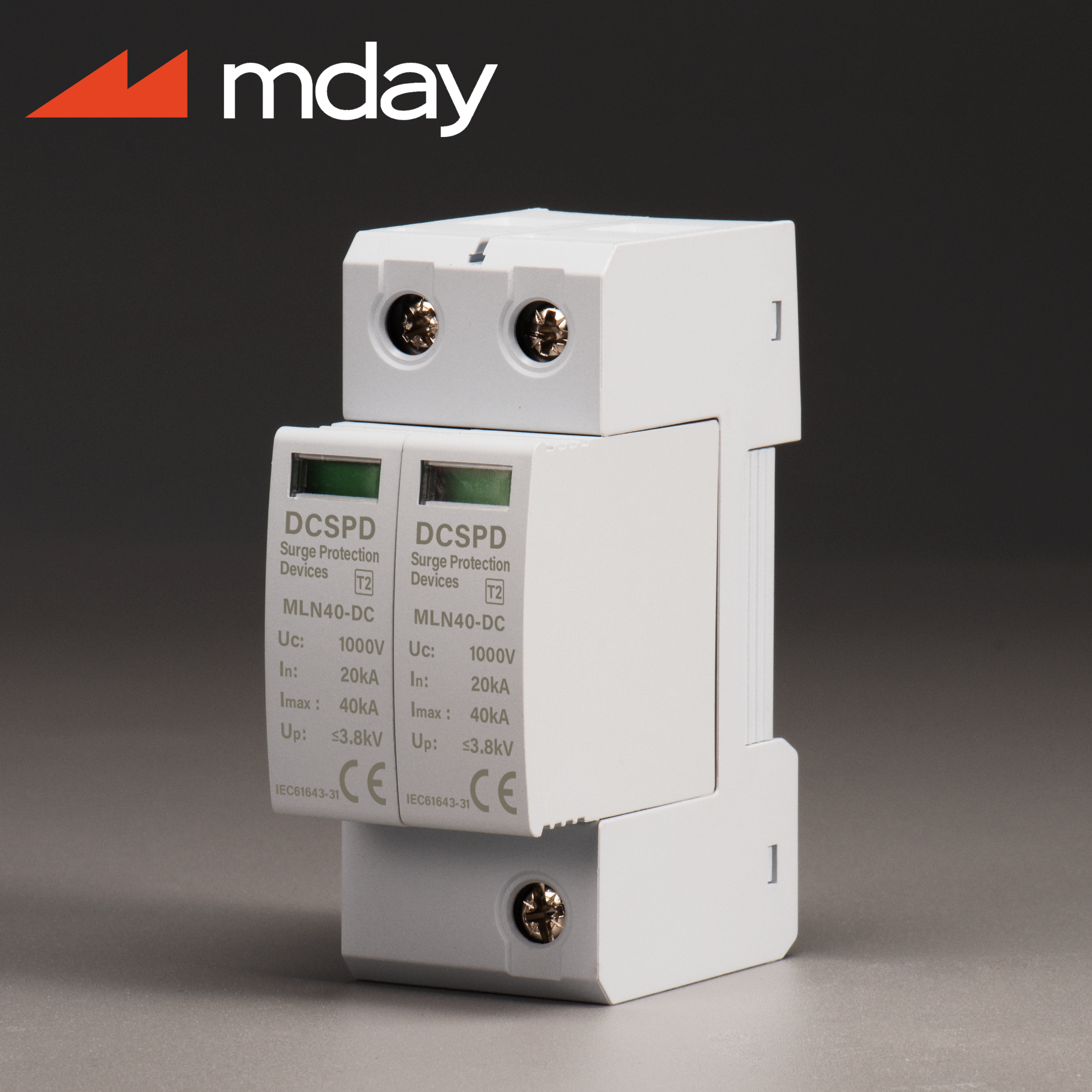
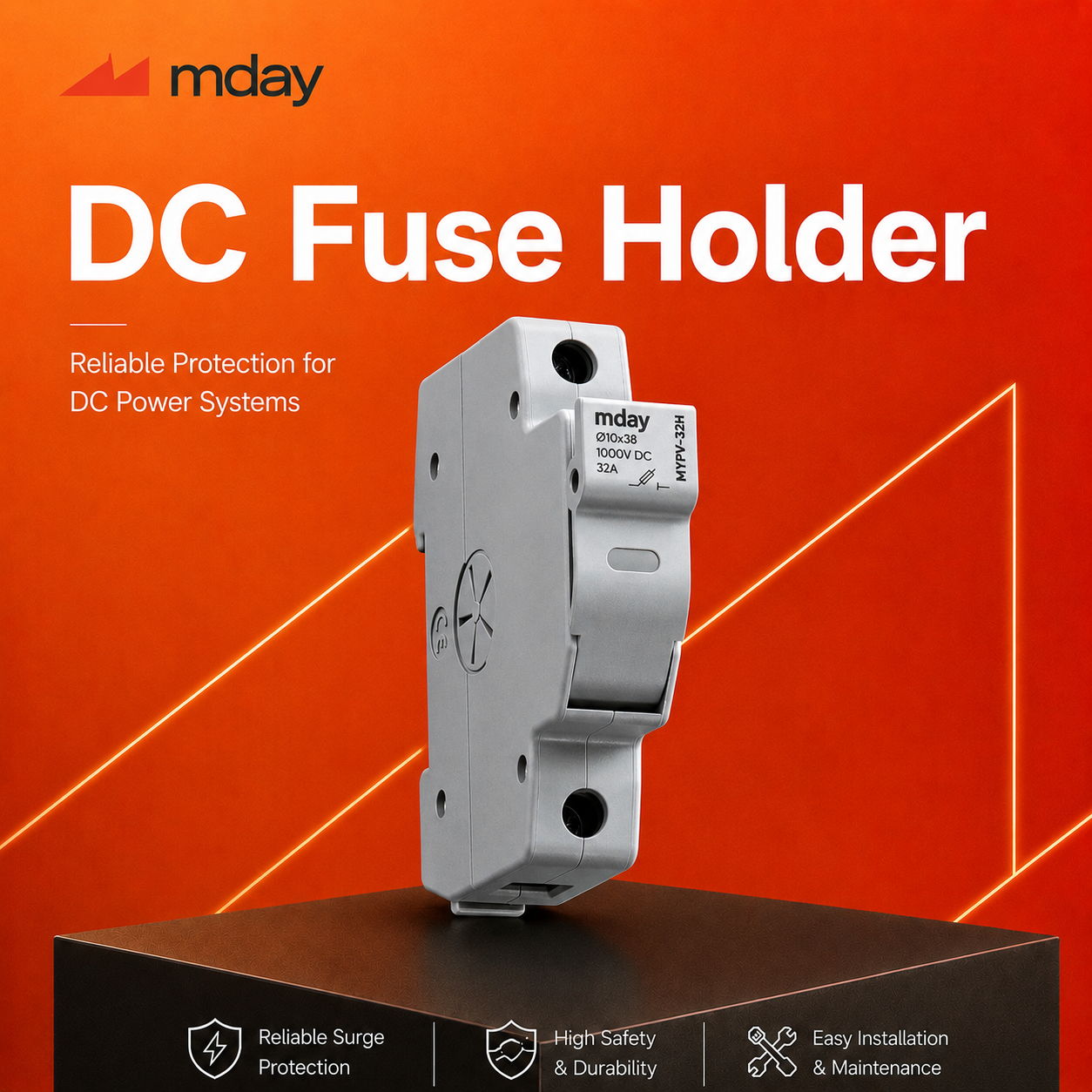
A comprehensive PV system safety matrix relies on multi-tiered protection. While DC circuit breakers provide resettable isolation for overloads and low-impedance short circuits, fast-acting gPV solar fuses (such as 10x38mm 1000V/1500V DC fuse links) offer sub-millisecond clearing times for localized string faults. Simultaneously, Type 2 Solar PV DC Surge Protective Devices (SPDs) containing high-joule 34mm Square Metal Oxide Varistors (MOVs) divert atmospheric lightning transients to ground, preventing catastrophic dielectric breakdown inside the inverter.
Future Procurement Trends in Global DC Protection Markets
How evolving grid codes, battery energy storage growth, and smart solar technologies are shaping buyer requirements over the next decade.
1. Dominance of 1500V DC and High-Ampere BESS Architectures
As utility solar and grid-scale Battery Energy Storage Systems (BESS) standardize on 1500V DC topologies, procurement teams are rapidly phasing out legacy 600V and 800V components. The surge in energy density requires higher frame size DC MCCBs (up to 250A–630A frame) capable of handling short-circuit currents up to 33kA without contact welding.
2. Shift Toward Smart IoT-Enabled Breakers & Remote Control
Modern commercial solar installations mandate real-time telemetry. Future procurement orders heavily prioritize intelligent DC MCBs featuring built-in RS485 Modbus or Wi-Fi communication protocols. These units enable automated trip logging, remote actuation via plant SCADA systems, and predictive maintenance metrics based on internal contact wear tracking.
3. Modular Pre-Wired Integration & Rapid Shutdown Rules
With field labor costs escalating in Europe, North America, and Australia, EPCs are shifting away from buying loose protection components. Sourcing is moving toward factory-tested, IP65 waterproof pre-wired combiner boxes and fast rapid-shutdown junction boxes that minimize manual field wiring errors and slash installation timelines by over 40%.
Emerging Technology Development Trends in Direct Current Breaker Design
Innovations driven by solid-state electronics, artificial intelligence arc detection, and stringent fire safety standards.
Solid-State & Hybrid DC Breakers
Traditional electromechanical contacts experience physical arc wear upon every break cycle. R&D labs are accelerating hybrid topologies combining power semiconductors (IGBTs or Silicon Carbide MOSFETs) with mechanical isolators. Semiconductor switches interrupt microsecond fault currents arc-free, while mechanical contacts maintain low conduction loss during continuous operation.
Embedded Arc Fault Circuit Interruption (AFCI)
DC arc faults remain a leading cause of solar array fires. Future DC circuit breakers integrate high-speed digital signal processors (DSP) running AI pattern-recognition algorithms. By analyzing high-frequency current noise spectrums, these smart breakers detect serial and parallel arcing in real time and trip long before thermal fires ignite.
Thermally-Stable Environmentally Material Sourcing
Export compliance to European markets requires strict adherence to REACH, RoHS, and halogen-free material standards. Leading Chinese factories are upgrading resin formulations to bio-based engineering polymers that exhibit zero toxic gas emission during thermal overload events while offering UL94-V0 self-extinguishing ratings.
DC Circuit Breaker Sourcing & Technical Procurement FAQ
Addressing key engineering considerations, compliance standards, and order logistics for overseas buyers.
What key technical parameters must be verified when importing DC circuit breakers?
Buyers must verify five core parameters against project single-line diagrams (SLD):
- Rated Operational Voltage ($U_e$): Must match the system DC string voltage (e.g., 500V, 800V, 1000V, or 1500V DC).
- Rated Current ($I_n$): Sized between $1.25 \times I_{sc}$ and the cable thermal current rating.
- Ultimate Short-Circuit Breaking Capacity ($I_{cu}$): Typically 6kA to 10kA for MCBs, and 20kA to 50kA for MCCBs.
- Number of Poles in Series: Multi-pole configuration distributes voltage stress across contacts (e.g., 4 poles in series for 1000V/1200V DC).
- International Certification Marks: Ensure valid CE, IEC 60947-2, TÜV, or VDE test reports from accredited laboratories.
Why can't standard AC circuit breakers be used in DC solar installations?
AC breakers rely on the natural zero-crossing point of alternating current to extinguish electrical arcs. In a direct current circuit, there is no zero-crossing. Standard AC breakers will fail to interrupt high-voltage DC arcs, causing catastrophic internal melting, contact welding, fire hazard, and severe electrical damage to the solar array and inverter system.
What is the difference between polar and non-polar DC circuit breakers?
Polar DC Breakers: Have designated (+) and (-) terminal connections. The internal magnetic arc-blowout system is engineered to function in one specific direction. Wiring a polar breaker backwards neutralizes the arc chute, risking failure during a trip.
Non-Polar DC Breakers: Feature symmetrical arc runners and bi-directional blowout magnets, allowing safe wiring regardless of current orientation. They are essential for battery storage systems where power flows in both charge and discharge directions.
What OEM / ODM customization options does Luck New Energy provide?
We offer turnkey OEM/ODM services including laser printing of customer logos, customized rated currents (custom trip calibration), private-label packaging boxes, housing color modifications, customized terminal screws, and fully assembled IP65 PV combiner boxes tailored to specific installer bill-of-materials (BOM).
What are the minimum order quantities (MOQ) and production lead times?
MOQ ranges from 5 to 200 pieces depending on the product frame size (e.g., lower MOQ for heavy-duty MCCBs or custom combiner boxes, standard MOQ for DIN rail MCBs). Standard catalog models ship within 2 to 7 days, while custom OEM branding orders typically ship in 14 to 21 days following sample sign-off.
How does Luck New Energy ensure quality control across batch shipments?
Quality is maintained via rigorous incoming raw material screening (flame retardant plastics, electrolytic copper content checks), automated assembly line stations, 9 in-house laboratory testing instruments, and 100% finished product testing for tripping function, dielectric resistance, and contact clearance prior to final packing.
Request Full Factory Catalog & Technical Specifications
Partner directly with a TÜV-verified manufacturer for certified DC Circuit Breakers, Surge Protection Devices, Solar Fuses, and IP65 Combiner Boxes.
