Recommended Surge Protection & Low-Voltage Portfolio
Direct-from-Factory Overvoltage Protection & Direct-Current Disconnect Systems

Mday DIN Rail ATS PC Class Dual Power Automatic Transfer Switch 2P 63A 100A 125A AC220V 400V
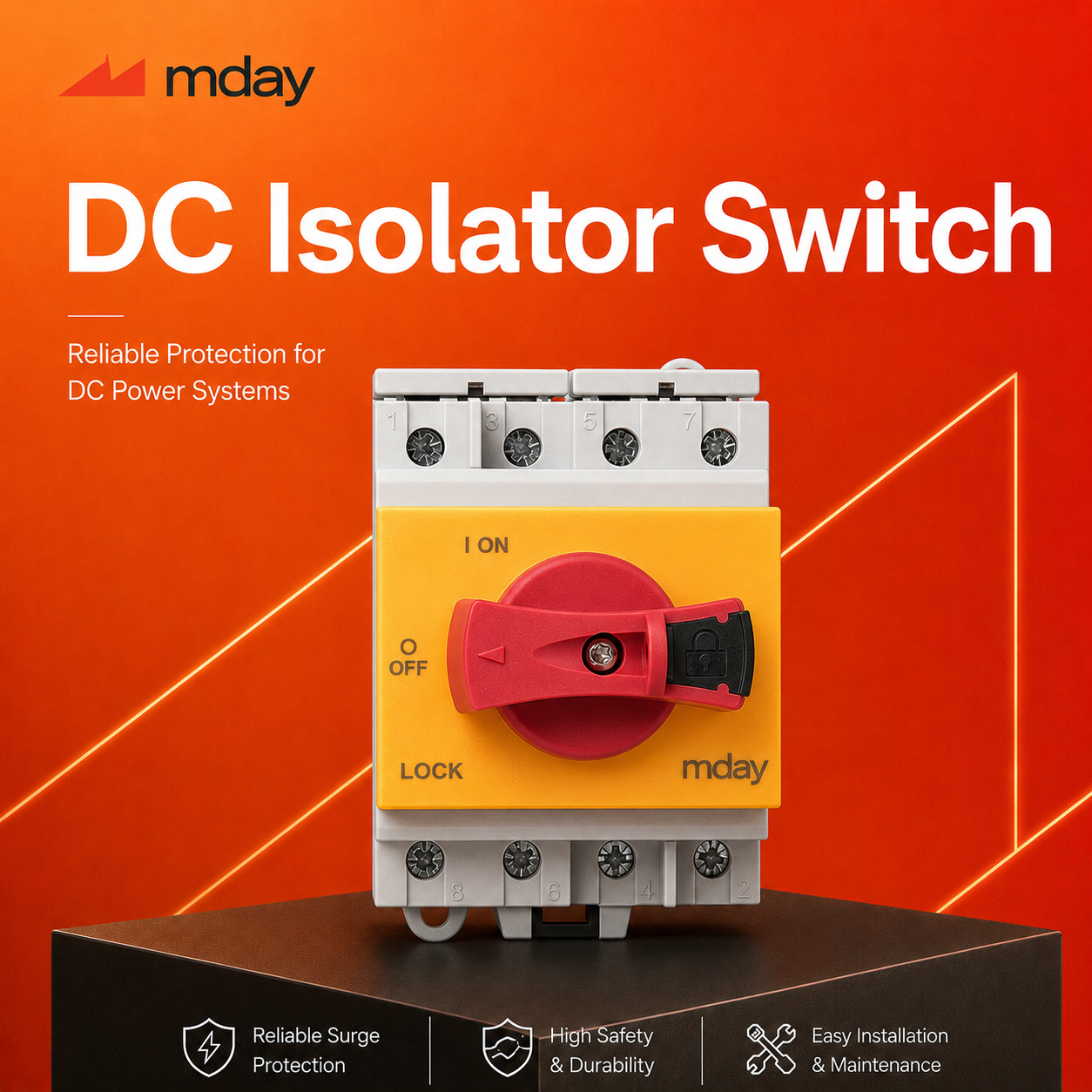
Mday Copper 4-Pole 16A 1200V DC Isolator Switch IP66 Waterproof Red Handle Disconnect Switch

High Capacity Mday 1000V 32A Fast Blow Fuse Holder New Popular 10x38 Fuse Carrier
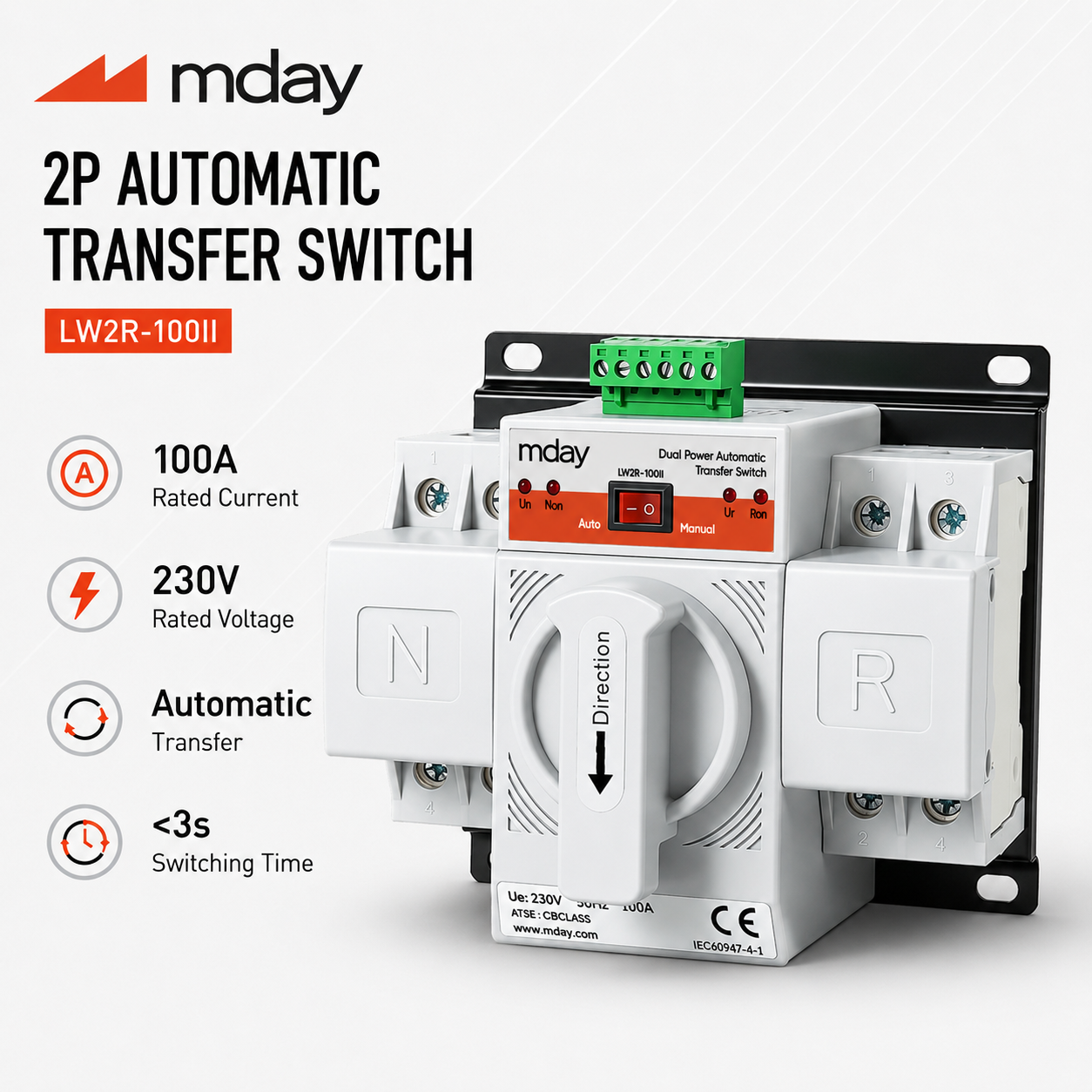
Mday AC Din Rail ATS Silver Contact 2P 3P 4P 63A-125A Dual Power Changeover Switch
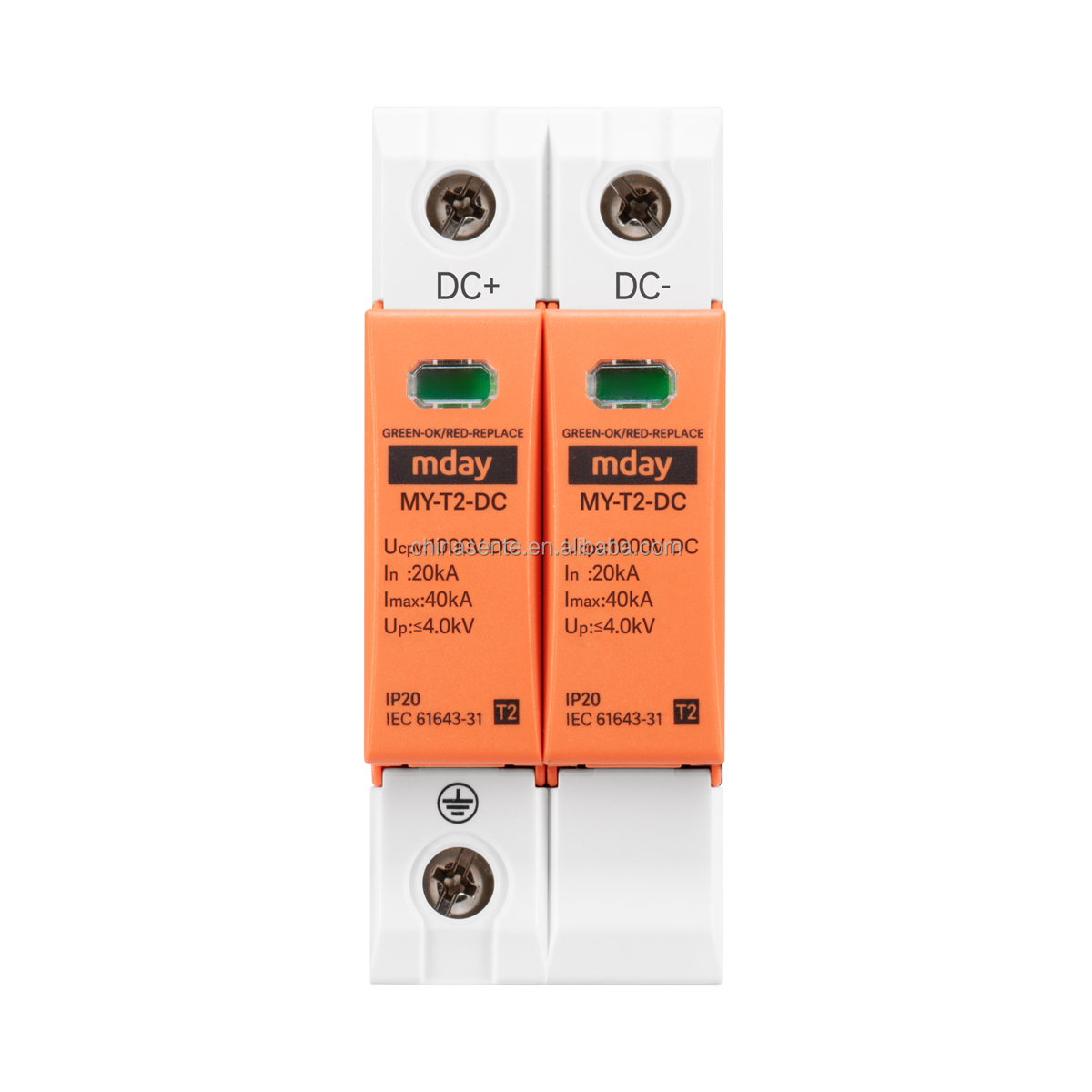
Mday Solar Type 2 DC SPD 40kA 1000V 2P Lightning Protection Solar System PV Voltage Suppressor
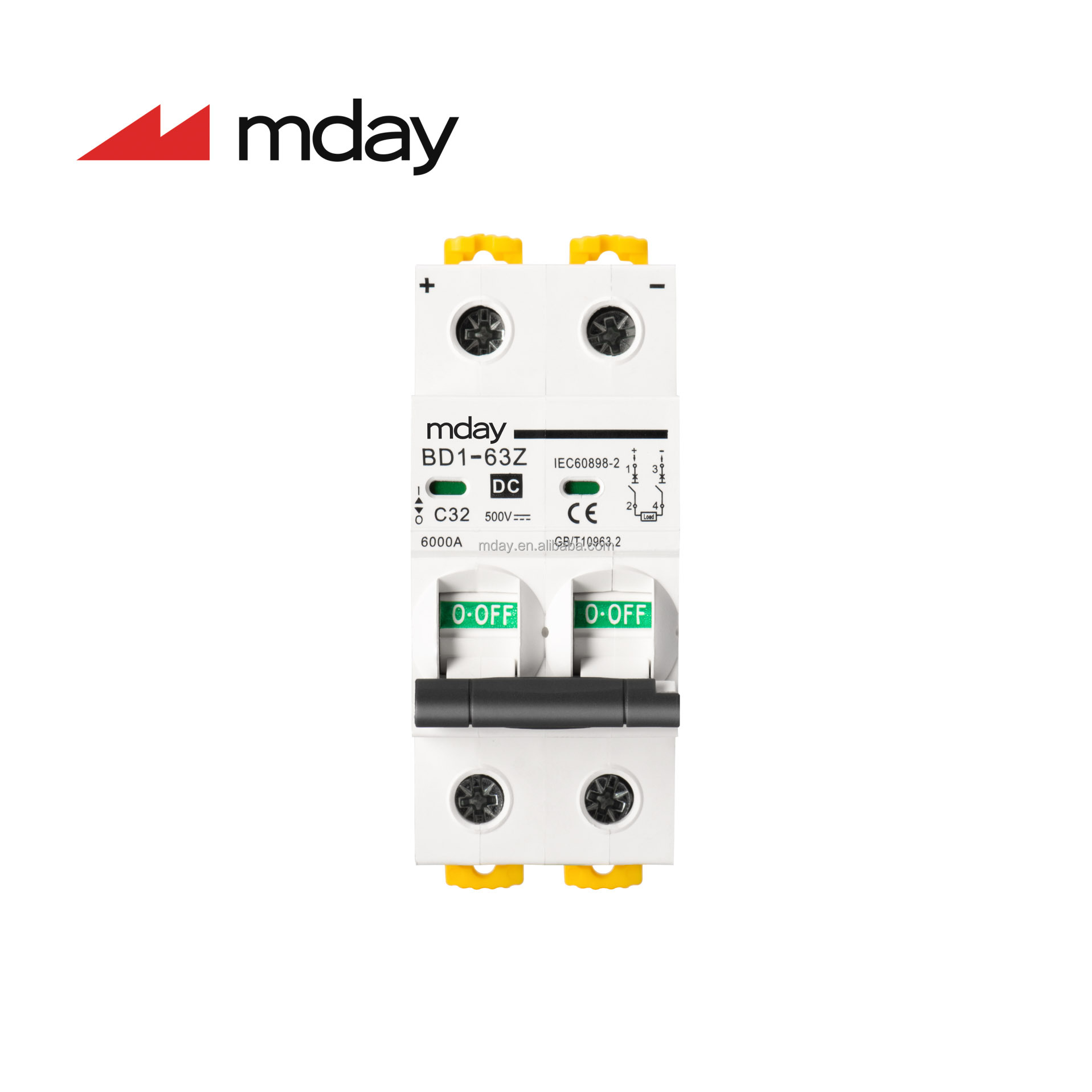
MDAY DC Breaker MQC-63DC 250V-1000V 2P Moulded Case Circuit Breaker 6kA Din Rail Mount
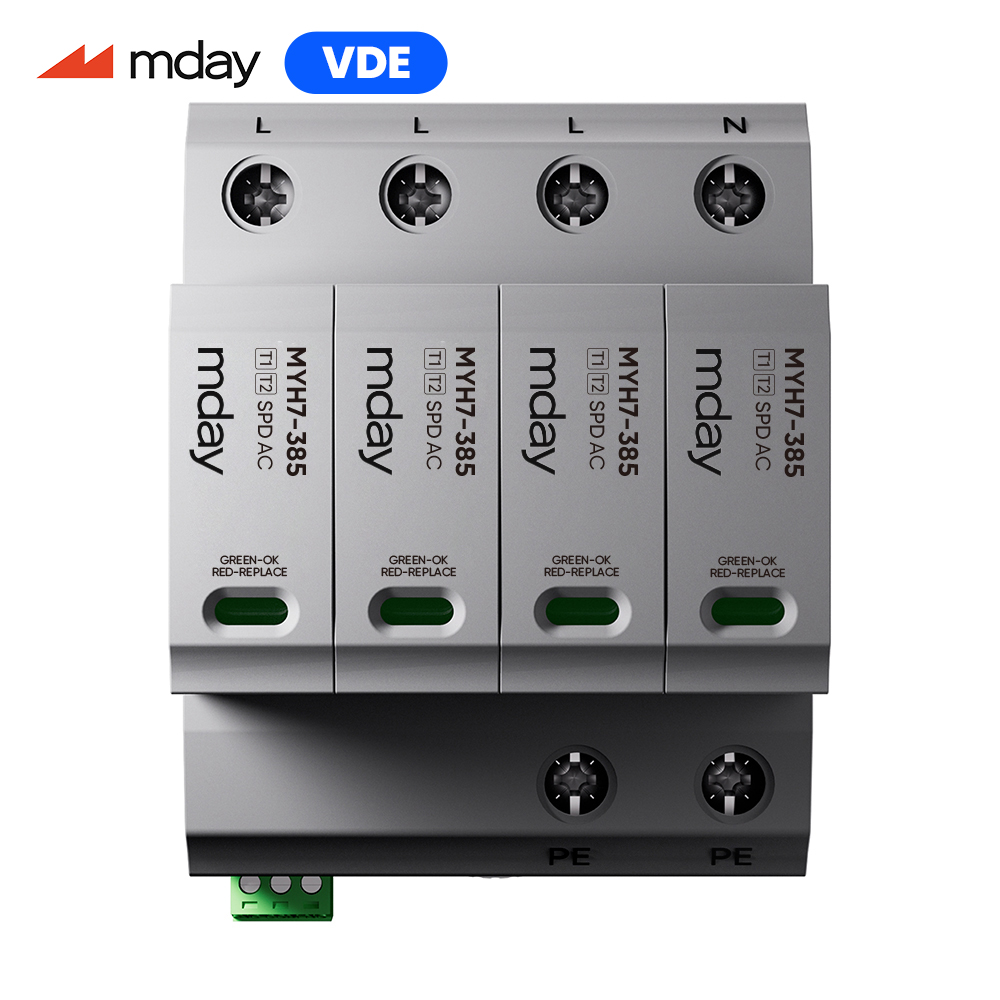
Mday T1+T2 MYH7 4P 385V VDE-Certified AC SPD Surge Protectors for Lightning Protection
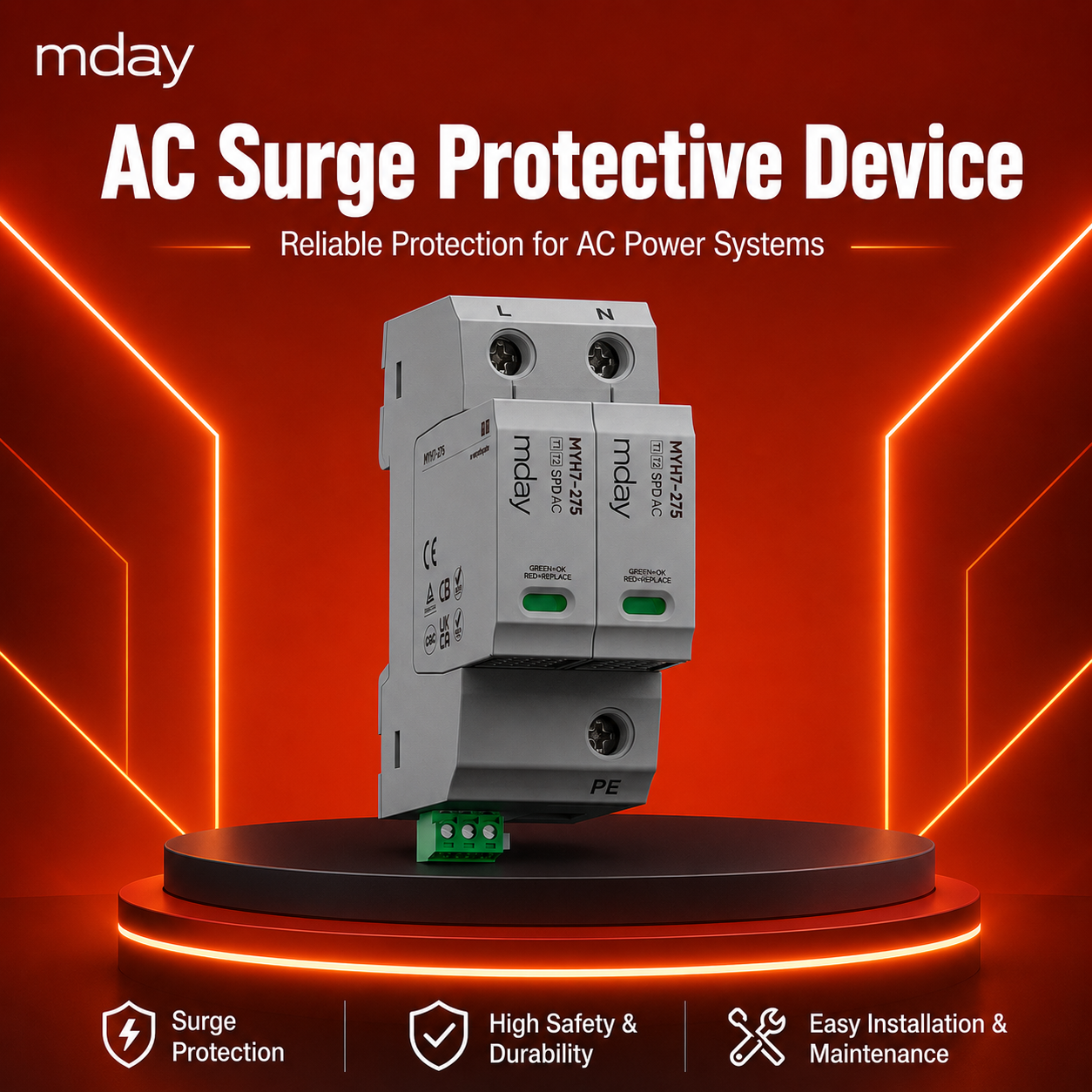
Mday T2 MYN40 VDE-Certified 20/40kA AC SPD Surge Protector Device for Solar & Industrial Use
Metal Oxide Varistor (MOV) Manufacturing in China: A B2B Engineering & Procurement Guide
Metal Oxide Varistors (MOVs) form the primary line of defense against electrical overvoltage transients across global electrical infrastructure, industrial automation, and renewable energy sectors. As semiconductor power density increases and solar photovoltaic (PV) array voltages scale to 1000V DC and 1500V DC thresholds, selecting high-integrity MOV components and Surge Protective Devices (SPDs) becomes a critical engineering mandate rather than a simple commodity sourcing decision.
China accounts for over 65% of the world's metal oxide ceramic disk production. However, quality variance between manufacturers remains vast. Evaluating top Chinese metal oxide varistor factories requires a rigorous understanding of ceramic microstructure synthesis, doping formulations, grain boundary breakdown physics, and long-term thermal stabilization.
1. Material Science & Microstructure Mechanics of High-Performance MOVs
At its core, a Metal Oxide Varistor is a polycrystalline ceramic voltage-dependent resistor consisting predominantly of Zinc Oxide (ZnO) grains combined with precise stoichiometric ratios of metallic oxide additives. These additives—typically including Bismuth Oxide (Bi₂O₃), Antimony Oxide (Sb₂O₃), Cobalt Oxide (Co₂O₃), Manganese Oxide (MnO₂), and Chromium Oxide (Cr₂O₃)—migrate to the boundaries between ZnO grains during the liquid-phase high-temperature sintering process (typically 1200°C to 1350°C).
The non-linear current-voltage ($I-V$) relationship that defines an MOV is governed by the double Schottky potential barriers formed at these microscopic grain boundaries. Under normal operating voltages ($U_c$), the potential barriers present extremely high resistance, yielding leakage currents ($I_l$) well below $20\mu\text{A}$. When an overvoltage transient occurs, the electrical field across the nano-meter-thin grain boundaries exceeds the critical threshold, triggering avalanche breakdown. The barrier resistance drops within nanoseconds, diverting massive transient surge currents ($8/20\mu\text{s}$ or $10/350\mu\text{s}$ waveforms) safely away from sensitive downstream power electronics.
Non-Linear Exponent ($\alpha$)
Tier-1 Chinese factories achieve $\alpha$ values between 30 and 50, providing razor-sharp clamping voltage curves under severe lightning impulses.
Thermal Runaway Protection
Advanced MOVs incorporate low-melting-point internal solder bridges or mechanical thermal disconnector mechanisms to safely isolate degraded blocks.
34mm Square Form Factor
High-energy square MOV blocks (such as MYN34S) maximize cross-sectional current distribution, preventing localized hot-spots under 40kA surges.
2. Key Sourcing & Engineering Criteria for Evaluating MOV Manufacturers
When conducting supplier audits in major industrial clusters such as Yueqing, Wenzhou, and Jiangsu, procurement engineers must evaluate factories against standardized metallurgical and electrical performance metrics. Relying solely on low piece-part cost frequently results in high warranty returns, field degradation, or catastrophic thermal runaway events in inverter assemblies.
| Evaluation Parameter | Generic Commodity Suppliers | Tier-1 Specialized OEM (e.g., Luck New Energy) | Engineering Impact on Application |
|---|---|---|---|
| ZnO Grain Uniformity | Variable grain size ($10 - 50\mu\text{m}$) | Tight mono-disperse sizing ($15 - 20\mu\text{m}$) | Prevents localized current crowding; extends impulse lifetime. |
| Electrode Metallization | Low-cost screened copper paste | High-purity silver/aluminum alloy flame spray | Ensures ultra-low contact resistance under $40\text{kA}$ $8/20\mu\text{s}$ surges. |
| Thermal Disconnector Fuse | Standard high-temp solder wire | Patented low-temperature melt alloys ($130^\circ\text{C}-145^\circ\text{C}$) | Prevents fire hazards during temporary overvoltage (TOV) breakdown. |
| Impulse Withstand Testing | Batch sampling (1 in 5,000 pcs) | 100% $V_{1mA}$ testing + $8/20\mu\text{s}$ batch stress check | Guarantees zero early-life failure rate in commercial solar installations. |
| International Approvals | Self-declared CE mark only | VDE, TÜV Rheinland, UL 248-19, IEC 60269-6 | Facilitates seamless export certification for OEM system builders. |
3. Technological Trends & Future Procurement Outlook (2025–2030)
The global surge protection ecosystem is experiencing a structural shift driven by four primary macroeconomic and technological trends:
A. Escalation to 1500V DC Architecture in Photovoltaic & BESS Systems: As utility-scale PV plants transition from 1000V DC to 1500V DC topologies to minimize $I^2R$ copper transmission losses, surge protection components must handle significantly higher continuous operating voltages ($U_{cpv}$). This requires MOV blocks with higher breakdown voltage density ($V_{1mA} > 1.2\text{kV}$) and multi-module DIN-rail configurations that can suppress high DC arc currents during fault isolation.
B. Adoption of Integrated Thermally Protected Varistors (TMOV / TPMOV): Traditional standalone MOV disks require external backup fuses to prevent fire if the varistor degrades into a low-impedance state. Next-generation procurement heavily favors TMOV architectures where a spring-loaded, micro-arc-extinguishing mechanical thermal switch is integrated directly into the MOV housing. Upon thermal overload, the spring disconnects the circuit in milliseconds.
C. Automated Hybrid Surge Protection Circuits (MOV + GDT): To eliminate residual leakage current and prevent premature MOV aging caused by small grid fluctuations, advanced AC SPDs utilize a series combination of Metal Oxide Varistors and Gas Discharge Tubes (GDT). The GDT acts as an open circuit during normal grid conditions, ensuring zero continuous leakage current ($I_{pe} = 0$), while the MOV clamps high-energy impulse transients when the GDT ignites.
D. Smart Grid & Remote Monitoring Integration: System operators demand real-time visibility into surge protective device health. Modern MOV modules incorporate auxiliary dry-contact micro-switches (FM remote status signaling) that interface with IoT gateways, alerting maintenance teams before an MOV reaches end-of-life.
Factory Advantage: Luck (Zhejiang) New Energy Co., Ltd.
Located in the Yueqing Economic Development Zone in Wenzhou—China's premier manufacturing center for low-voltage electrical apparatus—Luck (Zhejiang) New Energy Co., Ltd. operates as an integrated manufacturer specializing in custom solar PV circuit protection and power distribution components.
TÜV Rheinland Verified Facility
Onsite-audited manufacturing operations with full ISO9001 quality management workflows, ensuring complete traceability from raw ZnO powder to packaged goods.
In-House Moulding & Assembly
3 specialized production lines equipped with automated plastic injection moulding for UL94-V0 flame-retardant housings, reducing lead times to 2–7 days.
VDE & UL Compliance
Our VDE-certified AC/DC SPD range, UL 248-19 fuse carriers, and IEC 60947-2 DC circuit breakers comply with stringent international standards.
Equipped with 9 in-house testing instruments—including dynamic impulse surge generators, environmental thermal chambers, and high-precision micro-ohmmeters—our engineering team conducts 100% finished-product screening to ensure zero-defect shipments for global OEMs and EPC contractors.
frequently Asked Procurement & Engineering Questions (FAQ)
Comprehensive engineering clarity for procurement officers, system integrators, and electrical importers.
What is the primary difference between Type 1, Type 2, and Type 1+2 MOV-based SPDs?
Type 1 SPDs are tested with the heavy $10/350\mu\text{s}$ waveform designed to simulate direct lightning strikes; they are installed at main service entrance panels. Type 2 SPDs are tested with the $8/20\mu\text{s}$ waveform representing indirect lightning surges and switching transients; they are deployed at sub-distribution boards and inverter inputs. Type 1+2 combined SPDs (such as the Mday MYH7 series) integrate heavy-duty MOV blocks and GDTs capable of handling both $10/350\mu\text{s}$ impulse energy ($I_{imp}$) and $8/20\mu\text{s}$ maximum discharge currents ($I_{max}$ up to $40\text{kA}$) within a single DIN-rail footprint.
How do engineers prevent thermal runaway in Metal Oxide Varistors?
Thermal runaway occurs when continuous overvoltage or repeated current surges cause the MOV's leakage current to increase, generating internal heat faster than the ceramic disc can dissipate it. To prevent fire hazards, manufacturers integrate low-temperature solder links or mechanical thermal disconnectors inside the MOV assembly. When temperature exceeds safe thresholds ($130^\circ\text{C}-145^\circ\text{C}$), a spring mechanism physically separates the electrical connection, moving the visual indicator window from green to red and activating the FM remote signal contact.
Why is 34mm square MOV preferable to round disc MOVs in industrial SPDs?
Square MOVs (like the 34mm MYN34S series) provide approximately 25% greater surface area than equivalent-diameter round disks. This increased volume allows for higher energy absorption ($J/cm^3$) and more uniform current distribution across the ceramic block during severe impulse events ($8/20\mu\text{s}$ $40\text{kA}$). Furthermore, square block geometry simplifies mechanical clamping to heavy copper busbars, lowering contact resistance and thermal stress.
What certifications are mandatory when importing MOVs and SPDs into European and North American markets?
For European markets, compliance with EN 61643-11 (for AC surge protection) and EN 50539-11 / EN 61643-31 (for Photovoltaic DC protection) is mandatory, with VDE or TÜV Rheinland marks representing the gold standard of E-E-A-T trust. For North American markets, components must meet UL 1449 5th Edition (for SPDs) and UL 248-19 / IEC 60269-6 (for DC PV fuses). All products manufactured by Luck New Energy strictly adhere to these standards, carrying CE, VDE, and TÜV documentation.
What are the standard lead times, minimum order quantities (MOQ), and OEM customization capabilities?
Standard catalog models (such as DIN-rail SPDs, DC fuse holders, and MCBs) typically feature an MOQ of 5 to 200 units, with fast dispatch within 2 to 7 days from our Yueqing factory. For custom OEM/ODM projects—including custom laser-etched branding, specific voltage ratings ($U_c$), customized housing colors, or pre-wired IP65 PV combiner box assemblies—sample validation requires approximately 7–10 days, with full production orders fulfilled within 15–20 days.
How does ambient temperature affect the lifespan and rating of Metal Oxide Varistors?
Operating MOVs in elevated ambient temperatures (above $85^\circ\text{C}$) accelerates grain-boundary diffusion, increasing steady-state leakage current and reducing total joule energy handling capacity. High-quality manufacturers compensate for ambient heat by utilizing high-purity inorganic encapsulation resins and thermally stabilized ZnO formulations rated for $-40^\circ\text{C}\text{ to }+85^\circ\text{C}$ continuous operation.
