Featured Photovoltaic & Circuit Protection Products
Factory-direct OEM/ODM circuit protection components engineered to IEC 60947-2, UL 248-19, and VDE safety standards.

Mday DIN Rail ATS PC Class Dual Power Automatic Transfer Switch 2P 63A 100A 125A AC220V 400V
View Details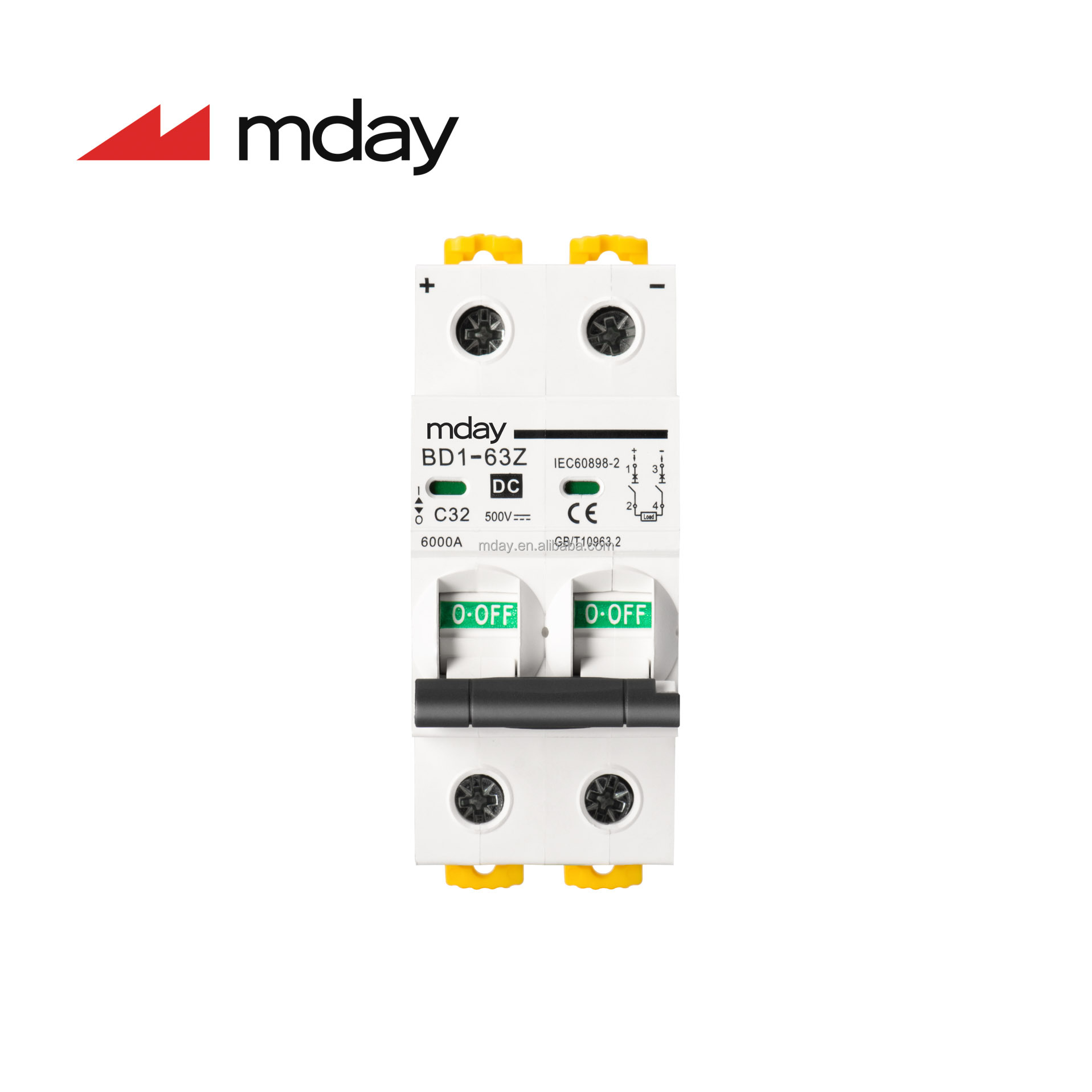
MDAY DC Breaker MQC-63DC 250V-1000V 2P Moulded Case Circuit Breaker 6kA Breaking Capacity Din Rail Mount
View Details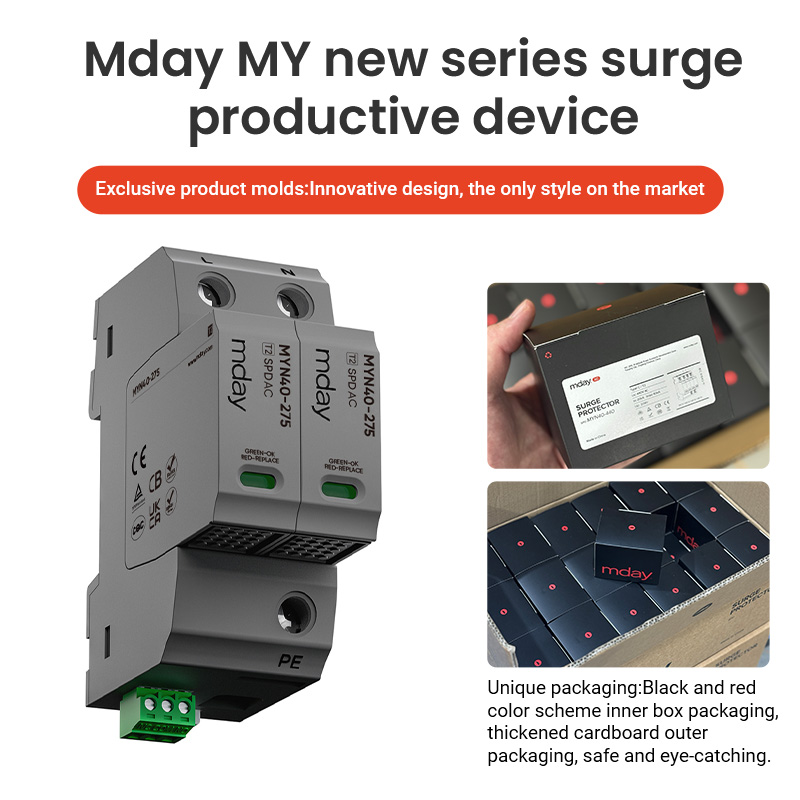
Mday T2 MYN40 3P VDE-certified 40KA 440V AC Din Rail Surge Protector IP20 Copper Solar System
View Details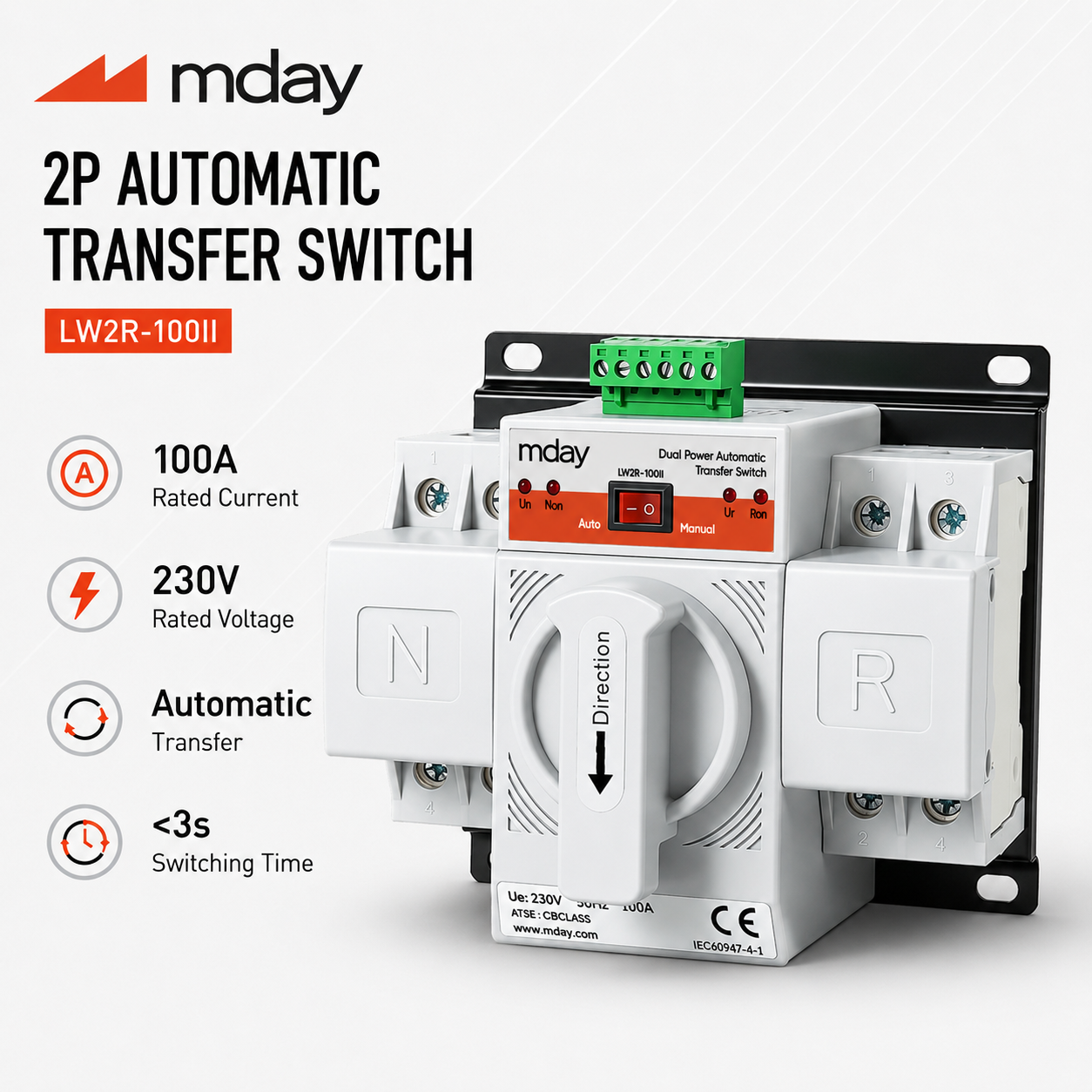

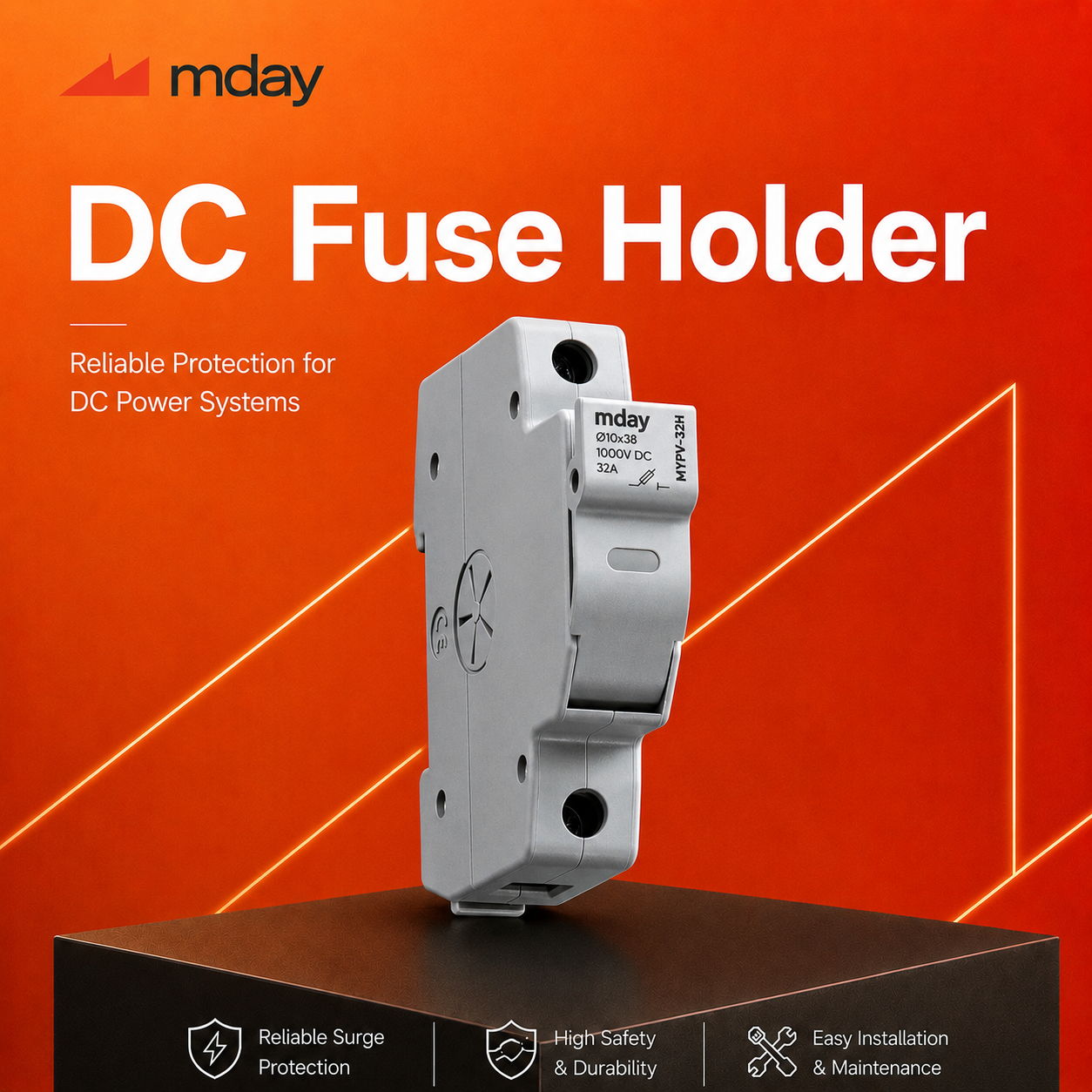
Mday MYPV-32H 1000VDC 32A 10x38mm Solar PV System DC Copper Fuse Holder UL248-19/IEC60269-6
View Details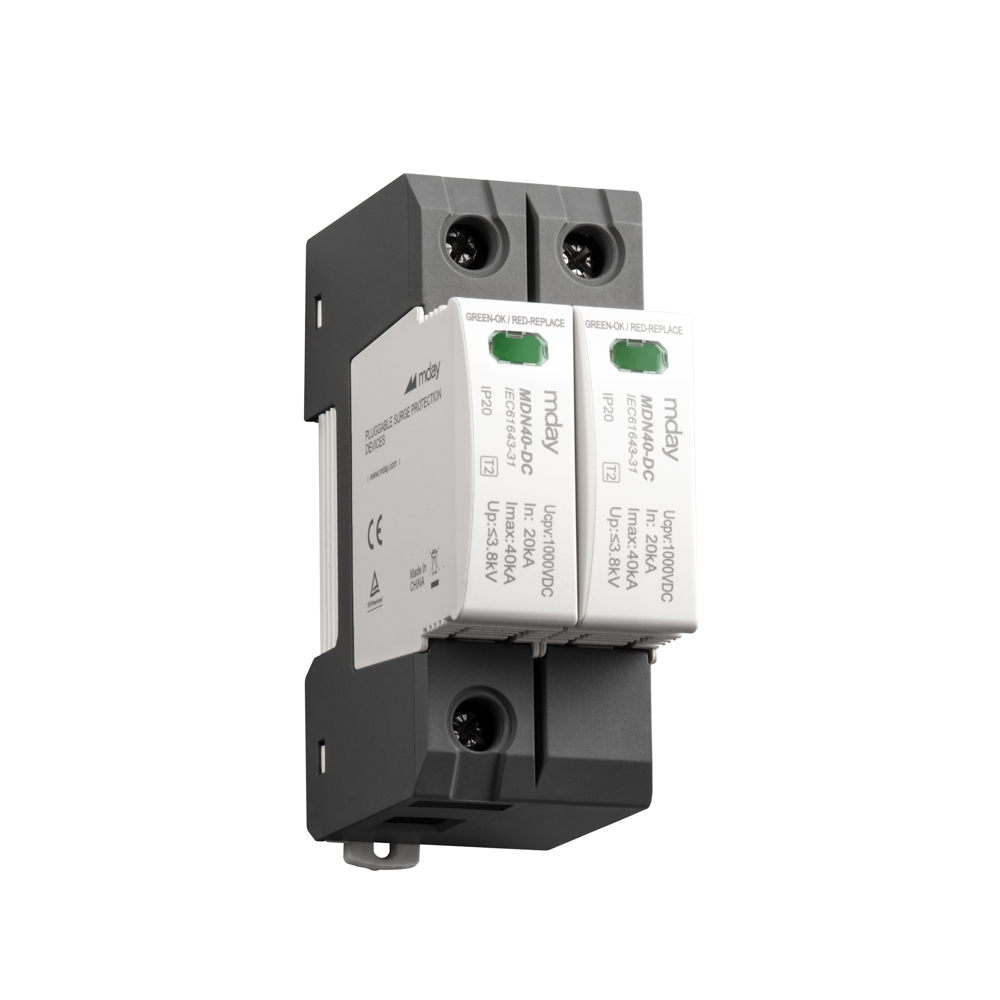
Mday DC SPD MDN40-DC T2 1000V Solar System Application SPD Lightning Arrester 40KA Surge Protector
View Details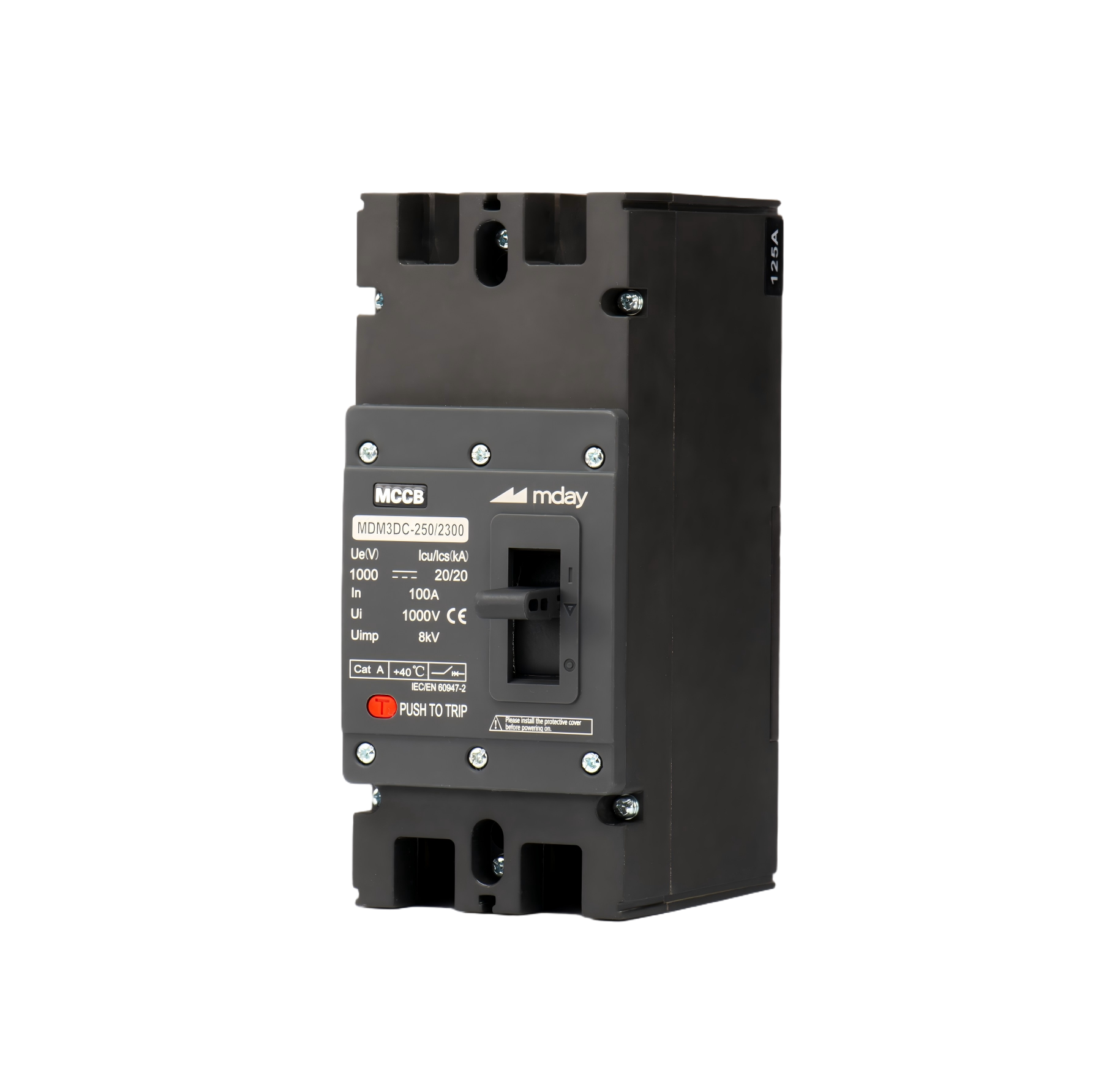
Mday MDM3DC-250 2P 500V 250A 20kA Thermal-Magnetic Trip Unit High Voltage IEC DC Circuit Breaker
View DetailsTechnical Whitepaper: Engineering Principles of High-Voltage DC Arc Extinction
In modern high-voltage direct current (HVDC) installations—specifically utility-scale photovoltaic (PV) arrays, Commercial & Industrial (C&I) solar architectures, and Battery Energy Storage Systems (BESS)—circuit interruption presents engineering challenges fundamentally distinct from traditional Alternating Current (AC) networks. Because direct current maintains a continuous voltage magnitude without natural current zero-crossings, extinguishing an electrical arc requires specialized internal geometry and physical arc-stretching mechanisms.
1. Direct Current Arc Quenching Mechanics & Magnetic Blowout Systems
When contact separation occurs under heavy load or short-circuit fault conditions (ranging up to 20kA or higher), an ionized plasma arc reaches thermal equilibrium exceeding 6,000 Kelvin. Our custom OEM DC Molded Case Circuit Breakers (MCCB), such as the MDM3DC series, incorporate permanent magnetic blowout grids paired with multi-plate arc chute assemblies. The transverse magnetic field exerts a strong Lorentz force (\(\vec{F} = I\vec{L} \times \vec{B}\)) on the charged arc column, forcing it away from silver-alloy main contacts and into arc splitter plates within milliseconds.
Technical Insight: By segmenting a single long DC arc into a series of smaller arcs across cold metallic splitter plates, the system artificially elevates the overall arc voltage above the source voltage (\(V_{arc} > V_{source}\)), starving the ionized channel of energy and driving rapid current zero-extinction without electrical re-ignition.
2. Thermal-Magnetic vs. Electronic Trip Units in Solar DC Applications
Protection selectivity in solar arrays requires strict coordination between string protection devices and main array isolators. Our custom OEM DC MCCB products feature dual-action trip mechanisms:
- Overload Protection (Thermal Bimetal): Calibrated inverse-time delay characteristics prevent false tripping during peak irradiance thermal fluctuations while reacting predictably to persistent modest overcurrents (1.05 to 1.30 \(I_n\)).
- Short-Circuit Protection (Electromagnetic Instantaneous): High-grade magnetic plungers respond instantly (<10 milliseconds) to short circuits exceeding set thresholds, preventing catastrophic cable melting and inverter bridge breakdown.
Molded Case Material Science & OEM/ODM Manufacturing Capabilities
As a specialized manufacturer based in the Yueqing Economic Development Zone (Wenzhou, China), Luck (Zhejiang) New Energy Co., Ltd. combines localized raw material supply chains with rigorous advanced polymer engineering. Molded case circuit breakers are subjected to heavy environmental stresses, high ambient operating temperatures, and severe arc erosion.
Thermosetting Bulk Molding Compound (BMC/DMC) Enclosures
Unlike standard low-cost thermoplastic housings that soften under thermal load, our DC MCCB structures are injection-molded using high-density glass-fiber reinforced unsaturated polyester Bulk Molding Compounds (BMC/DMC). Key dielectric and mechanical parameters include:
- Comparative Tracking Index (CTI): CTI > 600V (Class I material rating), virtually eliminating surface creepage breakdown under high DC potential.
- Flame Retardancy: UL94 V-0 self-extinguishing certification, maintaining structural integrity up to 960°C glow-wire exposure test standards.
- Thermal Stability: Continuous operational capacity across an extreme temperature envelope of -40°C to +85°C without dielectric degradation or mechanical embrittlement.
Custom OEM/ODM Engineering Scope
Serving international panel builders, EPC contractors, and brand distributors, our factory provides private-label customization backed by over 7 years of dedicated OEM execution:
Custom Ratings & Trip Curves
Tailored current calibration from 16A up to 250A / 630A, with specialized DC tripping curves optimized for battery short-circuit profiles or high-Voc solar strings.
Housing Branding & Aesthetics
Custom enclosure colors, laser-engraved customer part numbers, custom terminal barrier geometry, and private label retail/industrial packaging solutions.
Integrated Accessory Modules
Pre-installed field accessories including Shunt Trips (MX), Undervoltage Releases (MN), Auxiliary Switches (OF), and Alarm Contacts (SD) for remote monitoring integration.
Technical Specification Matrix & Engineering Selection Guide
Selecting the correct DC Molded Case Circuit Breaker (DC MCCB) requires matching string voltages, maximum short-circuit current capability, and operational environmental factors. Use the reference selection matrix below for system design validation:
| Model Series | Rated Voltage (Ue) | Frame Current (In) | Breaking Capacity (Icu) | Polarity Sensitivity | Primary Application |
|---|---|---|---|---|---|
| MQC-63DC | 250V – 1000V DC | 1A – 63A | 6kA / 10kA | Polarized / Non-Polarized | PV String Combiner Boxes & Inverter DC Inputs |
| MDM3DC-250 | 500V – 1000V DC | 63A – 250A | 20kA | Non-Polarized Geometry | Commercial Solar Central Inverters & BESS Racks |
| MDM3DC-630 | 1000V – 1500V DC | 250A – 630A | 33kA / 50kA | Multi-Pole Series Connected | Utility-Scale Solar Arrays & Main Storage DC Isolation |
| MYPV-32H (Fuse) | 1000V / 1500V DC | 1A – 32A | 20kA / 33kA | Non-Polarized | Individual String Fast-Blow Overcurrent Protection |
| MLN40-DC (SPD) | 600V – 1000V DC | 20kA (In) / 40kA (Imax) | Up < 2.8kV | DC Array Specific | Transient Surge & Lightning Overvoltage Protection |
* Note: For 1500V DC utility configurations, circuit poles are typically wired in series (e.g., 3-pole or 4-pole in series connection) to distribute total arcing voltage stress across multiple break points.
Future Procurement & Industry Technological Trends (2025–2030)
As global energy infrastructure accelerates the transition toward clean power, procurement strategies for low-voltage electrical protection components are undergoing key technical shifts. B2B buyers and OEM engineering teams must design systems anticipating the following industry evolutions:
1. Widespread Adoption of 1500V DC Architecture Across Commercial & Utility Solar
To reduce balance-of-system (BOS) costs, lower copper conductor cross-section requirements, and minimize cable transmission losses, global solar installations are migrating from 1000V DC systems to 1500V DC topologies. This increase in string voltage demands circuit breakers capable of withstanding higher dielectric impulse levels and isolating faults with significantly higher stored electrical energy.
2. Rapid Expansion of Battery Energy Storage Systems (BESS) & High Short-Circuit Fault Currents
Unlike photovoltaic panels where short-circuit currents are limited by semiconductor physics to approximately 1.2 to 1.4 times nominal short-circuit current (\(I_{sc}\)), lithium-ion battery banks exhibit exceptionally low internal impedance. A short circuit across a battery rack can discharge instantaneous prospective fault currents exceeding 30kA to 100kA within microseconds. Future DC MCCB procurement will focus heavily on high-speed breaking capability, current-limiting contact structures, and compliance with battery safety standard UL 9540A.
3. Integration of Smart Sensing, IoT Telemetry, and Solid-State DC Breaker Technologies
Digitalization of sub-stations and remote renewable power generation facilities demands real-time condition monitoring. Modern custom OEM circuit breakers are increasingly required to incorporate integrated current transformers, Rogowski coils, and temperature micro-sensors linked via Modbus-RTU, RS485, or CANbus communications. Additionally, hybrid solid-state DC circuit breakers (combining wide-bandgap semiconductors with physical air gaps) represent the next horizon for ultra-fast (<1 millisecond) arc-free fault isolation.
Why Partner with Luck (Zhejiang) New Energy Co., Ltd.?
Combining verified manufacturing infrastructure, certified testing protocols, and robust technical expertise.
TÜV Rheinland Onsite-Verified Factory
Our production facilities, staff headcount (55 verified professionals), and operational capacity are independently audited and verified on-site by TÜV Rheinland, offering total procurement transparency.
International Safety Compliance
Product lines strictly adhere to international quality benchmarks: VDE-certified surge protective devices, UL 248-19 and IEC 60269-6 DC fuses, CE-marked DC MCBs, and IEC/EN 60947-2 DC MCCBs.
In-House Testing & Quality Laboratory
Equipped with 9 advanced internal testing instruments, including high-current impulse generators, temperature-rise test benches, mechanical endurance testers, and calibration stations ensuring 100% finished product testing.
Frequently Asked Questions (FAQ)
Comprehensive engineering answers regarding custom OEM DC breaker sourcing, technical standards, and factory lead times.
What is the difference between an AC breaker and a dedicated DC Moulded Case Circuit Breaker (MCCB)?
How does ambient operational temperature affect DC MCCB rating and current derating?
What custom OEM/ODM options are available for custom brand order clients?
What international testing standards and certifications do your DC protection components hold?
What are the typical minimum order quantities (MOQ) and production lead times?
Which commercial payment terms are supported for international bulk procurement?
Request Your Custom OEM DC Circuit Breaker Quotation Today
Direct factory pricing, custom technical calibration, and complete compliance documentation for global distributors, panel builders, and solar EPC project managers.
