
Technical Industry Whitepaper: The Evolution of Metal Oxide Varistor (MOV) Technology in Power & Photovoltaic Protection
Metal Oxide Varistors (MOVs) are the unsung baseline defenders of modern electrical grid infrastructure, solar photovoltaic (PV) arrays, industrial automation cabinets, and battery energy storage systems (BESS). As non-linear voltage-dependent resistors, MOV components possess an electrical impedance that shifts by orders of magnitude when subjected to high-voltage transients, effectively clamping overvoltage spikes and diverting surge currents safely to ground.
In China—the global epicenter of advanced ceramic dielectric synthesis and power component manufacturing—Luck (Zhejiang) New Energy Co., Ltd. stands out as a premier OEM/ODM manufacturer specializing in high-performance MOV disc/block components, surge protective devices (SPDs), DC circuit breakers, fast-acting fuses, and custom PV junction boxes. Situated in the Yueqing Economic Development Zone, Wenzhou, China, Luck New Energy bridges cutting-edge materials science with rigorous quality assurance to empower global original equipment manufacturers and electrical distributors.
Core Technical Insight: The non-linear characteristic of a Zinc Oxide (ZnO) MOV is governed by the power law equation I = k · Vα, where the non-linearity coefficient (α) typically ranges from 30 to 50 in Luck New Energy's formulation. Higher α values ensure near-zero leakage current during nominal system voltage while enabling ultra-fast, sub-nanosecond clamping during lethal lightning or switching transients.
1. Microstructural Engineering & Sintering Chemistry of High-Energy MOV Blocks
The performance of a Metal Oxide Varistor is determined fundamentally at the atomic and grain-boundary levels. Unlike traditional silicon carbide (SiC) surge arresters, modern MOV ceramics consist predominantly of Zinc Oxide (ZnO) grains (around 90 mol%) doped with specialized metal oxides including Bismuth Oxide (Bi2O3), Antimony Oxide (Sb2O3), Cobalt Oxide (CoO), Manganese Oxide (MnO), and Chromium Oxide (Cr2O3).
Grain Boundary Boundary Layer (Schottky Barrier)
During high-temperature sintering (1200°C to 1300°C), Bi2O3 melts into a liquid phase that wraps around semiconducting ZnO grains. Upon cooling, double Schottky potential barriers form at the intergranular boundaries, creating the non-linear electrical threshold (~3.2V per grain boundary).
Heavy Surge Endurance (8/20μs & 10/350μs)
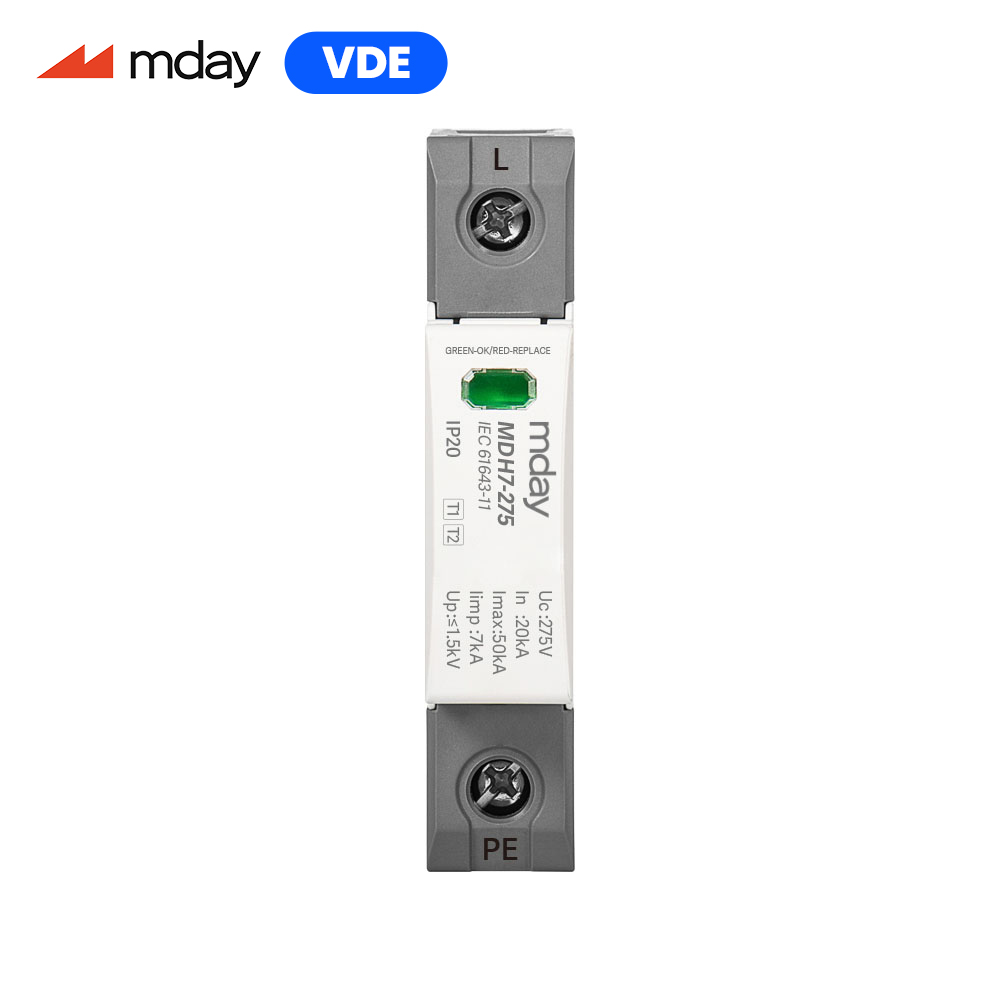
Precise doping of CoO and MnO stabilizes the Schottky barriers against degradation caused by repeated multi-impulse lightning strikes, preventing localized micro-cracking and thermal runaway during intense 40kA 8/20μs or 7kA 10/350μs impulse surges.
Silver Electrode Adhesion & Strap Termination
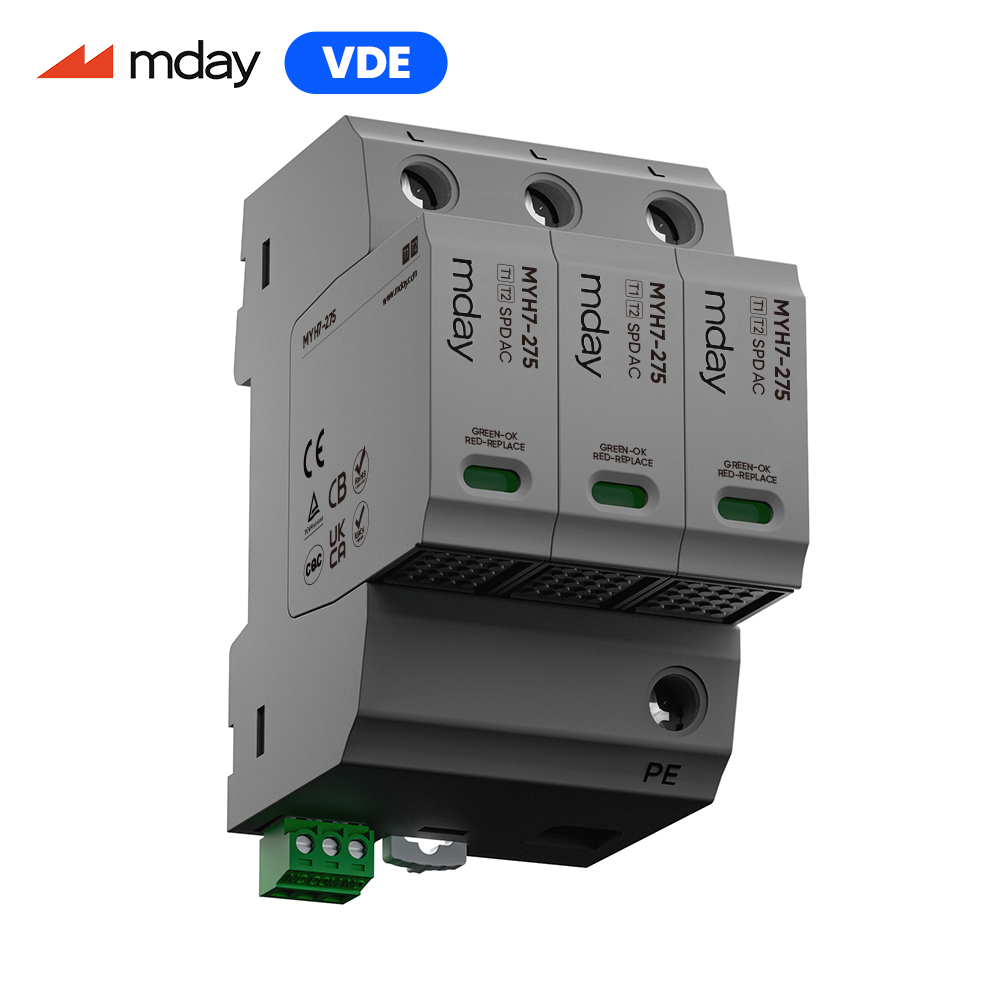
Luck New Energy utilizes screen-printed silver-zinc alloy paste fired at 600°C to form ultra-low-resistance ohmic contacts. Heavy-duty copper strap terminals (e.g., in the MYN34S series) are ultrasonically welded to withstand extreme electromechanical shear forces.
2. Technical Comparison: Heavy-Duty MOV Form Factors
Choosing the correct varistor geometry is essential for meeting specific enclosure constraints and surge handling requirements. Below is a engineering matrix highlighting common MOV topologies manufactured by Luck New Energy:
| MOV Series / Topology | Physical Dimension | Nominal Clamping Voltage (V1mA) | Max Surge Current (8/20μs) | Target Application Segment |
|---|---|---|---|---|
| MYN34S Square Block (Strap Type) | 34mm x 34mm Square | 200V – 1200V DC / AC | 40kA – 50kA | DIN-Rail Type 2 SPDs, PV Combiner Boxes, Wind Turbines |
| Disc Type MOV (Standard Lead) | 14mm – 20mm Round Disc | 180V – 680V AC | 6kA – 12kA | SMPS, Consumer Electronics, LED Drivers, AC Meters |
| Thermally Protected MOV (TMOV) | Modular Encapsulated | 275V – 440V AC / 1000V DC | 20kA – 40kA | Mission-Critical Industrial SPDs, Railway & Substation Protection |
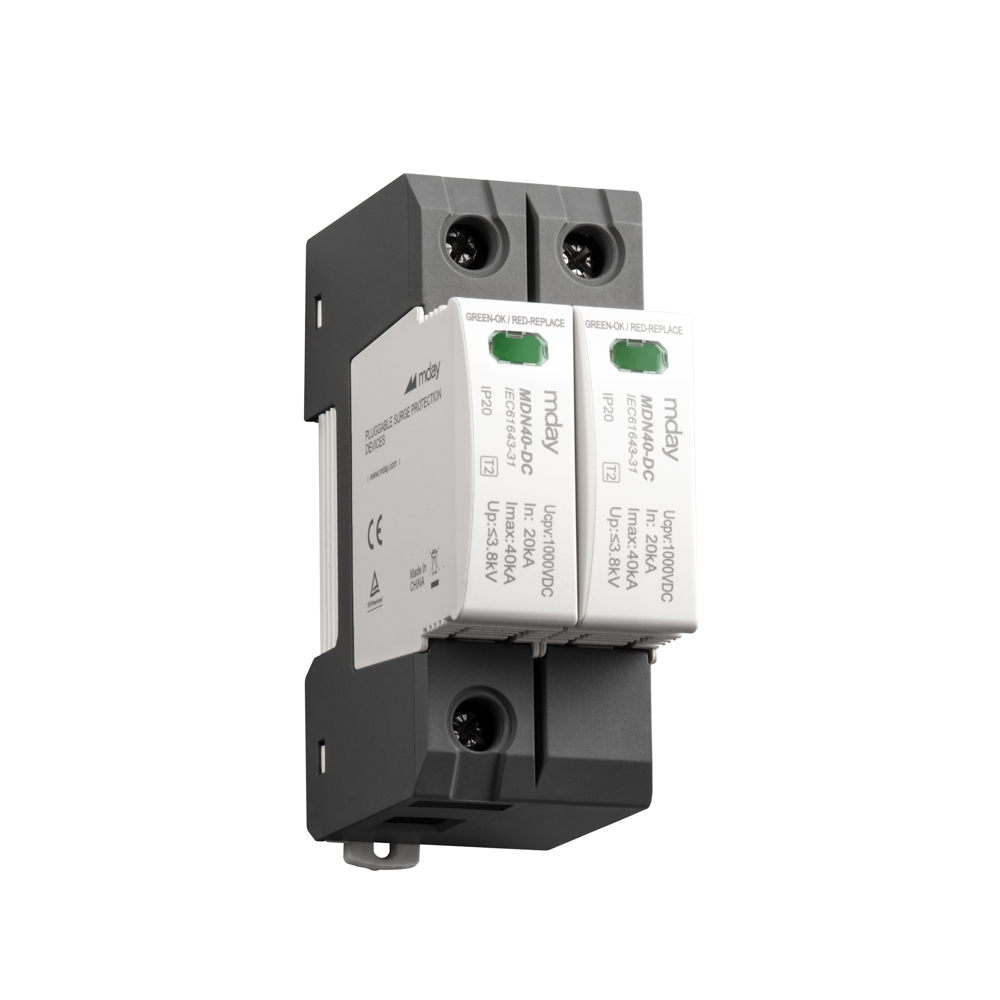
| High-Voltage DC Solar MOV Array | Custom Multi-Chip Module | 600V – 1500V DC | 20kA – 40kA | Utility-Scale PV Inverters & Battery Energy Storage (BESS) |
3. Future Technology & Development Trends in Varistor Manufacturing
As the world transitions toward renewable energy microgrids and ultra-high-voltage direct current (HVDC) power conversion, the technological demands placed on MOV manufacturers are undergoing a massive shift. Key trends shaping the future of varistors include:
- Nanostructured ZnO Powders: Transitioning from micro-grain to sub-micron ceramic powders allowing thinner ceramic wafers with higher voltage density per millimeter, enabling more compact DIN-rail surge protectors.
- Integrated Thermal Disconnector Mechanisms: Pairing varistor elements with spring-loaded low-melting-point solder joints (TMOV architecture) to instantly isolate degraded varistors from the circuit under catastrophic Temporary Overvoltage (TOV) conditions, preventing fire hazards.
- Smart Condition Monitoring & IoT Integration: Embedding micro-sensors into MOV modules to measure real-time leakage current (Ileak) and thermal elevation, sending predictive maintenance alerts to cloud monitoring platforms prior to component failure.
- 1500V DC Solar Optimization: Developing specialized MOV ceramics capable of continuous thermal stability under persistent 1500V DC bias without suffering from DC polarization degradation.
4. Global Procurement & Sourcing Trends for B2B Electrical Buyers
International procurement managers and EPC contractors are increasingly prioritizing factory transparency, rigorous compliance, and supply chain resilience. When sourcing MOVs and SPDs from Chinese manufacturers, modern buyers focus on:
Third-Party Onsite Verification: Enterprise credential verification by independent bodies such as TÜV Rheinland provides buyer confidence regarding production capacity, worker safety, and actual equipment inventories.
Full Compliance with Global Standards: Leading buyers demand comprehensive test reports certifying compliance with IEC/EN 61643-11 (for surge protective devices), UL 1449 5th Edition, UL 248-19 (solar fuses), and IEC 60269-6.
