
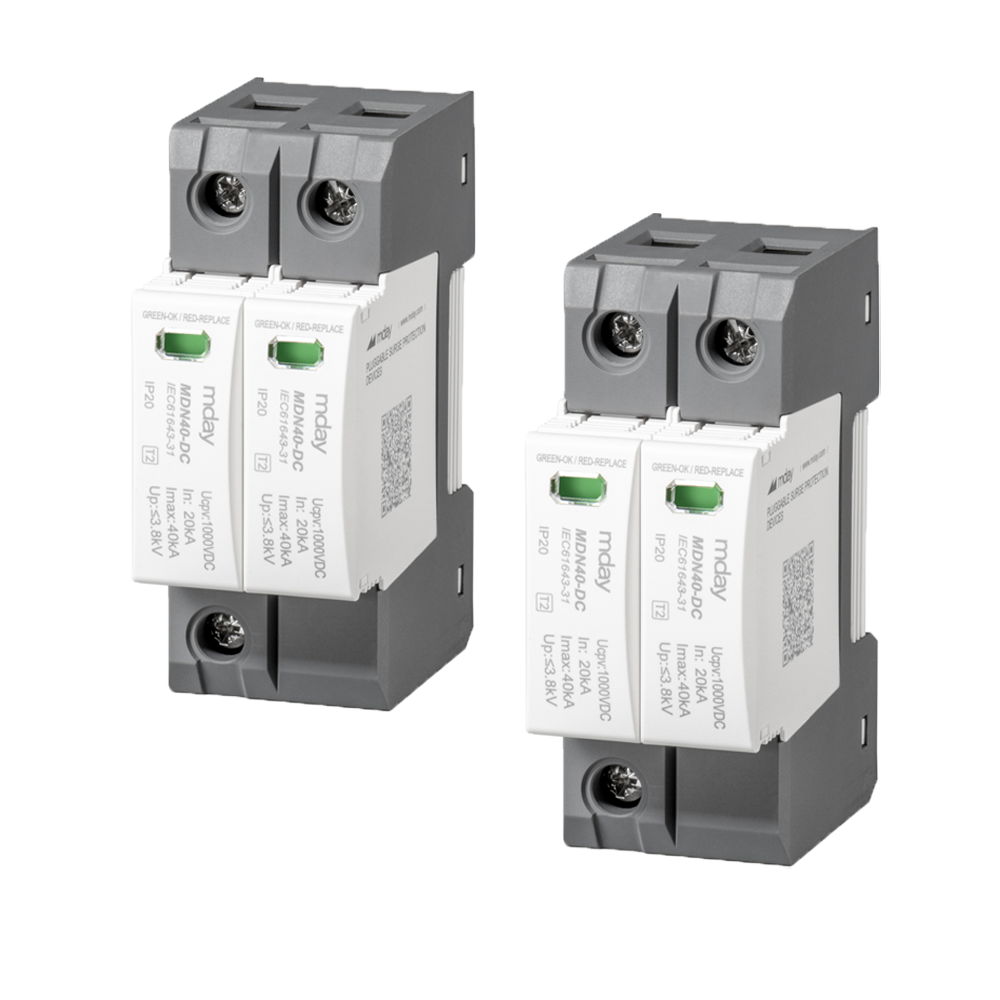

1. Technical Foundations: Defining Type 1 Surge Protective Devices (SPD)
In low-voltage electrical distribution networks and commercial solar PV installations, transient overvoltages stemming from direct lightning strikes or grid switching events present immediate threats to electrical assets. Type 1 Surge Protective Devices (SPDs)—classified under IEC 61643-11 and EN 61643-11 standards—are specifically engineered to handle high-energy direct lightning currents at the boundary between LPZ 0A (Lightning Protection Zone 0A) and LPZ 1.
Unlike Type 2 SPDs, which are designed to discharge induced switching transients characterized by the 8/20 µs current waveform, CE-certified Type 1 SPDs are tested with the rigorous 10/350 µs impulse current ($I_{imp}$) waveform. The 10/350 µs wave simulates the destructive charge transfer of a direct atmospheric discharge, requiring internal arc-quenching technologies capable of dissipating high peak currents ($I_{imp} \ge 12.5\text{ kA}, 25\text{ kA}$, or $50\text{ kA}$ per pole) without thermal runaway or physical destruction of the protective module.
Key Engineering Distinction: The energy density contained within a 10/350 µs impulse waveform is approximately 17 times higher than that of an equivalent 8/20 µs waveform. Selecting genuine CE & VDE certified Type 1 SPDs is essential for main switchboards (MSB) directly connected to external lightning protection systems (LPS) or overhead utility supply lines.
1.1 Spark Gap vs. Heavy-Duty MOV Technology in Type 1 Protection
Industrial B2B buyers must evaluate the internal arc protection architecture when procuring Type 1 SPDs. Modern Type 1 transient protection relies on two core physical mechanisms:
- Hermetically Sealed Spark Gaps (GDT): Utilizing non-exhausting graphite or triggered gas-discharge gaps, spark gap SPDs exhibit extremely low leakage currents, exceptionally high impulse current capability ($I_{imp} \ge 25\text{ kA}$ per pole), and high follow-current extinguishing capabilities ($I_{fi}$). They provide galvanic isolation during normal operation.
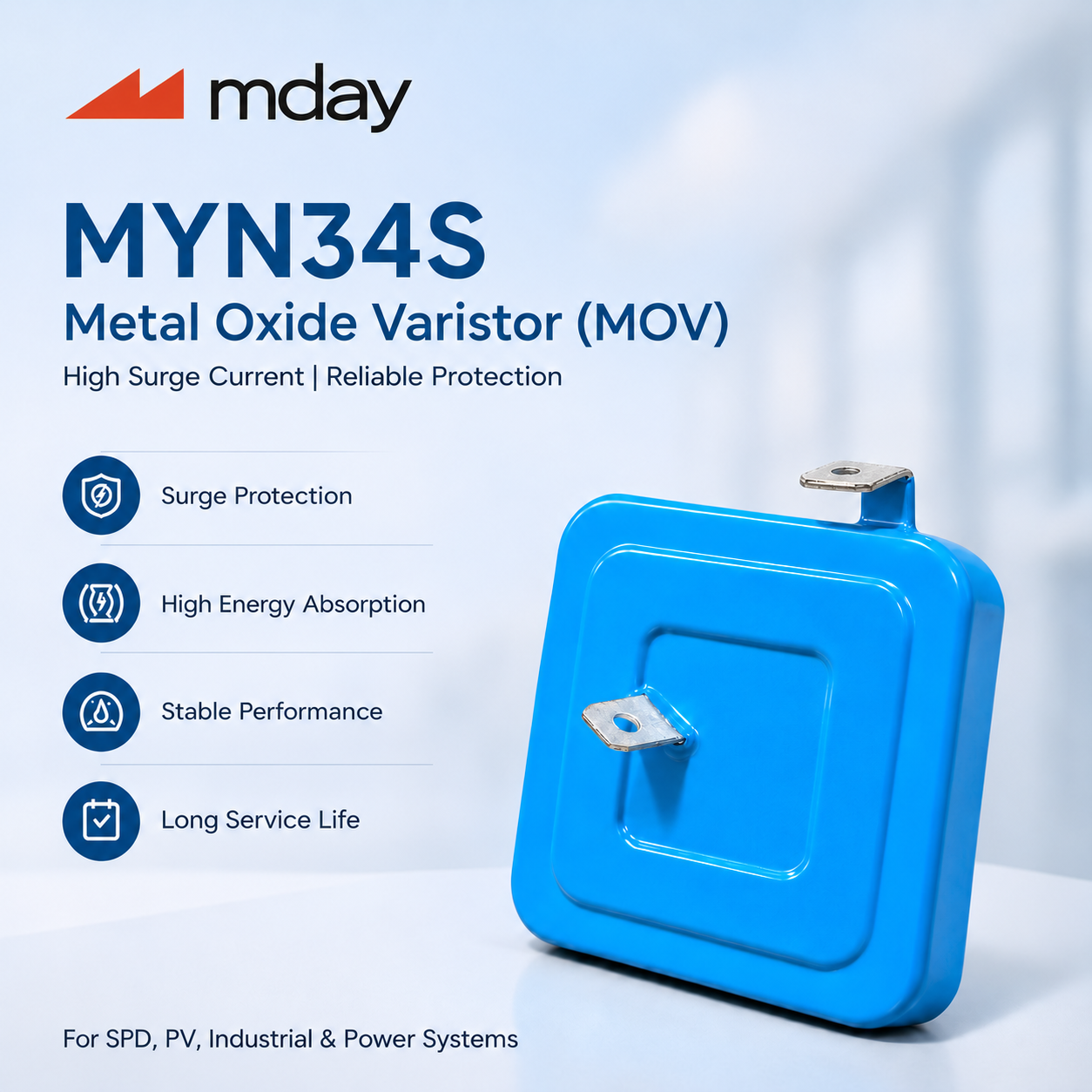
- High-Energy Metal Oxide Varistors (MOV): Incorporating large-format zinc-oxide ceramic discs—such as our 34mm square MOV units—varistor-based Type 1 SPDs deliver rapid nanosecond response times ($t_a < 25\text{ ns}$) and lower voltage protection levels ($U_p$). Integrated heavy-duty thermal disconnector mechanisms ensure safe isolation upon reaching end-of-life condition.
- Combined Type 1+2 Hybrid Designs: Integrating series-connected spark gaps and high-capacity MOV modules behind a synchronized internal thermal trip, hybrid monobloc SPDs eliminate the decoupling length requirement ($>10\text{ meters}$) typically mandated between separate Class I and Class II SPD installations.
| SPD Class / Type | Standard Waveform | Core Electrical Parameter | Installation Location | Primary Target Risk |
|---|---|---|---|---|
| Type 1 (Class I) | 10/350 µs Waveform | Impulse Current ($I_{imp} \ge 12.5\text{kA} - 50\text{kA}$) | Main Service Entrance / LPZ 0A to 1 | Direct Lightning Discharge & External LPS |
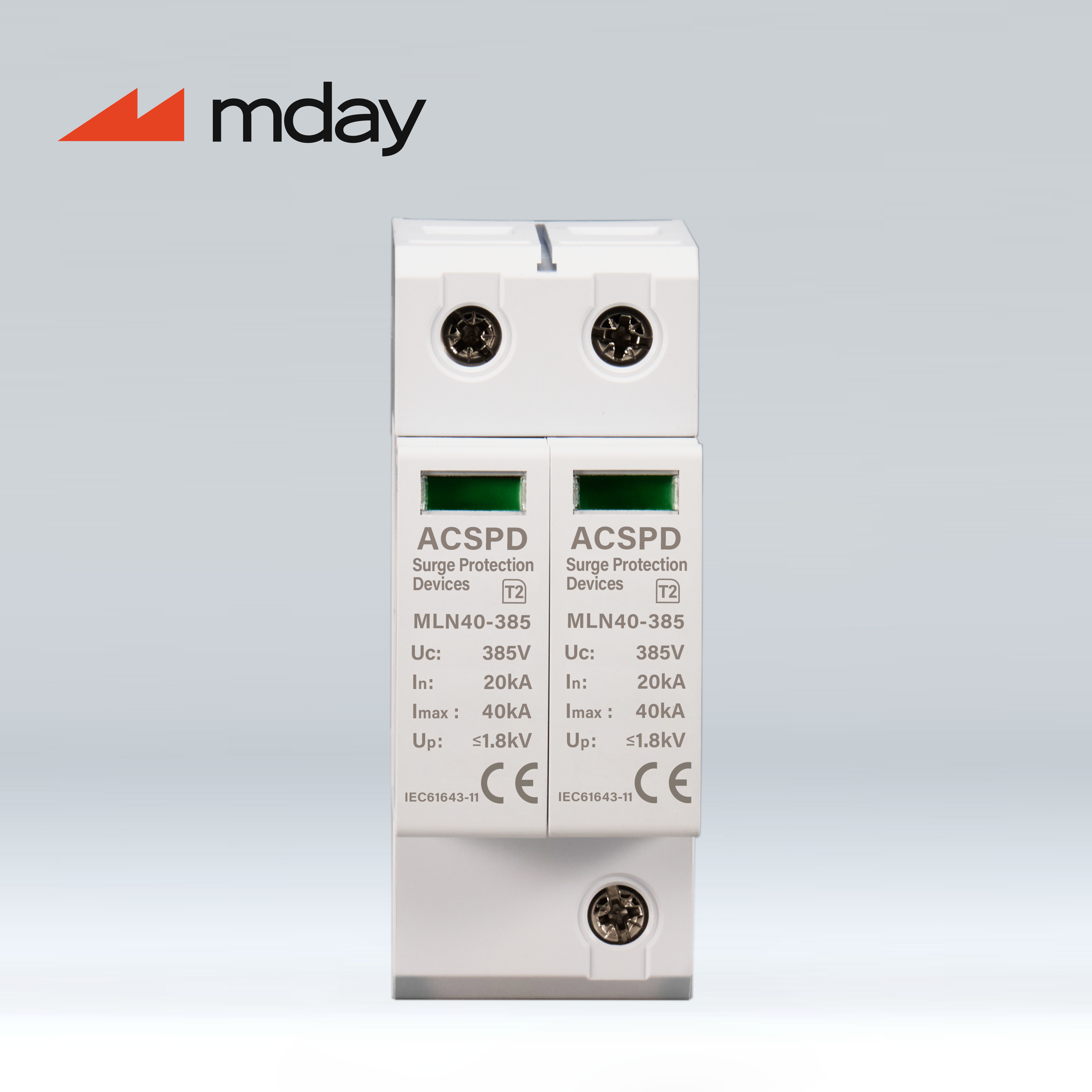
| Type 2 (Class II) | 8/20 µs Waveform | Nominal / Max Discharge ($I_n / I_{max} = 20\text{kA} / 40\text{kA}$) | Sub-distribution Boards / LPZ 1 to 2 | Induced Surges & Grid Switching Transients |
| Type 1+2 Monobloc | 10/350 µs & 8/20 µs | $I_{imp} + I_{max}$ Dual Rating | Compact Main Boards & PV Inverter DC Inputs | Direct Lightning + High Frequency Transients |
| Type 3 (Class III) | 1.2/50 µs & 8/20 µs | Open Circuit Voltage ($U_{oc} \le 10\text{kV}$) | Point of Use / Sensitive Electronic Equipment | Residual Voltage Clamping at Terminal Device |
