Industrial Grade Photovoltaic Circuit Protection Line
Rigorously tested DC surge arresters, high-capacity gPV fuses, and heavy-duty switchgear designed for extreme field conditions and utility-scale solar arrays.
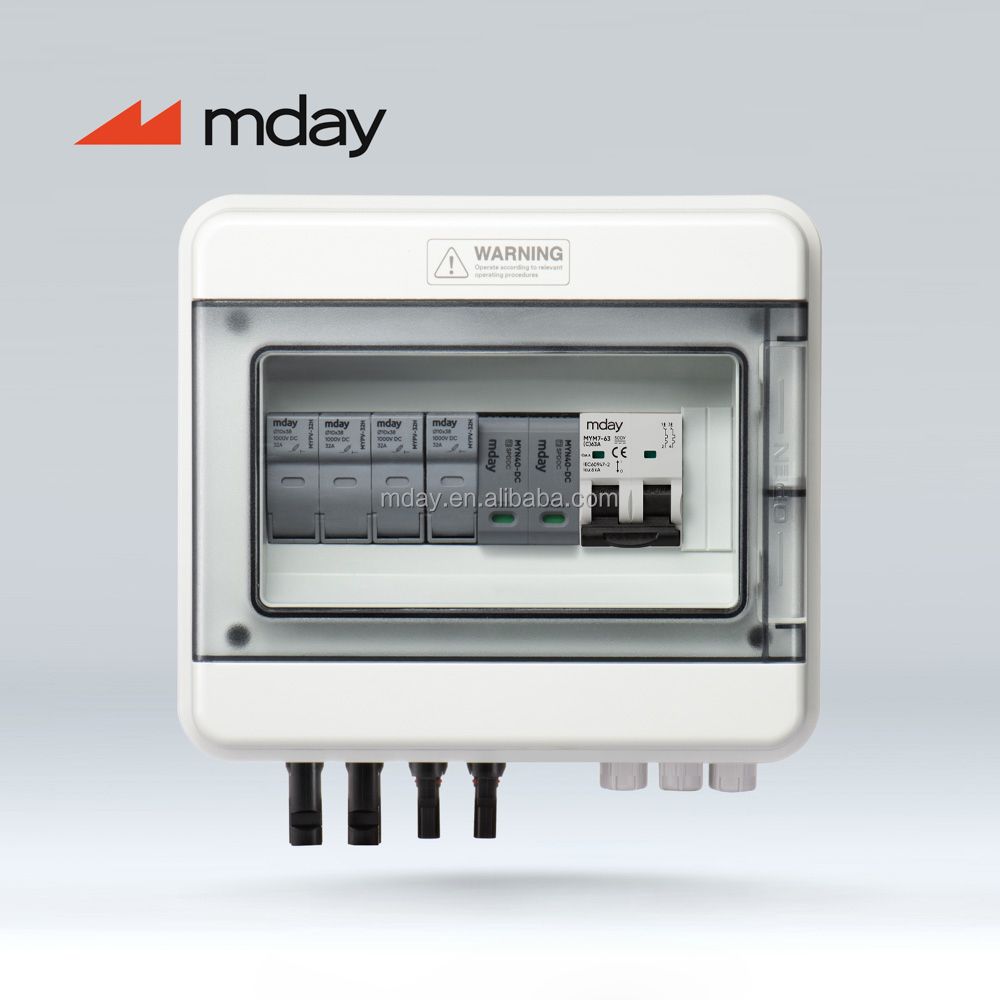
Mday IP65 Waterproof 600V 2-in-1 Out Solar Photovoltaic Electronic Instrument Junction Box ABS Plastic
- Rating: 600V DC
- In-Out: 2-in-1 Out
- Enclosure: IP65 ABS
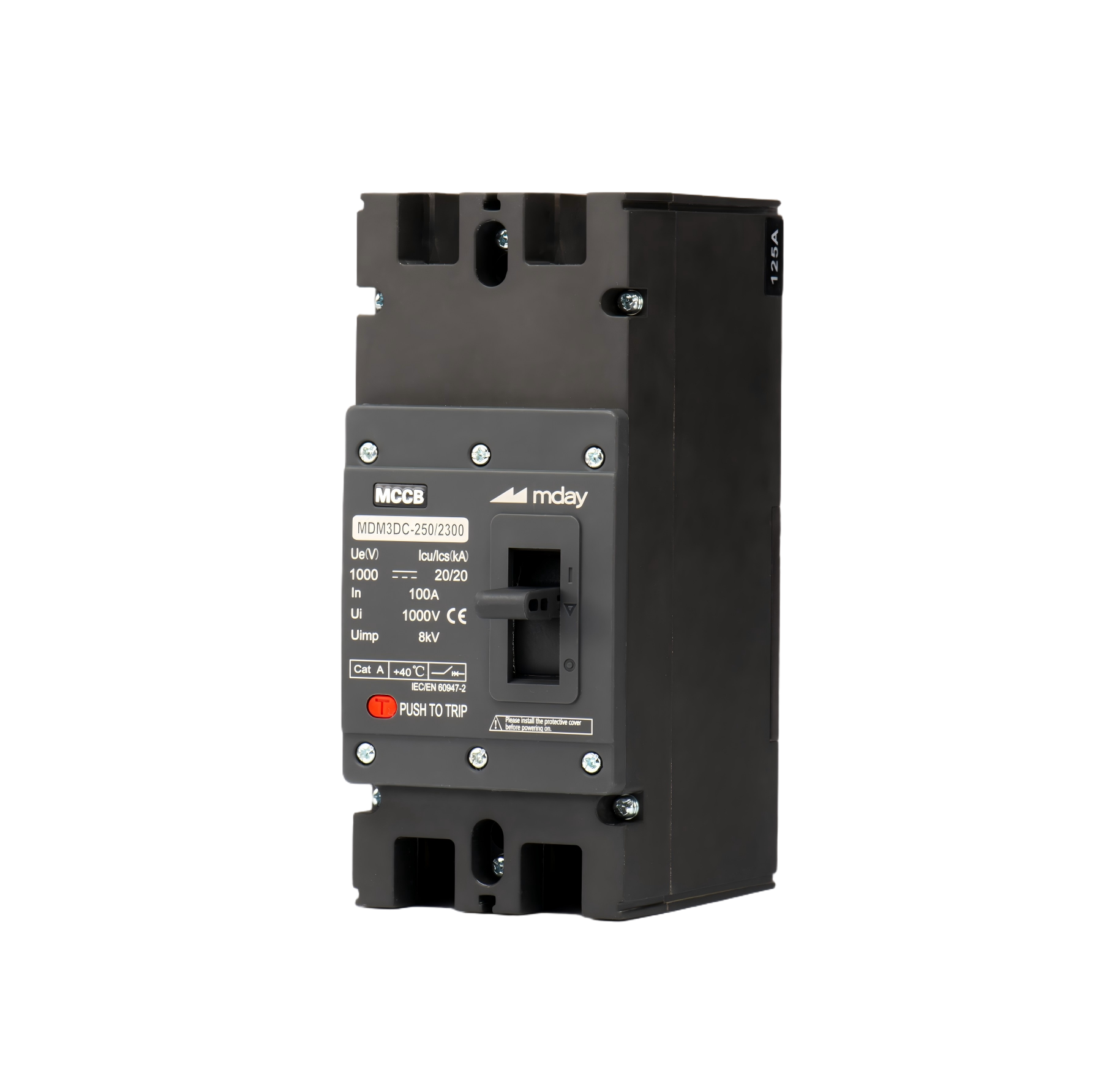
Mday MDM3DC-250 2P 500V 250A 20kA Thermal-Magnetic Trip Unit Plastic Copper Solar PV Industry High Voltage IEC Circuit Breaker
- Voltage: 500V DC
- Current: 250A
- Icu: 20kA
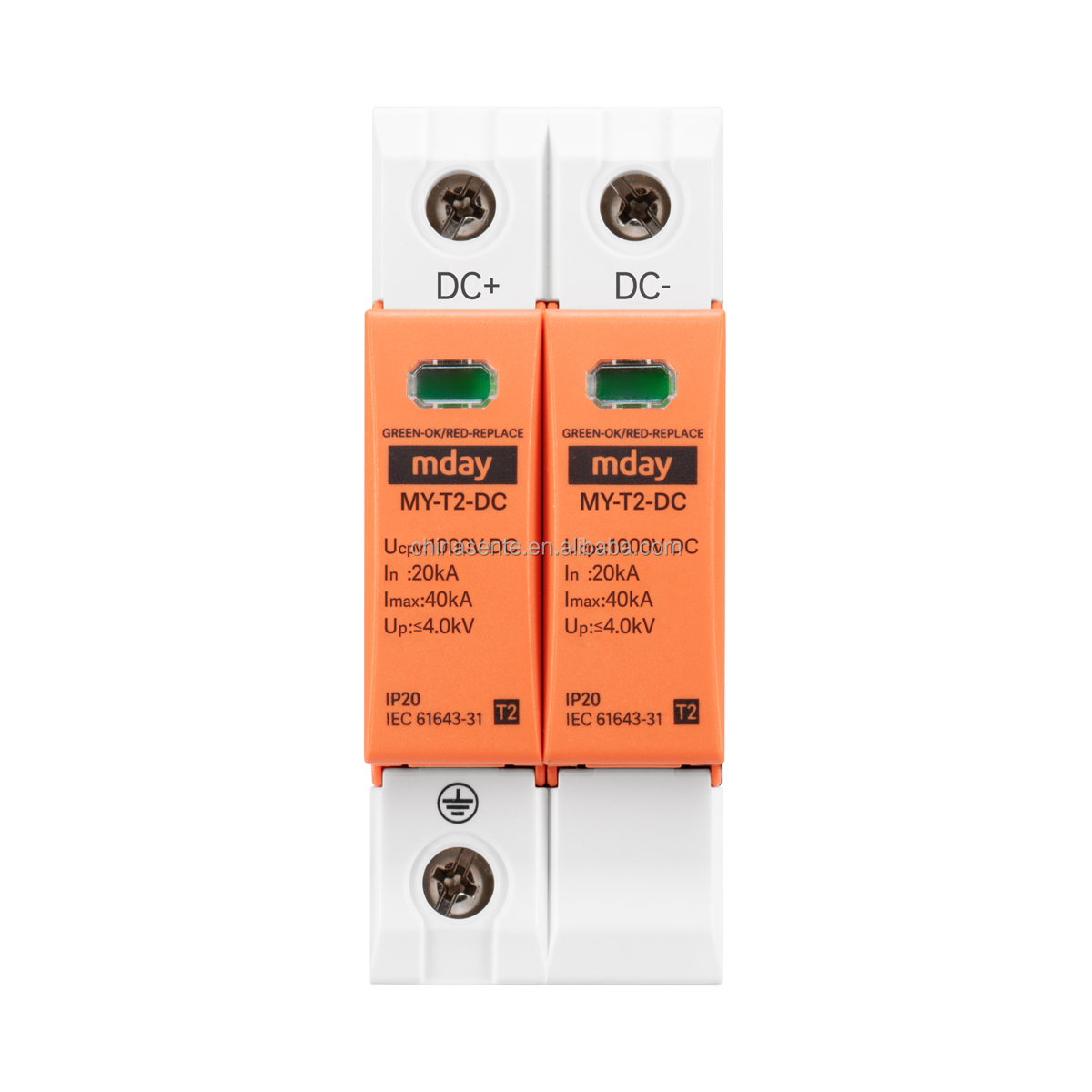
Mday Solar Type 2 DC SPD 40kA 1000V 2P Lightning Protection Solar System PV Transient Voltage Surge Suppressor for Approved
- Ucpv: 1000V DC
- Imax: 40kA
- Class: Type 2
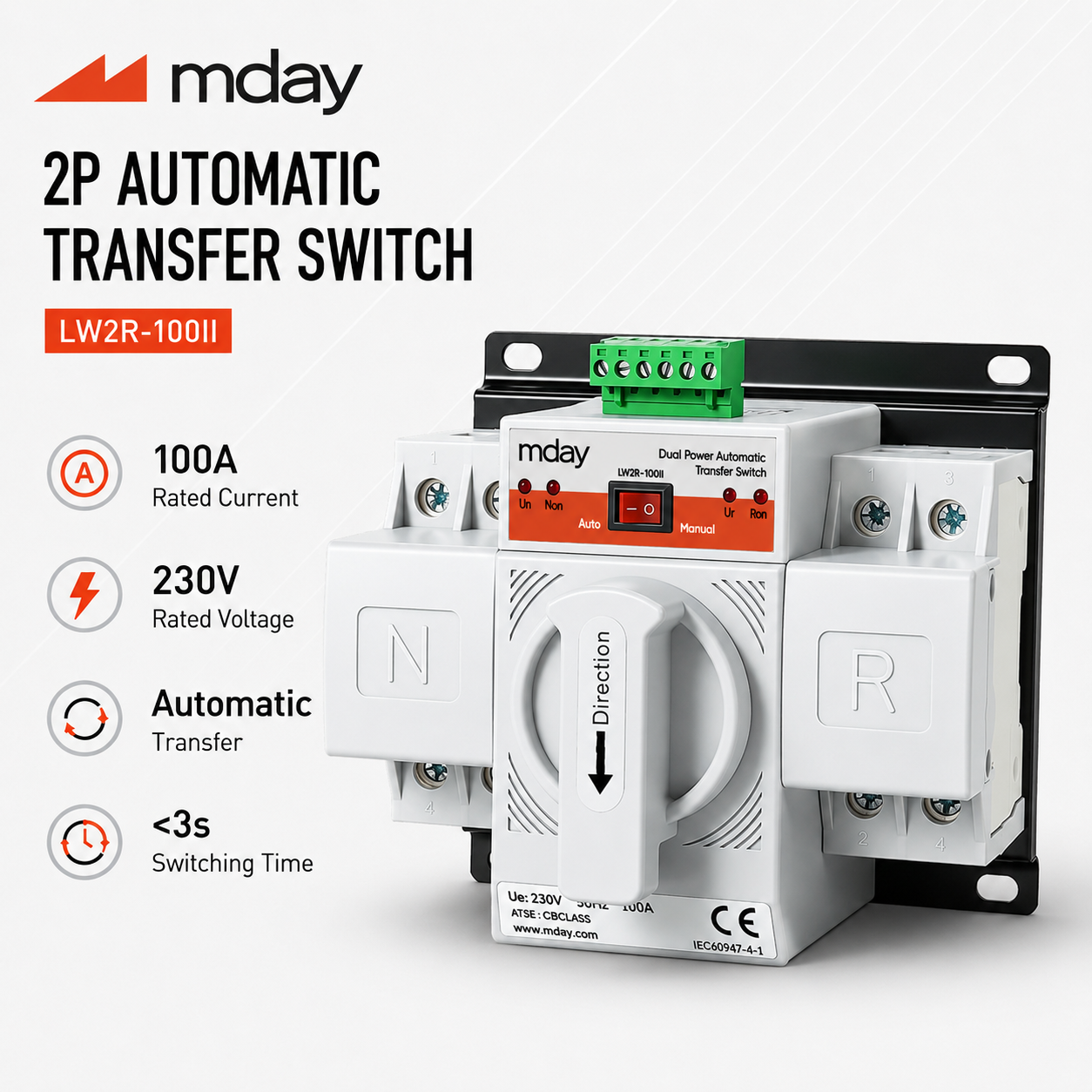
Mday AC Din Rail ATS Silver Contact 2P 3P 4P 63A-125A Dual Power Changeover Switch for PV Solar Industrial Fire Fighting
- Poles: 2P/3P/4P
- Current: 63A-125A
- Contact: Silver alloy
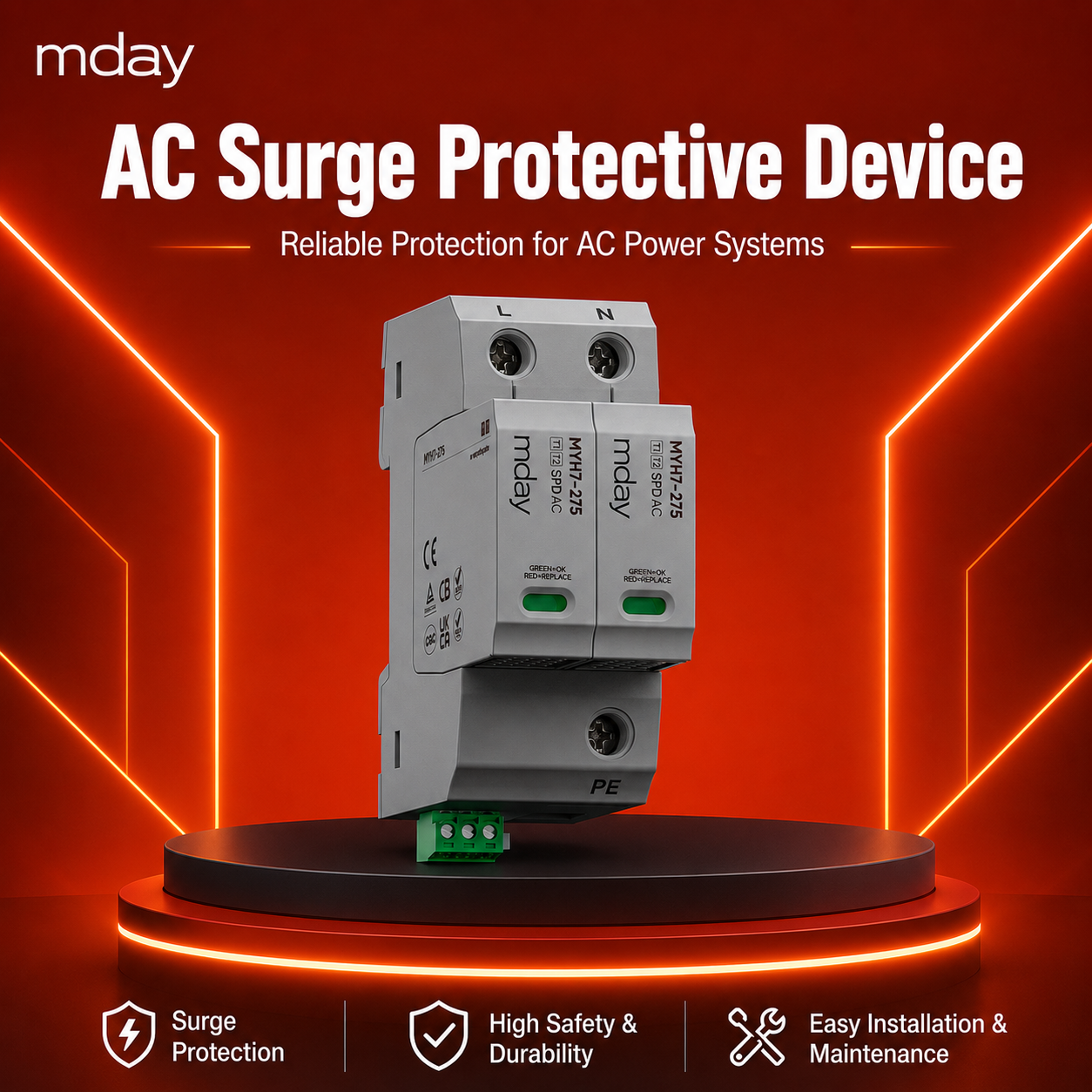
Mday T2 MYN40 20/40KA 2.8KV 2P 3P DC Copper SPD Surge Protector Device for Lightning Protection Industrial Solar Systems
- In/Imax: 20/40kA
- Up: 2.8kV
- Core: Pure Copper
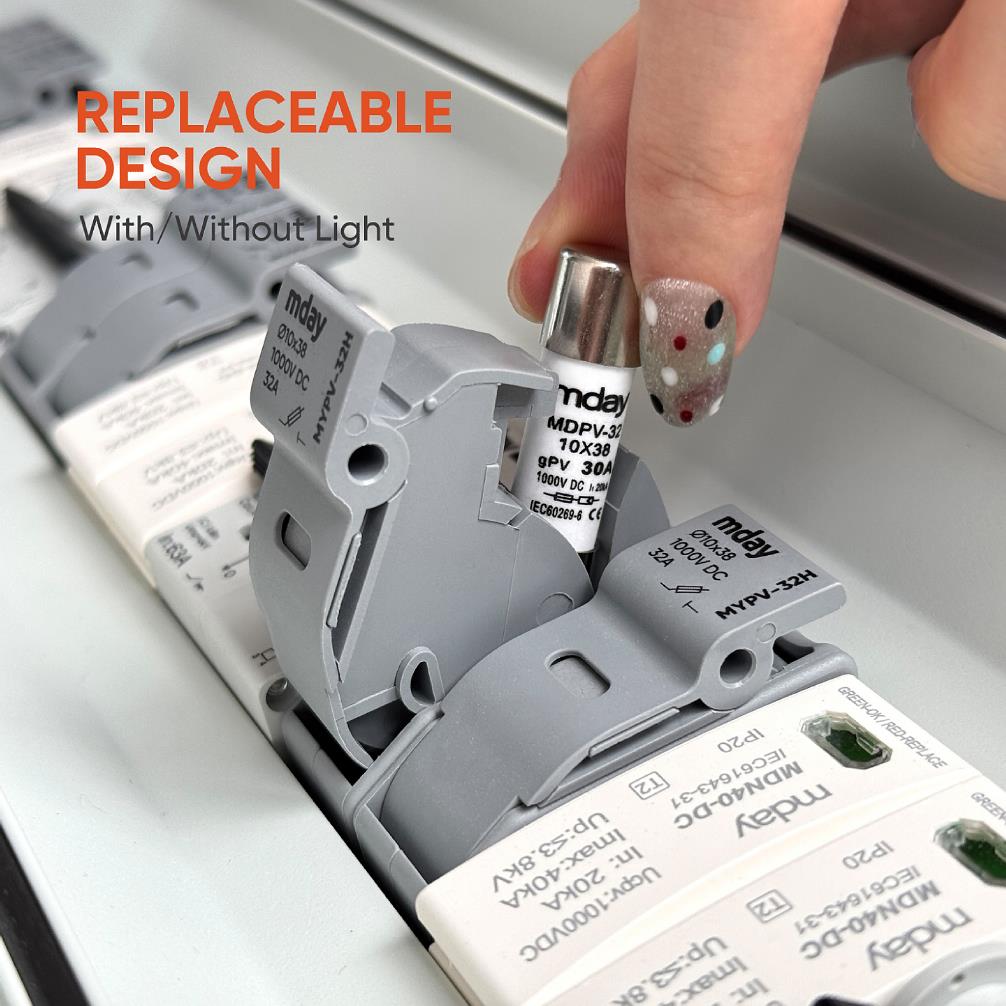
High-Capacity DC 1500V Fuse Preferential Price Solar Pv Fuse Holder From Manufacturer
- Rating: 1500V DC
- Std: IEC 60269-6
- Mount: DIN Rail
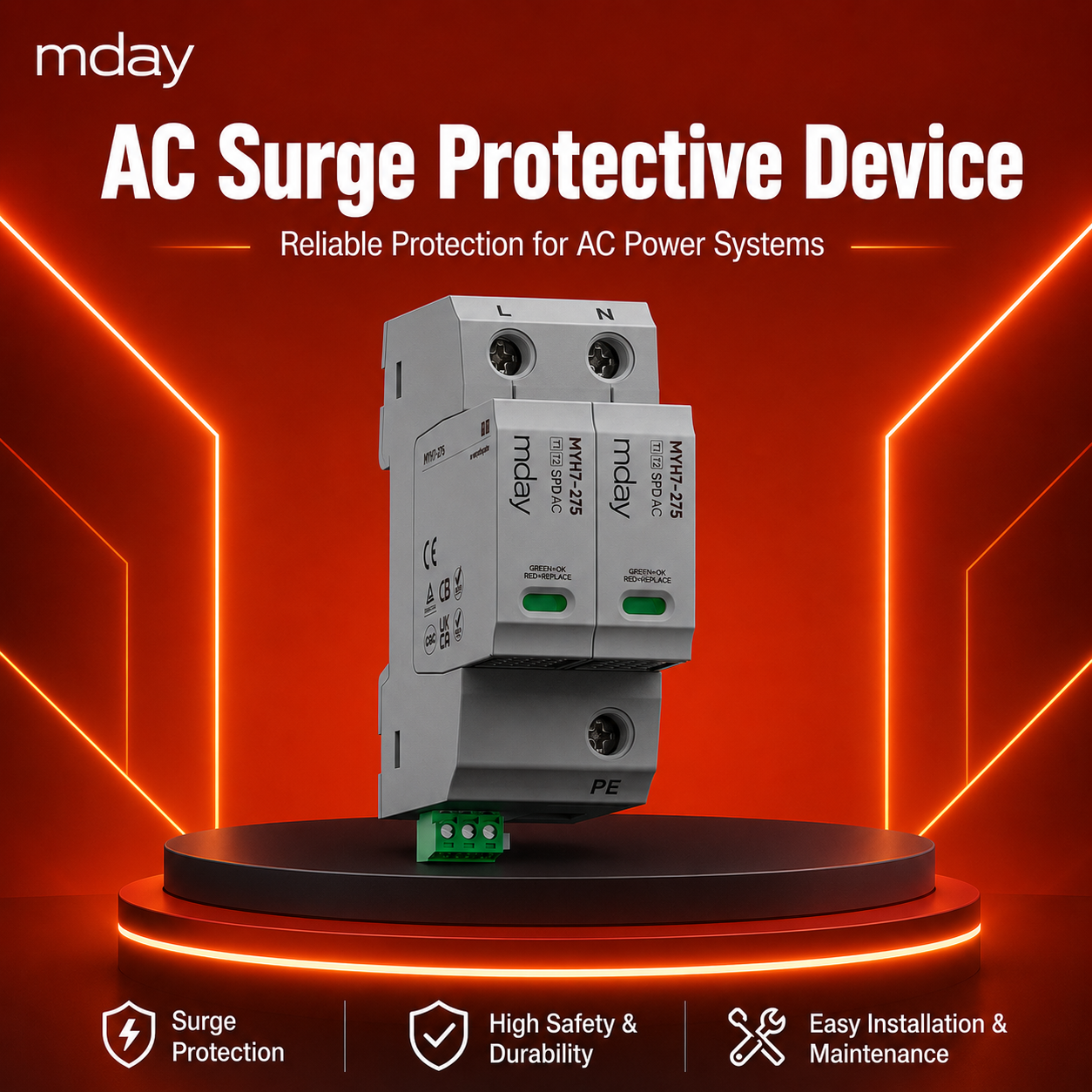
Mday T2 MYN40 VDE-certified 20/40kA AC SPD Surge Protector Device for Solar System Lightning Protection & Industrial Use
- Cert: VDE Certified
- In/Imax: 20/40kA
- App: AC Distribution
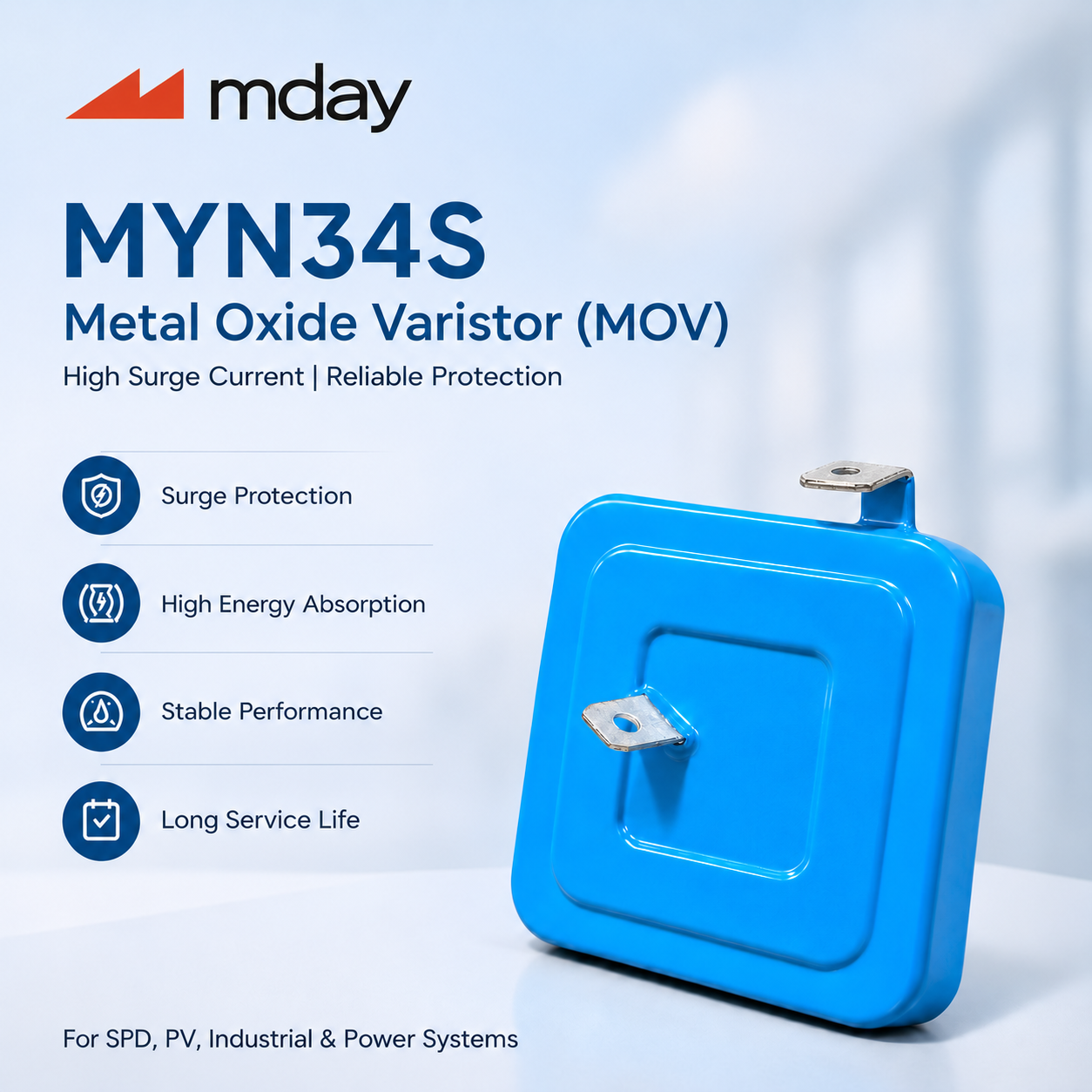
Mday MYN34S 34mm Square Metal Oxide Varistor MOV 275VAC 40kA 8/20s for SPD Surge Protection TUV Certificate
- Size: 34mm Square
- Cap: 40kA (8/20μs)
- Cert: TÜV Approved
Technical Whitepaper: Engineering Next-Generation DC Surge Protection for Photovoltaic Infrastructures
As global solar installations scale rapidly toward utility-grade 1500V DC architectures, system safety and transient overvoltage suppression have emerged as critical prerequisites for commercial viability. Unlike AC electrical circuits, direct current (DC) systems lack a natural zero-voltage crossing point. Consequently, when an electrical arc or transient lightning surge enters a DC solar array, extinguishing the resultant energy requires specialized arc-quenching technologies, high thermal-capacity Metal Oxide Varistors (MOVs), and precision-engineered dynamic disconnector mechanisms.
Luck (zhejiang) New Energy Co., Ltd. (operating under the Mday brand) has established itself as an authoritative supplier and exporter of CE, VDE, and TÜV-verified DC Surge Protective Devices (SPDs). By combining advanced zinc-oxide ceramic sintering with proprietary thermal disconnectors, Mday solutions resolve the severe industry challenge of MOV thermal runaway, providing long-term insulation reliability and zero-catastrophic-failure operation across global photovoltaic projects.
Deploying standard AC surge arresters on DC solar arrays creates a catastrophic fire risk. AC disconnectors rely on sinusoidal zero-crossings to extinguish lingering electric arcs during a surge event. In contrast, high-voltage DC current sustains ionized arc channels indefinitely. Standard AC SPDs will melt or ignite under sustained DC fault currents. Purpose-built DC SPDs certified to IEC 61643-31 and EN 50539-11 incorporate high-speed mechanical disconnection barriers and dual-MOV Y-configuration circuits specifically tuned for DC arcs.
1. Architectural Design & The Role of Y-Topology in Solar SPDs
Modern high-voltage solar arrays operate in floating or functionally grounded configurations where DC positive (+), DC negative (-), and Protective Earth (PE) form a three-node isolation network. Under normal operating conditions, the voltage stress is distributed evenly. However, during atmospheric lightning strikes or switching transients, common-mode and differential-mode surges attack the system simultaneously.
To address this, Mday DC Surge Protectors utilize a mandatory 3-module Y-configuration (or 2-module for lower voltages). This topology places MOV cartridges between (+) to PE, (-) to PE, and (+/ -) internally. If one branch suffers permanent insulation degradation, the remaining MOV modules continue to prevent catastrophic phase-to-earth short circuits. Furthermore, integrated visual indicators change from green to red, signaling electrical maintenance teams to replace the plug-in cartridge without shutting down the inverter string.
2. Technical Parameter Selection Matrix for B2B Procurement
Procurement directors and EPC system designers must carefully align four non-negotiable electrical parameters when sourcing DC surge protection components:
| Electrical Parameter | Symbol | Engineering Definition | Procurement Selection Rule |
|---|---|---|---|
| Max Continuous DC Voltage | Ucpv | Maximum continuous voltage the SPD can withstand safely without degrading. | Must exceed the maximum open-circuit voltage ($V_{oc}$) of the PV array at minimum ambient temperature (Ucpv ≥ 1.2 × $V_{oc}$). |
| Nominal Discharge Current | In | 8/20μs surge current amplitude the SPD can withstand for 15 consecutive impulses. | Standard commercial applications require $I_n \ge 20\text{ kA}$; critical utility installations require $I_n \ge 30\text{ kA}$. |
| Maximum Discharge Current | Imax | Peak 8/20μs surge current amplitude the SPD can dissipate safely once. | High lightning risk regions demand $I_{max} = 40\text{ kA}$ to $60\text{ kA}$ per module. |
| Voltage Protection Level | Up | Maximum clamping voltage across the SPD terminals during impulse current flow. | Must be strictly lower than the impulse withstand voltage ($U_w$) of the inverter ($U_p < 0.8 \times U_w$). |
| Short-Circuit Withstand | Iscwp | Maximum DC short-circuit current the SPD can interrupt autonomously. | Must match or exceed the maximum short-circuit current capability of the connected solar array string. |
Future Sourcing Trends & Technical Market Trajectory (2025–2030)
The global demand for DC surge protective devices is shifting due to evolving installation standards, higher-density energy storage integration, and extreme weather frequencies. Industrial buyers should factor the following industry shifts into their long-term component procurement strategy:
A. Rapid Transition from 1000V DC to 1500V DC Utility & Storage Infrastructures
Utility-scale solar farms are standardizing on 1500V DC systems to reduce cable lengths, lower current losses ($I^2R$), and maximize central inverter capacity. This transition demands SPDs with higher dielectric creepage distances ($>12\text{ mm}$), enhanced flame-retardant housings (UL 94-V0 rated ABS/Polycarbonate), and superior thermal mass varistors capable of clamping energetic lightning surges without insulation puncture.
B. Mandatory Integration of Remote Telemetry & Auxiliary Status Signaling (SD)
Manual visual inspection of solar combiner boxes in remote desert or offshore solar installations is no longer cost-effective. Modern procurement tenders specify SPDs equipped with integrated micro-switch dry contacts ($SD$ remote signaling). These contacts link directly to SCADA systems, automated PLC controllers, or IoT gateways, instantly transmitting an alarm when an MOV module reaches end-of-life or detaches due to severe thermal overload.
C. Coordinated Protection: Hybrid MOV + GDT Technologies
To eliminate micro-leakage current and extend component longevity, hybrid surge arresters combining Metal Oxide Varistors with Gas Discharge Tubes (GDTs) in series are gaining market share. The GDT acts as a high-impedance switch during steady-state DC operations, preventing continuous thermal stress on the varistor. When a high-voltage surge occurs, the GDT ionizes in nanoseconds, allowing the MOV to clamp the transient peak safely before re-sealing automatically.
Why Direct OEM/ODM Procurement from Luck New Energy Yields Competitive Advantage
Headquartered in the Yueqing Economic Development Zone, Wenzhou—the world's premier cluster for low-voltage electrical engineering—Luck (zhejiang) New Energy Co., Ltd. operates state-of-the-art manufacturing facilities certified by TÜV Rheinland. Our engineering team controls the complete production chain from raw material inspection to automated MOV sub-assembly.
Certified Quality Compliance
Products hold VDE, TÜV, CE, and ISO9001 certifications. Fully compliant with international standards IEC 61643-31, EN 50539-11, UL 248-19, and IEC 60269-6.
In-House Testing Facility
Our dedicated laboratory houses 9 precision testing instruments, including 8/20μs impulse current generators, thermal degradation chambers, and high-voltage DC calibration benches.
Robust Manufacturing Scale
55 highly trained staff operating 3 automated production lines ensure rapid lead times (2–7 days for standard products) with an export share exceeding 70% worldwide.
Full OEM/ODM Flexibility
7+ years of OEM/ODM private-label experience. Customized housing colors, custom laser-etched branding, modified clamping voltages, and pre-wired combiner box assemblies.
B2B Sourcing & Engineering FAQ: Frequently Asked Procurement Questions
Below are technical and commercial responses to the queries most frequently submitted by solar EPC contractors, electrical distributors, and OEM panel builders.
1. Why do DC surge protective devices (SPDs) require special IEC 61643-31 certification distinct from AC SPDs? +
Photovoltaic DC currents do not cross a zero-voltage point, meaning electrical arcs created during fault conditions are self-sustaining and significantly harder to extinguish than AC arcs. Standard AC SPDs certified under IEC 61643-11 lack the arc-chutes and high-mass thermal disconnectors necessary to break continuous DC short-circuits. IEC 61643-31 (and EN 50539-11) mandates specialized testing procedures specifically evaluating thermal disconnector safety under high DC short-circuit conditions ($I_{scwp}$), ensuring the arrester disengages cleanly without catching fire or shorting out the PV array.
2. How do I calculate the correct voltage rating ($U_{cpv}$) for a solar DC surge protector? +
The Maximum Continuous Operating Voltage ($U_{cpv}$) of a DC SPD must be greater than or equal to the maximum open-circuit voltage ($V_{oc}$) of the solar string under lowest temperature conditions. Standard practice dictates applying a minimum safety factor of 1.15 to 1.20 to the cold-weather $V_{oc}$ calculation ($U_{cpv} \ge 1.2 \times V_{oc}$). For example, if a solar array has a cold-weather peak $V_{oc}$ of 830V DC, a 1000V DC SPD ($U_{cpv} = 1000\text{V}$) must be selected to avoid continuous stress and premature thermal breakdown of the MOV components.
3. What is the difference between Type 1+2 and Type 2 DC SPDs in photovoltaic applications? +
Type 1+2 DC SPDs (tested with a 10/350μs waveform impulse current, $I_{imp}$) are designed to handle direct lightning discharges and high-energy partial lightning surges. They are installed at main DC entrance panels or high-risk outdoor combiner boxes on buildings equipped with external lightning protection systems (LPS). Type 2 DC SPDs (tested with an 8/20μs current wave, $I_{max}$) protect against indirect lightning surges, induced switching overvoltages, and grid transients. They are installed at string inverters, internal combiner boxes, and residential PV monitoring points.
4. Why is thermal disconnect protection critical in DC surge protectors? +
Metal Oxide Varistors (MOVs) experience cumulative degradation over time due to repeated transient suppression events and high ambient temperature stress. As an MOV degrades, its leakage current increases, generating internal heat. A precision-engineered thermal disconnector utilizes low-melting-point solder joints held under spring tension. When internal temperature exceeds safe thresholds (typically ~120°C–130°C), the solder melts, and the mechanical arm snaps open, isolating the degraded MOV module from the live DC bus before thermal runaway occurs.
5. How does Metal Oxide Varistor (MOV) quality impact solar system safety? +
The MOV is the active heart of an SPD. Low-quality MOV discs suffer from non-uniform zinc oxide grain boundaries, leading to localized hot-spots under surge currents. This results in premature short-circuiting, lower energy dissipation capability, and unexpected system downtime. Mday utilizes 34mm high-purity square MOV components (such as the TÜV-certified MYN34S series) engineered for uniform surge current distribution, exceptional energy absorption capacity (up to 40kA 8/20μs), and low clamping voltages.
6. What certifications are mandatory for importing DC SPDs into the European Union and North America? +
For the European Union, compliance with the Low Voltage Directive (LVD) via CE Marking and testing under EN 50539-11 or IEC 61643-31 is mandatory. Premium European buyers often require third-party marks such as VDE or TÜV Rheinland. For North America, devices must comply with UL 1449 5th Edition (Type 1 CA or Type 2 CA Component Assemblies for PV) or CSA C22.2 standards.
7. Can DC circuit breakers replace DC surge protectors in a PV combiner box? +
No. DC circuit breakers (MCBs/MCCBs) and DC surge protective devices perform entirely different protection functions. A DC circuit breaker is a mechanical device designed to interrupt low-frequency overcurrents and sustained short-circuit faults (operating in milliseconds). An SPD is a non-linear voltage-clamping device designed to suppress nanosecond-duration high-voltage lightning impulses ($kV$). They must be installed in parallel to provide complete electrical protection.
8. What customization (OEM/ODM) options are supported for private label DC protection components? +
Luck New Energy offers extensive OEM/ODM capabilities, including private-label brand silk-screening or laser etching, custom DIN-rail enclosure colors (e.g., custom gray, orange, black), custom voltage ratings ($U_{cpv} = 500\text{V}, 600\text{V}, 800\text{V}, 1000\text{V}, 1200\text{V}, 1500\text{V}$), customized terminal configurations, specialized retail packaging, and complete pre-wired IP65 solar combiner box build-outs tailored to exact engineering bill of materials (BOM).
9. What is the typical lead time and minimum order quantity (MOQ) for bulk DC SPD exports? +
Standard catalog models (such as Mday 1000V 40kA DC SPDs and gPV 10x38mm fuse holders) feature flexible MOQs starting from 50 to 200 units, with typical production dispatch taking 2 to 7 business days. Full custom OEM orders, private-label branding, or specialized container-load shipments are scheduled within 15 to 20 days following sample approval and engineering sign-off.
10. How does Luck New Energy conduct quality testing on DC SPDs and MOV components? +
Quality assurance follows a strict 4-stage protocol: 1) Incoming inspection of MOV ceramic discs and copper contact materials; 2) In-process calibration during automated terminal soldering; 3) 100% finished-product dielectric insulation and leakage current testing ($I_{pe}$ at $U_{cpv}$); and 4) Batch sampling impulse testing using our in-house 8/20μs high-current generator to confirm protection level ($U_p$) stability.
