Featured DC Protection Components for Fukuoka Projects
Certified Class II / Type 2 & Type 1+2 DC Surge Protective Devices, High-Voltage Fuses, and Breakers Stocked for Direct Export

Technical Whitepaper: Mitigating DC Overvoltage Risks in Fukuoka’s Photovoltaic Infrastructure
Fukuoka Prefecture, serving as the commercial engine and energy dispatch nerve center of Kyushu, occupies a geographically unique and meteorologically challenging position in Southwestern Japan. As Kyushu continues to lead the nation in renewable energy penetration—frequently achieving solar power generation levels that exceed regional demand—the reliability requirements placed on Direct Current (DC) circuit protection components have escalated dramatically. For engineering, procurement, and construction (EPC) firms, panel builders, and project developers operating within Fukuoka, Kitakyushu, Kurume, and surrounding industrial zones, protecting solar arrays and Battery Energy Storage Systems (BESS) against transient overvoltage is not merely a design checkbox; it is a critical safeguard for multi-million-yen capital assets.
As an established global manufacturer and specialized exporter, Luck (Zhejiang) New Energy Co., Ltd. delivers VDE, TÜV, UL, and CE-certified DC Surge Protective Devices (SPDs) purpose-engineered to withstand the compounded environmental stressors of the Kyushu region. This technical document presents an in-depth analysis of lightning surge dynamics, microclimatic degradation variables, selection parameters under Japanese Industrial Standards (JIS C 5381-31 / IEC 61643-31), and system integration strategies tailored specifically for the Fukuoka market.
Critical Engineering Note for Kyushu System Integrators
Kyushu Electric Power Company (Kyuden) enforces strict grid interconnection guidelines regarding voltage ride-through and automatic trip behavior during switching operations. Transient overvoltage events originating on long DC string cables can corrupt inverter control electronics, leading to accidental tripping during peak feed-in windows. Installing high-performance Type 2 DC SPDs with low residual voltage (Up ≤ 3.8 kV at 1500V DC) is essential to maintain continuous operation during grid-side grid transients.
1. Environmental & Electrical Stressors Specific to the Fukuoka Region
Designing DC surge protection systems for Fukuoka requires accounting for three intersecting physical factors: high lightning stroke density during seasonal transition months, extreme atmospheric salinity from the Genkai Sea and Hakata Bay, and volcanic ash deposits from active regional volcanoes such as Mt. Aso and Sakurajima.
A. Summer Lightning & Typhoon Season Transients: Between June and September, humid sub-tropical maritime air masses collide with continental fronts over Kyushu, producing frequent, high-intensity cloud-to-ground lightning strikes. Furthermore, the annual typhoon corridor subjects solar farms in rural Fukuoka to severe electromagnetic field fluctuations (LEMP - Lightning Electromagnetic Impulse). Induced voltage surges ($V = L \cdot \frac{di}{dt}$) propagating down exposed DC string cables can easily reach tens of kilovolts, destroying inverter MPPT input stages and ungrounded PV module frames if adequate clamping mechanisms are absent.
B. Marine Salt Mist & Insulation Creepage Degradation: Coastal solar installations along Fukuoka’s northern coastline face continuous exposure to aerosolized sodium chloride (NaCl). Marine salt accumulation on SPD housings creates conductive surface films when exposed to high ambient humidity. Standard plastic enclosures with low Comparative Tracking Index (CTI) ratings are susceptible to tracking arcing and flashovers. Luck New Energy utilizes high-CTI flame-retardant polyamide (PA66) housings rated UL94 V-0, ensuring high dielectric breakdown resistance even under severe salt mist conditions compliant with IEC 60068-2-52 Severity Level 5.
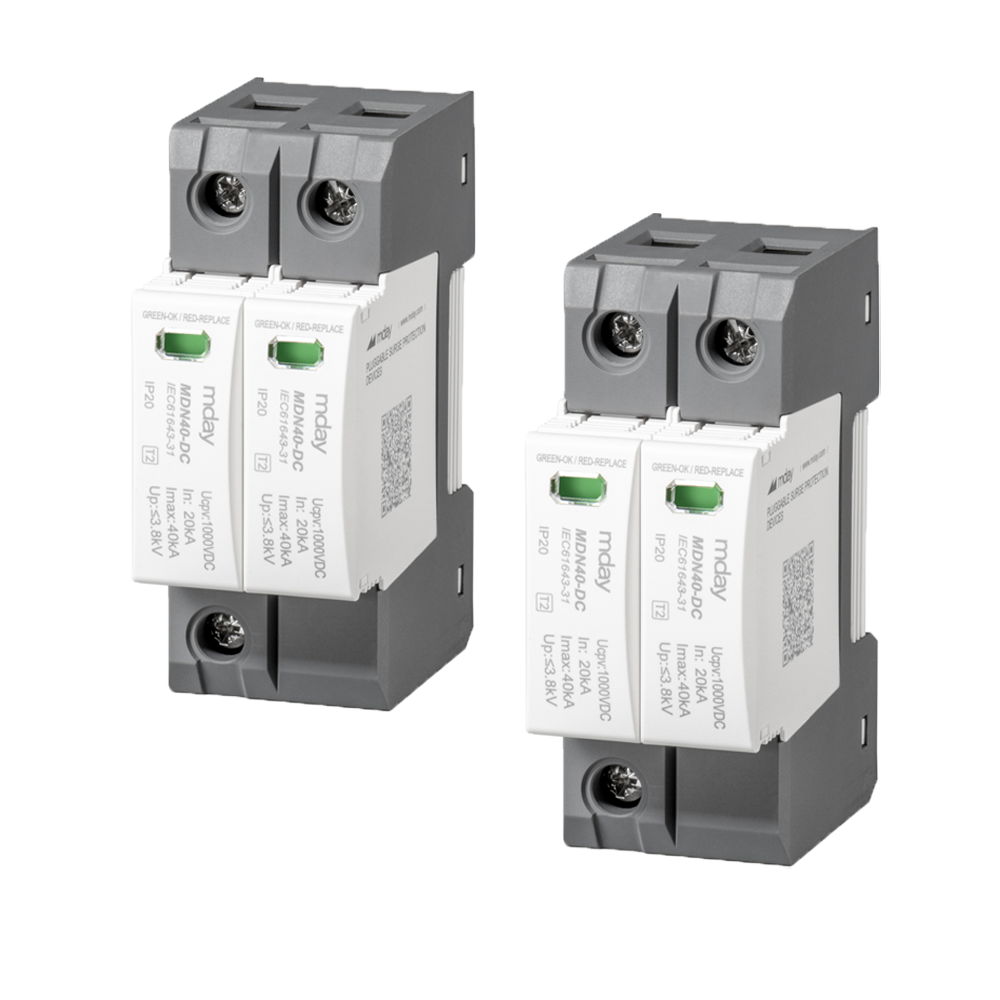
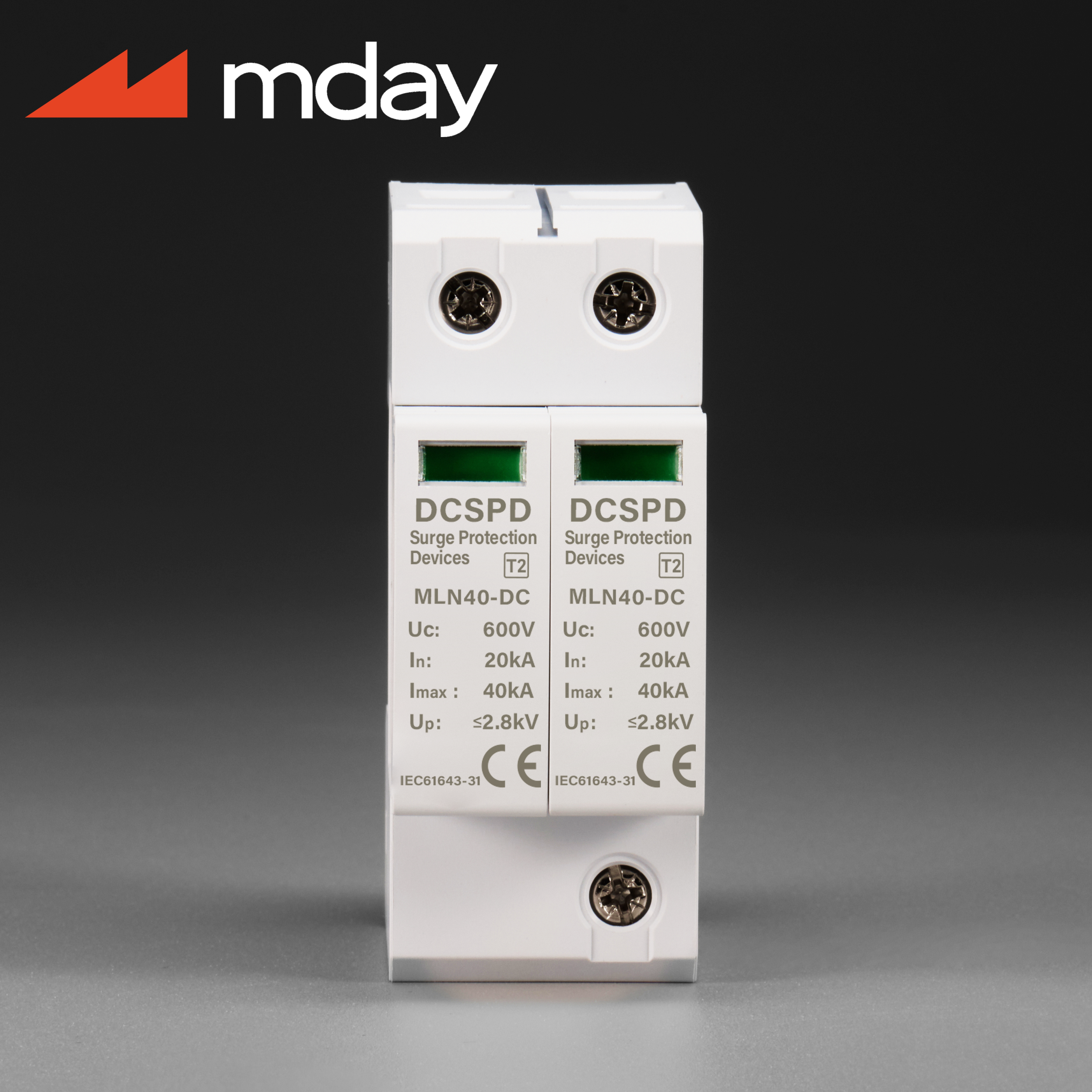
C. Airborne Volcanic Ash & Thermal Dissipation Challenges: Fine particulate matter originating from regional volcanic activity settles on field-installed combiner boxes and inverter enclosures. Fine particulate accumulation degrades natural convective cooling, driving internal enclosure temperatures above 60°C during peak summer irradiance. High ambient temperatures accelerate the thermal aging of standard Metal Oxide Varistors (MOVs). Our MLN40-DC and MYN40 product lines incorporate specialized eutectic thermal disconnectors calibrated to trip safely before varistor thermal runaway occurs, preventing localized electrical fires.
MOV + Thermal Disconnector Architecture
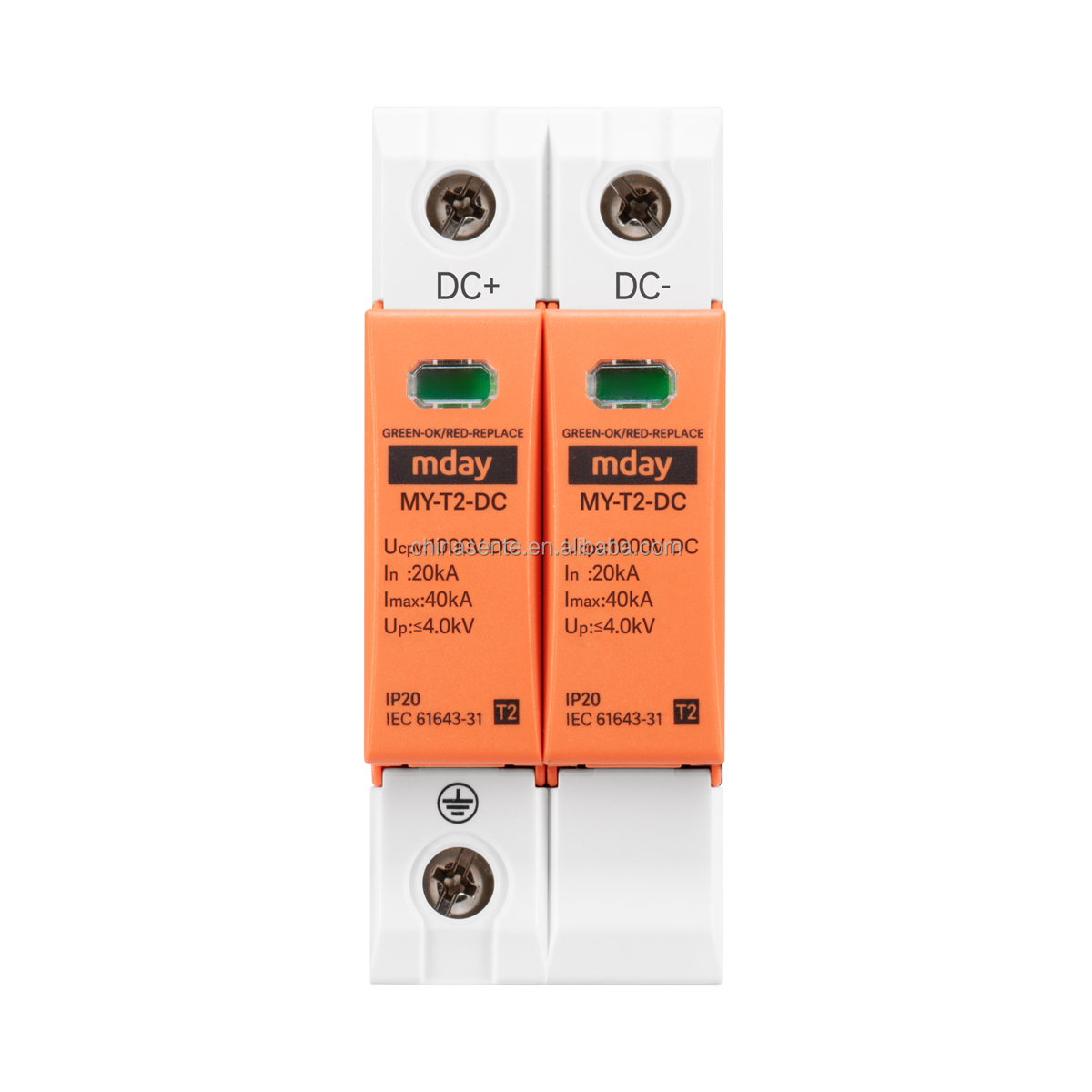
Our DC Surge Protection Devices utilize high-purity Zinc Oxide (ZnO) ceramic varistors fortified with bismuth and antimony oxides. Under normal operating voltages ($U_{cpv}$), the MOV presents mega-ohm impedance, drawing negligible leakage current ($I_{pe} < 20\,\mu\text{A}$). When a transient overvoltage impulse strikes, the micro-junctions between ZnO grains transition in nanoseconds into a low-resistance state, safely diverting up to 40kA (8/20μs waveform) to ground.
- Eutectic alloy thermal cut-off calibrated to 136°C
- Visual green/red status indicator linked to physical disconnect
- Optional remote signaling contact (SD) for SCADA integration
SPD Response Curve vs Voltage Impulse
2. Detailed Selection Parameters: 1000V DC vs 1500V DC Topologies
As commercial and utility-scale solar installations in Fukuoka transition from traditional 1000V DC configurations to high-efficiency 1500V DC string architectures, selecting the precise maximum continuous operating voltage ($U_{cpv}$) becomes paramount to prevent premature component failure or safety non-compliance.
In accordance with JIS C 5381-31 (Low-voltage surge protective devices - Part 31: SPDs connected to photovoltaic installations), the rated $U_{cpv}$ must be strictly higher than the maximum open-circuit voltage ($V_{oc\,\text{max}}$) of the PV array under extreme cold ambient conditions. In high-altitude areas of inland Fukuoka (such as the mountains near Soeda or Yame), winter temperatures drop below -5°C, causing PV module open-circuit voltage to rise due to negative temperature coefficients.
For a 1500V nominal system, cold-weather voltage spikes can push array $V_{oc}$ to 1380V or higher. Standard 1200V-rated SPDs will enter continuous conduction, leading to thermal breakdown and catastrophic failure. Luck New Energy’s MLN40-DC 1500V series provides a robust $U_{cpv}$ rating of 1500V DC, ensuring an adequate safety buffer against environmental voltage variations.
| Electrical Parameter | 1000V DC System Requirement | 1500V DC System Requirement | Luck New Energy Engineering Solution |
|---|---|---|---|
| Max Continuous Voltage ($U_{cpv}$) | ≥ 1170 V DC | ≥ 1500 V DC | MLN40-DC 1000V / 1500V Models Available |
| Nominal Discharge Current ($I_n$) | 15 kA - 20 kA (8/20μs) | 20 kA (8/20μs) | 20 kA certified nominal discharge current |
| Max Discharge Current ($I_{max}$) | 40 kA (8/20μs) | 40 kA (8/20μs) | Heavy-duty 40 kA MOV block integration |
| Voltage Protection Level ($U_p$) | ≤ 2.8 kV - 3.2 kV | ≤ 3.8 kV - 4.2 kV | Optimized $U_p$ matching inverter impulse withstand ($U_w$) |
| Short-Circuit Current Rating ($I_{scpv}$) | 1000 A | 1000 A - 2000 A | Integrated arc-extinguishing chamber (1000A $I_{scpv}$) |
| Applicable Standard | JIS C 5381-31 / IEC 61643-31 | JIS C 5381-31 / IEC 61643-31 | Full VDE & TÜV Rheinland compliance certificates |
3. Localized Application Scenarios Across Kyushu & Fukuoka
Different solar and storage installations require distinct protection topologies based on location, system sizing, and grid interface characteristics. Below are the primary deployment scenarios engineered by Luck New Energy for Fukuoka clients:
Utility-Scale Ground-Mounted Solar (Kitakyushu & Asakura)
Large multi-megawatt farms spanning hilly terrain are highly vulnerable to direct and indirect lightning strikes. Deployment requires Class I+II (Type 1+2) SPDs on central combiner boxes to handle direct lightning current impulses ($I_{imp}$ up to 7kA/12.5kA 10/350μs waveform), coupled with Type 2 SPDs directly at the inverter DC terminal inputs.
Commercial Rooftop Arrays (Hakata Logistics & Industrial Parks)
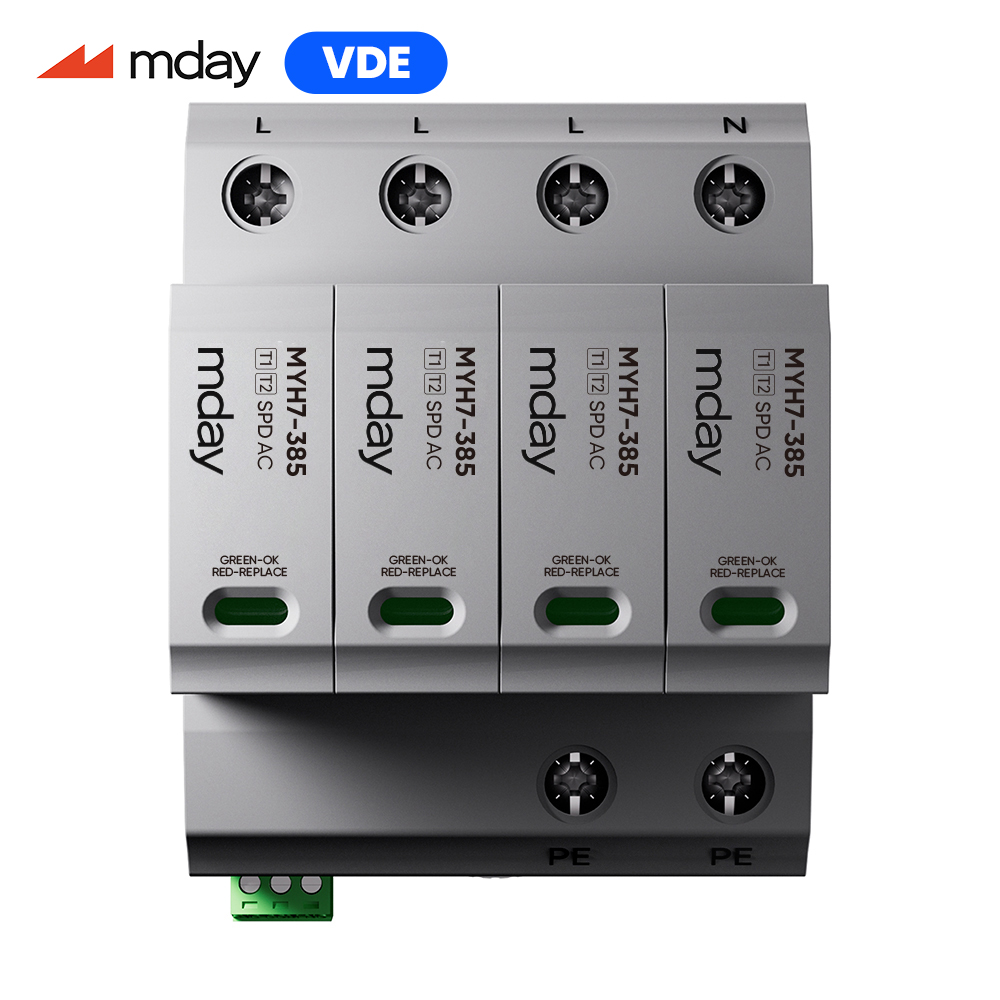
High-density industrial distribution centers in Hakata and Kanda feature extensive metal roofing structures. Induced switching surges from adjacent heavy machinery and grid step-down transformers demand Type 2 DC SPDs (MLN40-DC) on string combiner enclosures, alongside 4-Pole AC Type 1+2 SPDs (MYH7 385V) on main AC distribution boards.
Coastal Agrivoltaics & Salt-Exposed Solar (Itoshima Peninsula)
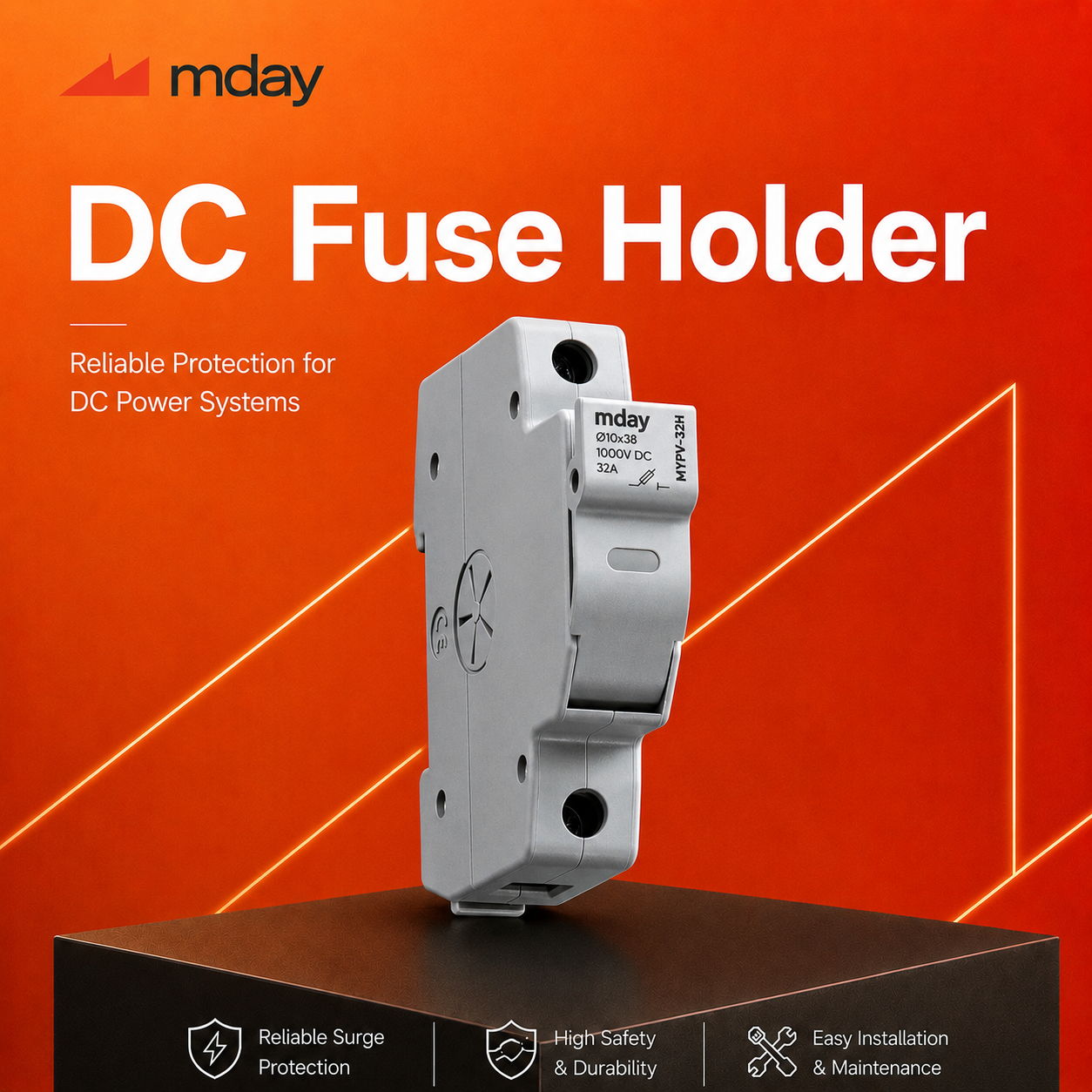
Agrivoltaic arrays combining greenhouse structures with solar power along the Genkai Sea face severe moisture condensation and corrosion. Systems require IP65-rated waterproof PV combiner boxes pre-fitted with DIN-rail mounted DC SPDs, silver-plated fuse links (MYPV-32H), and UV-resistant polycarbonate housings.
Microgrids & Distributed BESS (Fukuoka Suburban Residential/Commercial)
Energy storage systems paired with distributed PV require bidirectional DC protection. Surge devices must handle rapid charge/discharge transient spikes without false tripping, isolating lithium battery management systems (BMS) from high-voltage DC bus transients during rapid solar generation curtailment events.
4. Strategic Market Trends in Kyushu’s Renewable Energy Sector
The renewable energy market in Fukuoka and broader Kyushu is undergoing several significant technological transitions that directly impact electrical safety component specification:
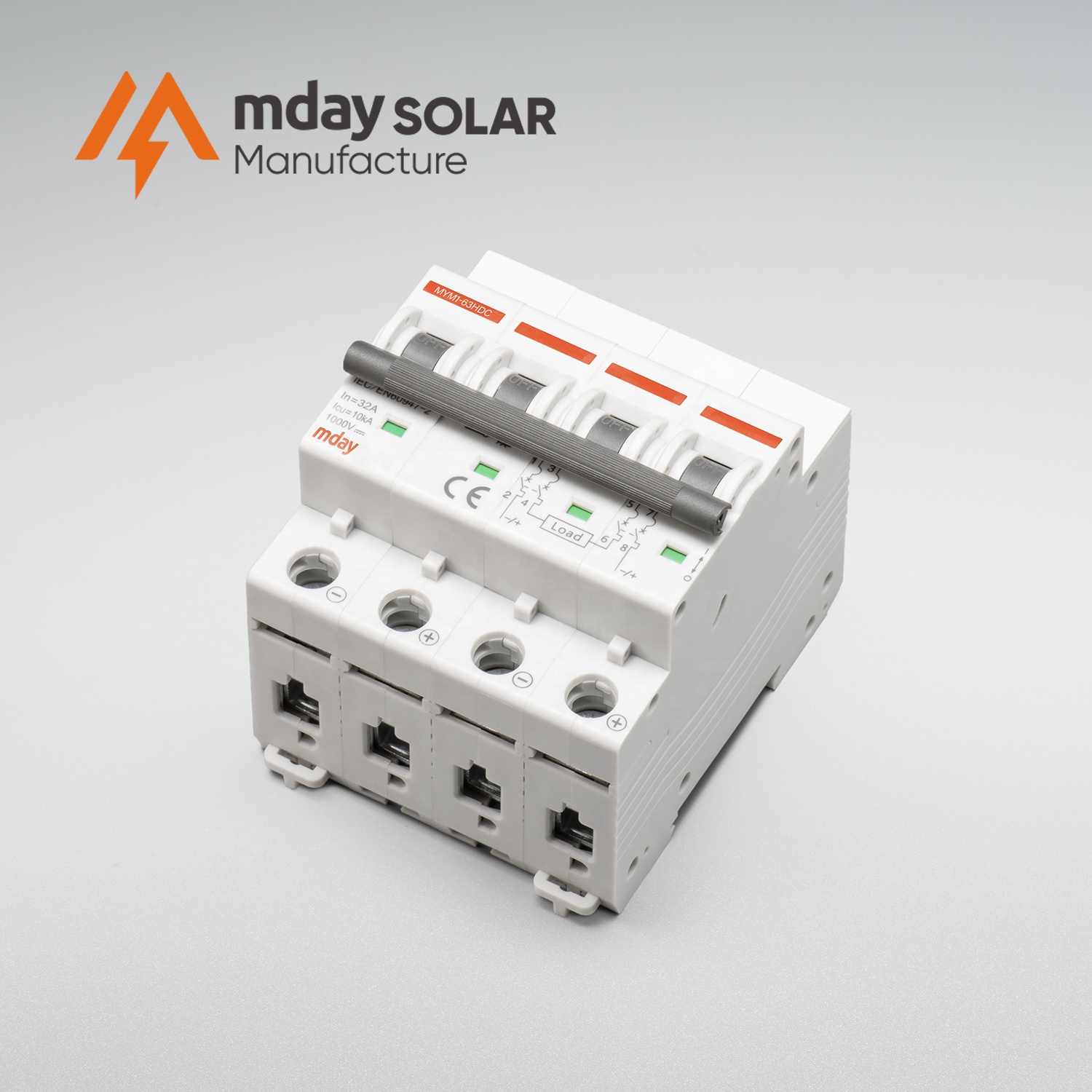
1. Aggressive Expansion of BESS Integration: To combat frequent curtailment orders imposed by Kyushu Electric during sunny spring months, developers are retrofitting utility solar farms with large-scale battery energy storage systems. High-voltage battery systems (operating up to 1500V DC) require fast-acting DC Miniature Circuit Breakers (MCBs) and Moulded Case Circuit Breakers (MCCBs) such as our MDM3DC-250 series (250A, 500V/1000V/1500V, 20kA breaking capacity) paired with specialized MOVs to absorb energy feedback surges during emergency DC disconnections.
2. Harmonization with Global IEC Standards: Japan’s Ministry of Economy, Trade and Industry (METI) has accelerated the alignment of local Electrical Appliance and Material Safety Law (DENAN) guidelines with international standards. Consequently, Japanese EPC procurement engineers now explicitly mandate IEC 61643-31 / JIS C 5381-31 certification for DC SPDs, along with UL 248-19 compliance for 10x38mm gPV solar fuse links. Products lacking verified international test reports are increasingly disqualified from municipal and corporate tender proposals.
3. Demand for Modular Maintenance & Remote Monitoring: To reduce operational expenditure (OPEX) across remote Kyushu solar facilities, asset managers prefer pluggable SPD cartridge designs. Modules equipped with dry contact remote auxiliary contacts allow automated SCADA systems to alert maintenance teams immediately when a varistor module degrades and trips green-to-red, enabling target replacements before catastrophic overvoltage events occur.
Why Fukuoka Buyers Trust Luck New Energy
Vertical integration from varistor powder synthesis to fully automated SPD assembly ensures total quality control.
-
✔
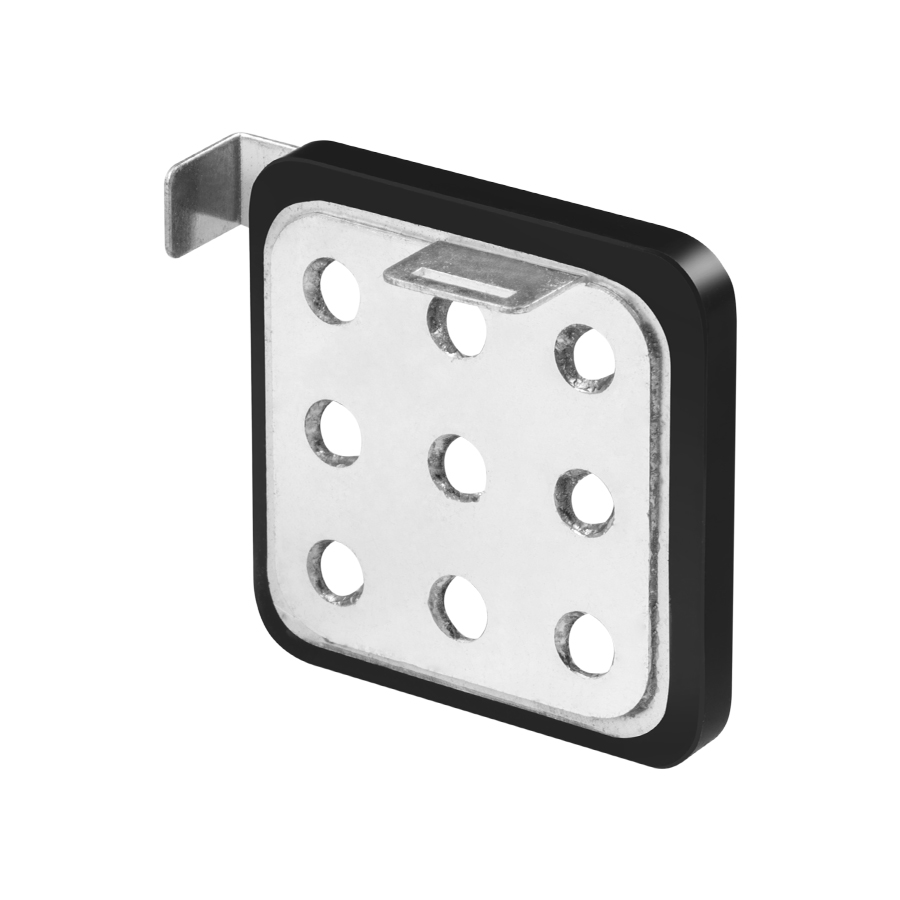
In-House MOV Element Production: Unlike assemblers who source third-party varistor disks, we manufacture 34mm square MOV chips (MYN34S) in-house, ensuring strict control over clamping voltage uniformity and energy absorption capacities ($I_{max} = 40\text{kA}$).
-
✔
TÜV Rheinland Onsite-Verified Facility: Our 55-person manufacturing plant in Yueqing Economic Development Zone operates under audited ISO 9001 quality management systems with 100% finished-product screening.
-
✔
VDE & CE Testing Laboratories: Equipped with 9 specialized testing instruments including 8/20μs impulse current generators, high-voltage DC insulation testers, and salt-mist environmental test chambers.
Fast Delivery to Hakata & Moji Ports
We offer streamlined export logistics tailored for Japanese buyers. Standard catalog models ship within 2 to 7 days. We provide comprehensive export documentation including Certificate of Origin (Form E/RCEP), detailed factory test reports (FAT), and English/Japanese technical datasheets.
Frequently Asked Questions by Fukuoka Procurement Engineers
Direct answers to technical and commercial inquiries commonly submitted by Japanese importers, electrical distributors, and solar EPC companies:
Do Luck New Energy DC SPDs comply with Japanese Industrial Standard JIS C 5381-31?
Yes. Our complete solar DC surge protective device lineup (including the MLN40-DC and MYN40 series) is fully compliant with IEC 61643-31 and its Japanese standard equivalent, JIS C 5381-31. Testing reports verify performance parameters including $U_{cpv}$ withstand, $I_n$ (20kA 8/20μs), $I_{max}$ (40kA 8/20μs), and short-circuit current rating ($I_{scpv} = 1000\text{A}$). Complete test documentation is provided with project quotes.
How do your SPDs handle the salt air corrosion in coastal Fukuoka installations?
Our DIN-rail housings are moulded using high-grade thermoplastic polyamide 66 (PA66) reinforced with flame retardants, possessing a high Comparative Tracking Index (CTI > 600V). Internal metallic contacts are treated with anti-corrosive silver/nickel plating, meeting IEC 60068-2-52 salt mist endurance tests. For direct outdoor marine exposure, we recommend mounting our SPDs inside Luck IP65 waterproof PV combiner boxes.
Can you provide customized OEM/ODM branding for Japanese electrical brands?
Absolutely. With over 7 years of specialized OEM experience, we provide private labeling, custom housing colors (white, black, gray, orange), custom laser-printed technical markings, customized packaging, and modified pin terminal configurations. Minimum order quantities (MOQ) for custom branding start as low as 200 pieces depending on the model.
What is the recommended replacement cycle for DC SPDs operating in high-lightning regions?
While Luck SPDs are engineered to sustain multiple nominal surge strikes ($I_n = 20\text{kA}$ up to 15-20 times), a direct or near-miss lightning stroke exceeding 40kA will intentionally sacrifice the MOV disk to protect downstream inverters. The visual status indicator will turn from Green to Red. Plug-in modular designs allow field technicians to swap the degraded cartridge in seconds without disconnecting main DC wiring.
What shipping options and lead times apply for orders delivered to Fukuoka or Kitakyushu?
Standard models maintain regular factory stock and can be dispatched within 2 to 7 working days. For bulk ocean freight, direct shipping routes from Ningbo or Shanghai Port to Hakata Port (Fukuoka) or Moji Port (Kitakyushu) take approximately 3 to 5 transit days. Air express options (DHL/FedEx) arrive within 48 to 72 hours for urgent project replacements.
What payment terms are available for verified Japanese importers?
We accommodate flexible international trade payment methods including Telegraphic Transfer (T/T), Irrevocable Letter of Credit at sight (L/C at sight), Documents Against Payment (D/P), Western Union, and PayPal for sample orders. Credit terms can be evaluated for long-term contract partners following credit index verification.
Request Engineering Datasheets & Direct Factory Quotes
Partner directly with a TÜV-verified DC surge protection manufacturer. Send us your system line diagrams or required specifications, and our senior electrical engineering team will respond within 24 hours.
