Featured Photovoltaic & DC Circuit Protection Products
Industrial-grade DC fuse bases, gPV fuse links, DIN rail holders, and surge protection devices designed for high-reliability Japanese renewable installations.

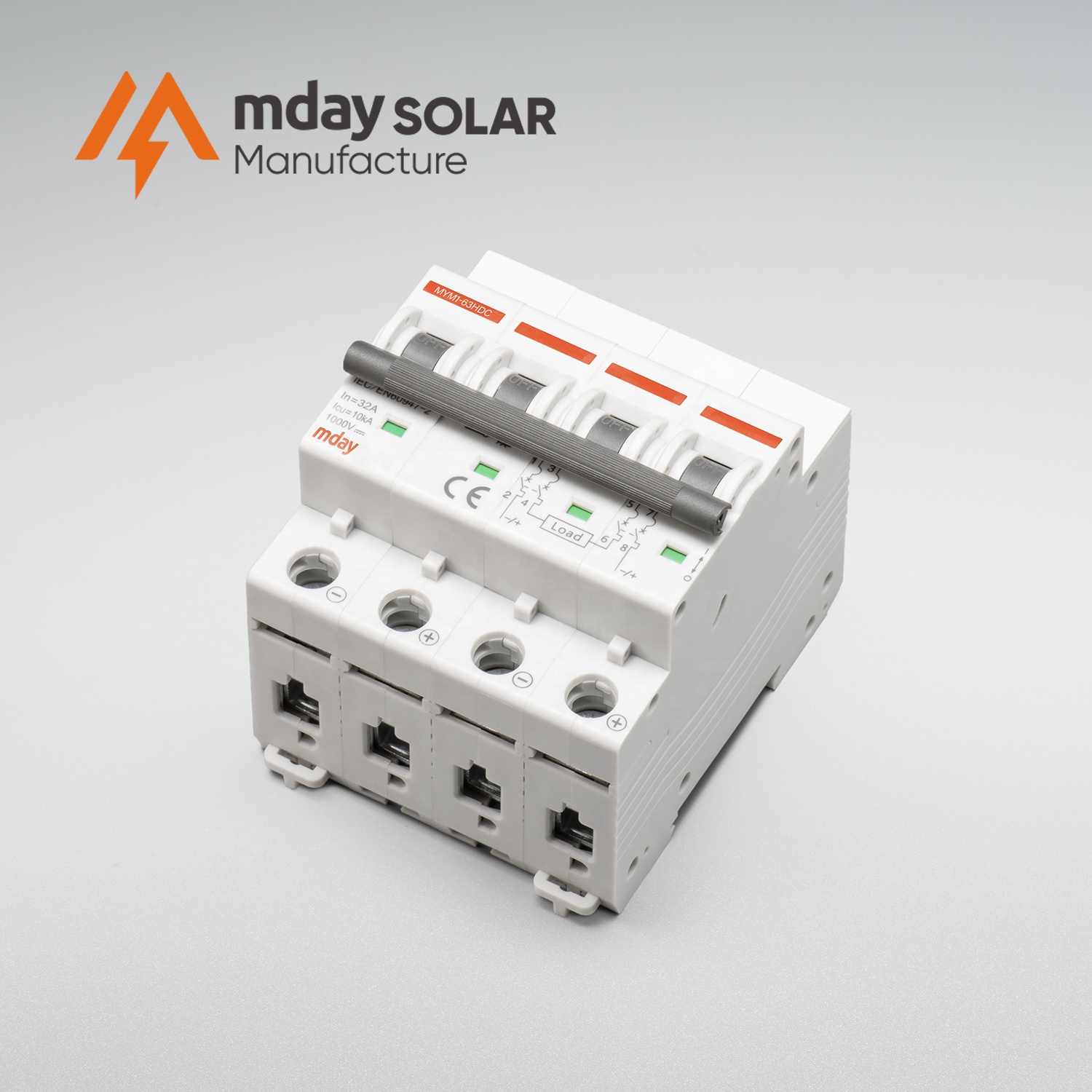
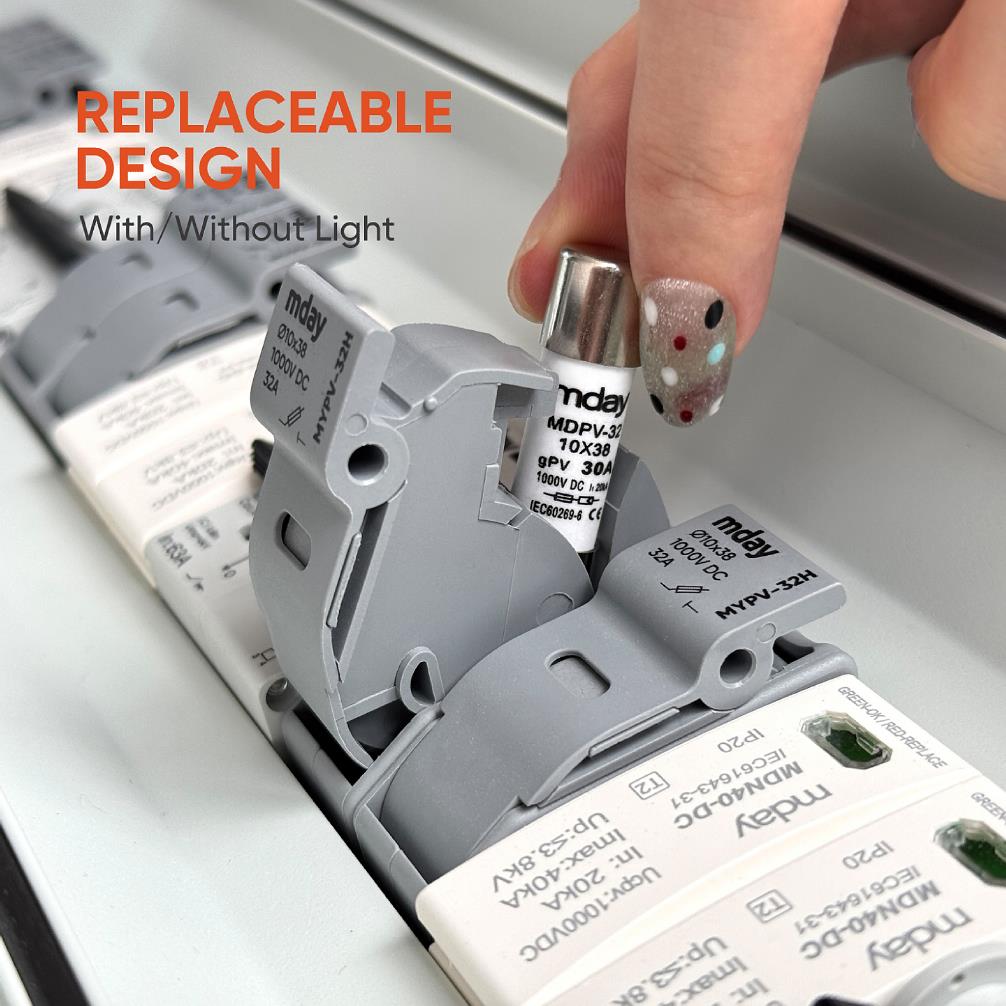
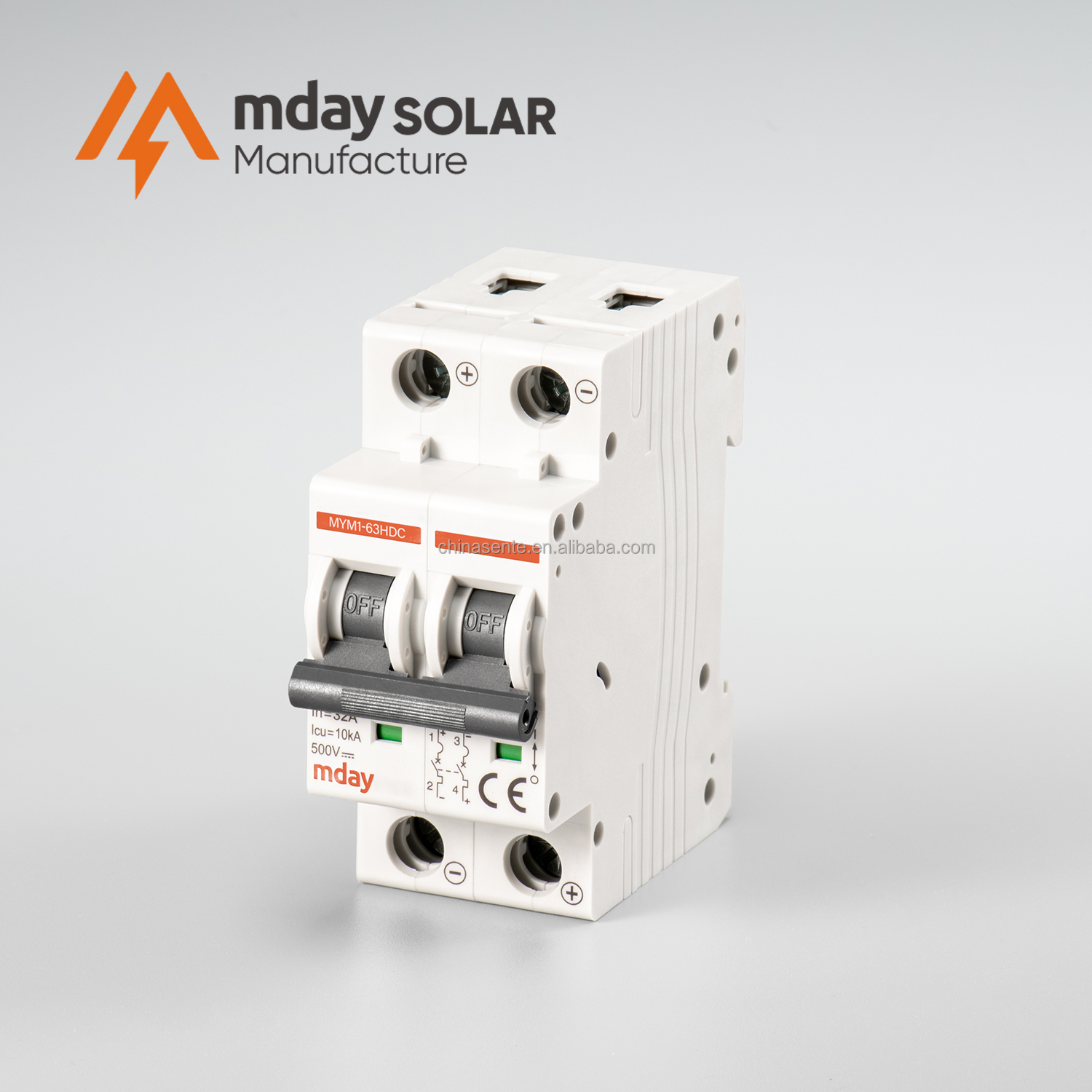
Technical Whitepaper: Engineering DC Fuse Bases for Japan’s Next-Gen PV & Storage Infrastructure
A comprehensive analysis on technical compliance, arc interruption physics, thermal dissipation, and wholesale sourcing strategies for Japanese EPCs and panel builders.
1. The Shift to 1500V DC Systems in Japan & Regulatory Drivers
Japan’s solar energy landscape is undergoing a structural transition driven by the Ministry of Economy, Trade and Industry (METI) Green Transformation (GX) initiative and the shift toward grid-scale renewable parity. While early FIT (Feed-in Tariff) installations predominantly utilized 600V and 1000V DC architectures, modern Japanese Mega-Solar projects, agrivoltaic systems, and Battery Energy Storage Systems (BESS) are aggressively adopting 1500V DC topologies.
Operating at 1500V DC yields significant balance-of-system (BOS) savings by allowing longer PV string lengths, reducing cable cross-sections, and minimizing line loss. However, increasing DC open-circuit voltage (Voc) under low ambient temperatures—such as those encountered in Hokkaido and Tohoku regions—drastically intensifies electrical arc persistence during fault conditions. Consequently, high-capacity DC fuse bases must comply strictly with international and Japanese standards, including JIS C 8528 / JIS C 8201 and IEC 60269-6 (gPV class), ensuring fast-acting arc extinction without catastrophic housing flashover.
Key Takeaway for Japanese Systems Integrators: Standard AC fuse bases or substandard DC holders cannot safely extinguish direct current arcs due to the absence of natural zero-crossing points. Sourcing certified 1000V/1500V gPV DC fuse bases with reinforced arc chutes and silver-plated contact clips is critical for preventing electrical fires in isolated mountain and coastal solar sites across Japan.
2. DC Arc Suppression Physics & Fuse Base Material Science
Unlike AC circuits where current alternates through zero 100 or 120 times per second, high-voltage direct current maintains a continuous electron flow. When a gPV fuse element melts under overcurrent or short-circuit conditions, an intense thermal arc forms inside the ceramic body. The DC fuse base plays a vital structural role in containing high dynamic mechanical pressure and thermal radiation during this process.
Our industrial DC fuse bases engineered for Japanese importers utilize polybutylene terephthalate (PBT) and reinforced polyamide (PA66) housings rated to UL94 V-0 self-extinguishing standards. Internal contact clamps are forged from high-conductivity electrolytic copper plated with a 5μm-8μm silver layer. This design mitigates contact resistance, minimizes ambient thermal rise within enclosed IP65 combiner boxes, and prevents micro-welding under repetitive thermal cycling.
| Technical Parameter | 1000V DC Fuse Base (10x38mm) | 1500V DC Fuse Base (10/14x65mm) | Application Benefit for Japanese OEMs |
|---|---|---|---|
| Rated Voltage (Ue) | 1000V DC | 1500V DC | Compatible with industrial & mega-solar string voltages. |
| Rated Current (In) | Up to 32A | Up to 50A / 63A | Handles high-efficiency bifacial N-type TOPCon/HJT modules. |
| Interrupting Rating (Icn) | 20kA - 33kA | 30kA - 50kA | Clears high short-circuit currents in centralized BESS arrays. |
| Housing Material | Thermoplastic UL94 V-0 | High-Temp Mineral Reinforced PA66 | Prevents flame propagation during severe thermal overload. |
| Mounting Standard | 35mm DIN Rail (JIS C 2812) | 35mm DIN Rail / Screw Bolt | Fits standard Japanese distribution and combiner enclosures. |
| Indicator System | Neon / LED Blown Lamp | Optical / Remote Contact Signal | Enables rapid visual audit by field maintenance technicians. |
3. Localized Japanese Application Scenarios & Environmental Challenges
Japanese solar and energy storage installations encounter diverse environmental stressors ranging from humid sub-tropical climates in Okinawa to heavy snow accumulation and sub-zero temperatures in Hokkaido. Reliable DC fuse bases must perform flawlessly under all regional microclimates:
Hokkaido & Tohoku Cold Climate Mega-Solar
Low winter ambient temperatures trigger sharp increases in PV module Voc open-circuit voltage. Fuse bases must accommodate thermal expansion cycles down to -40°C without plastic embrittlement or contact tension decay.
Coastal & Island Solar (Chiba, Shizuoka, Kyushu)
High relative humidity and salt-laden sea breezes accelerate atmospheric oxidation. Silver-plated electrolytic copper clips resist salt mist corrosion, maintaining low contact resistance across 25-year design lifespans.
Rooftop C&I PV in Tokyo, Nagoya & Osaka Metros
Space constraints inside urban rooftop combiner boxes require high-density DIN-rail mounting and superior thermal dissipation properties to mitigate de-rating issues under summer heat island effects.
Containerized Battery Energy Storage Systems (BESS)
Grid-side energy storage installations require fuse holders with massive breaking capacities (up to 50kA) to interrupt high-energy battery short circuits within milliseconds, shielding expensive lithium-ion modules.
4. Wholesaler Sourcing Advantage: Luck (Zhejiang) New Energy Co., Ltd.
As a specialized manufacturer and global supplier, Luck (Zhejiang) New Energy Co., Ltd. (operating the premier Mday brand) delivers end-to-end OEM and wholesale solutions tailored for Japanese electrical distributors, trading companies (Shosha), and renewable EPC contractors.
Our production complex in Yueqing Economic Development Zone features automated plastic injection workshops, 3 specialized assembly lines, and an in-house electrical testing laboratory staffed by over 55 verified experts. Every batch of 1000V/1500V DC fuse bases undergoes 100% finished-product contact resistance checks, dielectric withstand testing, and visual QA prior to containerized dispatch.
- TÜV Rheinland & VDE Compliance: Onsite verified manufacturing infrastructure meeting strict European and Asian quality assurance metrics.
- Flexible OEM / ODM Customization: Custom laser-etched branding, customer-specific current rating marking, custom terminal configurations, and private label packaging for Japanese market entry.
- Rapid Logistics & Lead Times: Standard model dispatch within 2-7 days, backed by direct shipping routes connecting Ningbo/Shanghai ports to Yokohama, Tokyo, Kobe, and Hakata.
Frequently Asked Questions by Japanese Buyers & Wholesalers
Addressing technical compliance, purchasing terms, customs documentation, and product compatibility for Japanese importers.
Are your DC fuse bases compliant with Japanese Industrial Standards (JIS) and METI guidelines?
Yes. Our DC fuse bases are designed and manufactured in full accordance with IEC 60269-6 (gPV class) and UL 248-19, which align directly with Japanese technical requirements under JIS C 8528 and METI technical standards for solar PV low-voltage equipment. Our 35mm DIN rail mounting profiles fit standard JIS C 2812 enclosure rails seamlessly.
What is the difference between 1000V DC and 1500V DC fuse holders for Japanese installations?
1000V DC fuse holders accommodate standard 10x38mm gPV fuses rated up to 32A, ideal for residential and medium C&I rooftop systems. 1500V DC holders feature larger physical creepage and clearance distances (handling 10x65mm or 14x65mm fuse links), offering higher breaking capacity (up to 33kA-50kA) required for utility-scale Mega-Solar projects and BESS containers.
Do you provide OEM, ODM, and private label services for Japanese electrical distributors?
Absolutely. With over 7 years of specialized OEM expertise, we support complete private labeling—including custom logo laser engraving on housing plastics, custom box printing, Japanese user documentation insertion, and pre-wired combiner box sub-assemblies based on your engineering drawings.
How do your fuse bases perform under severe ambient temperatures in Japanese summers and winters?
Our fuse holders utilize flame-retardant V0-rated PBT/PA66 thermoplastics engineered to withstand continuous operating temperatures from -40°C to +90°C. For extreme summer rooftop heat inside IP65 sealed boxes, our engineering team provides precise thermal de-rating curves to assist your system designers.
What is your Minimum Order Quantity (MOQ) and delivery timeline for Japanese sea ports?
Our wholesale MOQ ranges from 50 to 200 pieces depending on the specific model. Standard catalog items ship within 2 to 7 business days. Direct ocean freight from Ningbo or Shanghai reaches major Japanese ports (Yokohama, Tokyo, Nagoya, Kobe) in approximately 3 to 6 transit days.
What quality testing and third-party certifications back your DC protection line?
Our facility is onsite-verified by TÜV Rheinland. Our product line carries TÜV, VDE, CE, and RoHS certifications, with fuse holders manufactured to UL 248-19 and IEC 60269-6. Our laboratory uses 9 advanced testing instruments to perform 100% electrical inspection prior to export packaging.
Partner with a Trusted DC Fuse Base Manufacturer for Japan
Whether you are sourcing wholesale 1000V/1500V DC fuse bases, gPV fuse links, or custom PV protection components, our engineering team is ready to assist with samples, technical datasheets, and direct factory pricing.
