Industrial Solar DC Protection & Distribution Components
Direct factory-grade electrical protection devices manufactured under strict IEC/EN 60947-2, UL 248-19, and VDE standards for utility-scale, commercial, and residential photovoltaic systems.
Mday T2 MYN40 20/40KA 2.8KV 2P 3P DC Copper SPD Surge Protector Device
View Details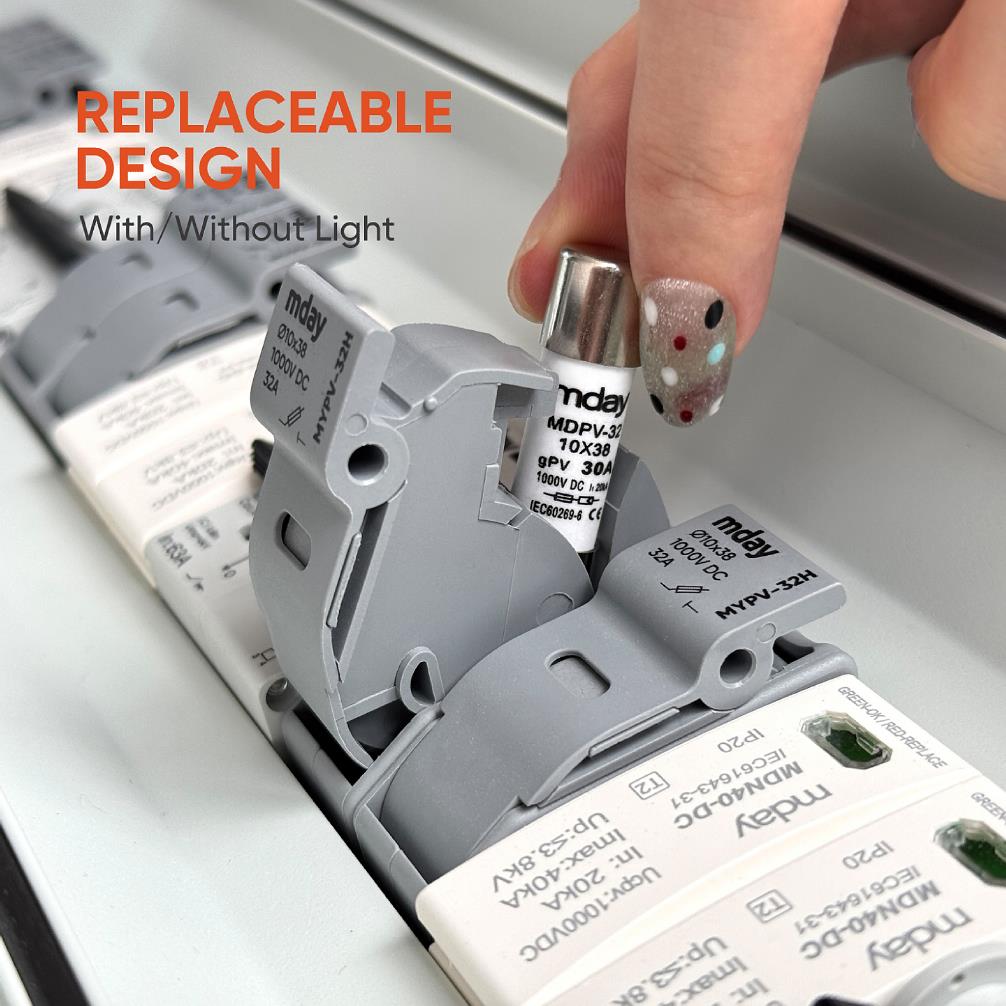
High-Capacity DC 1500V Fuse Preferential Price Solar PV Fuse Holder
View Details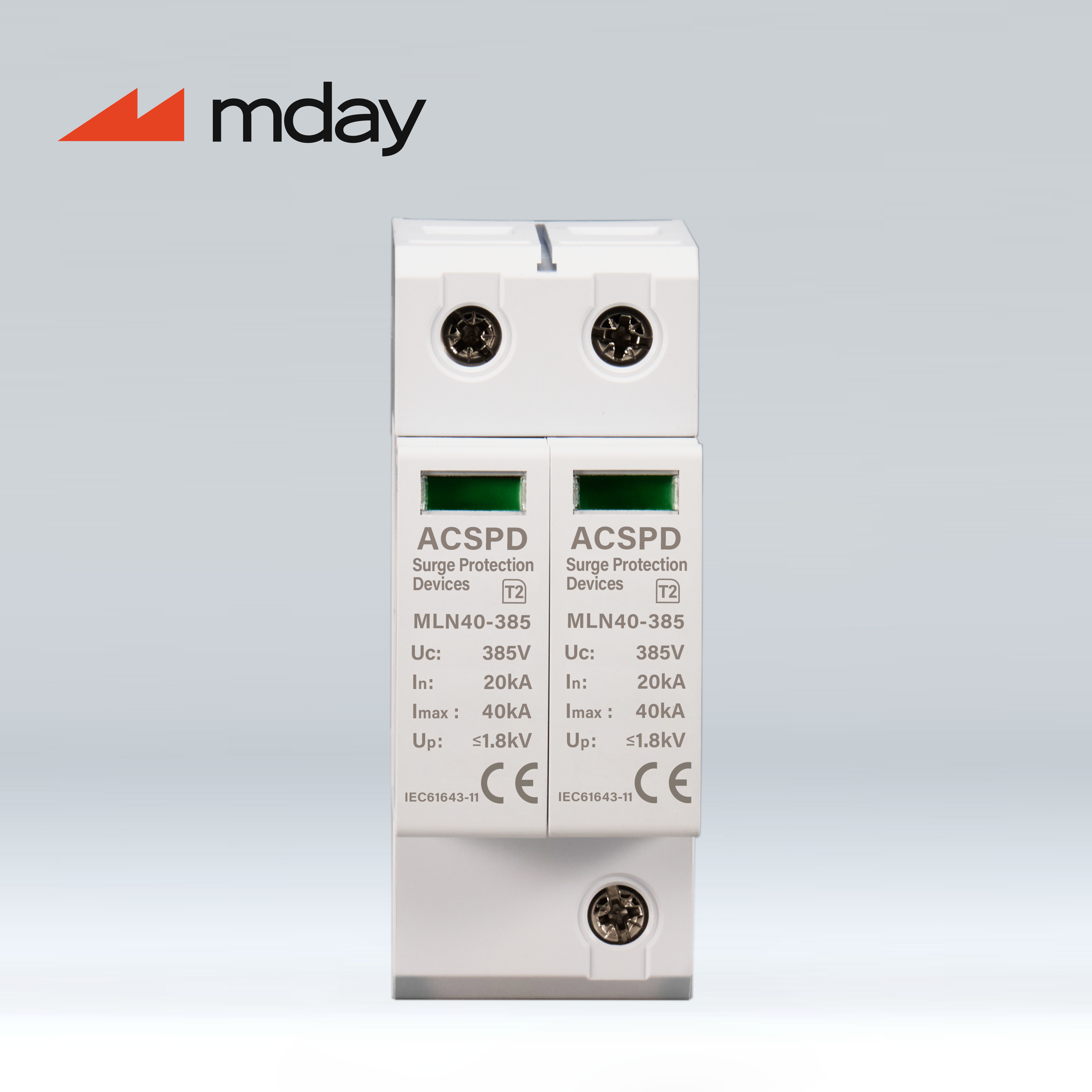
MLN40 T2 AC SPD 1P 2P 3P 4P Surge Protection Device 40KA DIN Rail
View Details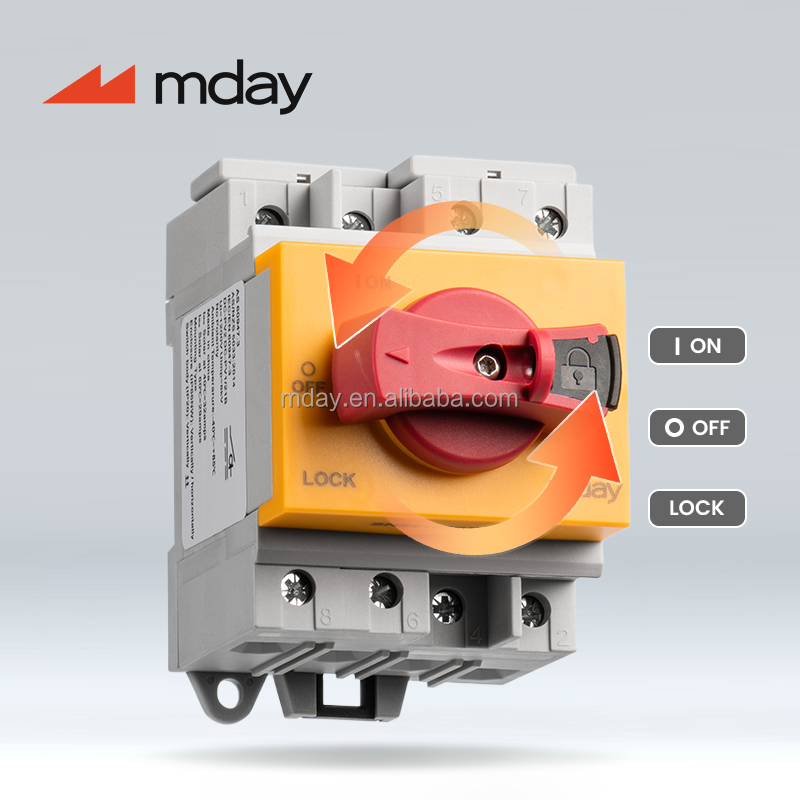
Mday 4-Pole 16A Copper Isolator Switch 1200V AC Waterproof Disconnect
View Details
Mday DIN Rail ATS PC Class Dual Power Automatic Transfer Switch 2P 63A-125A
View Details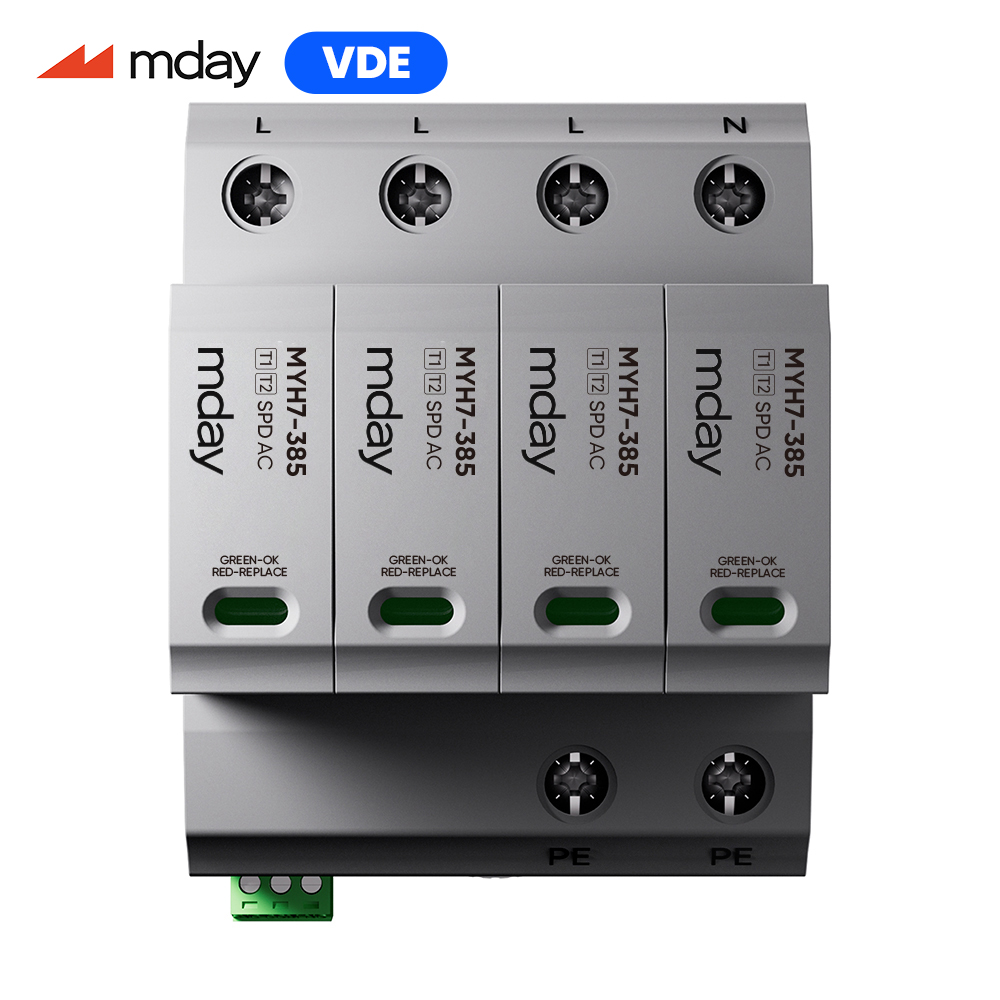
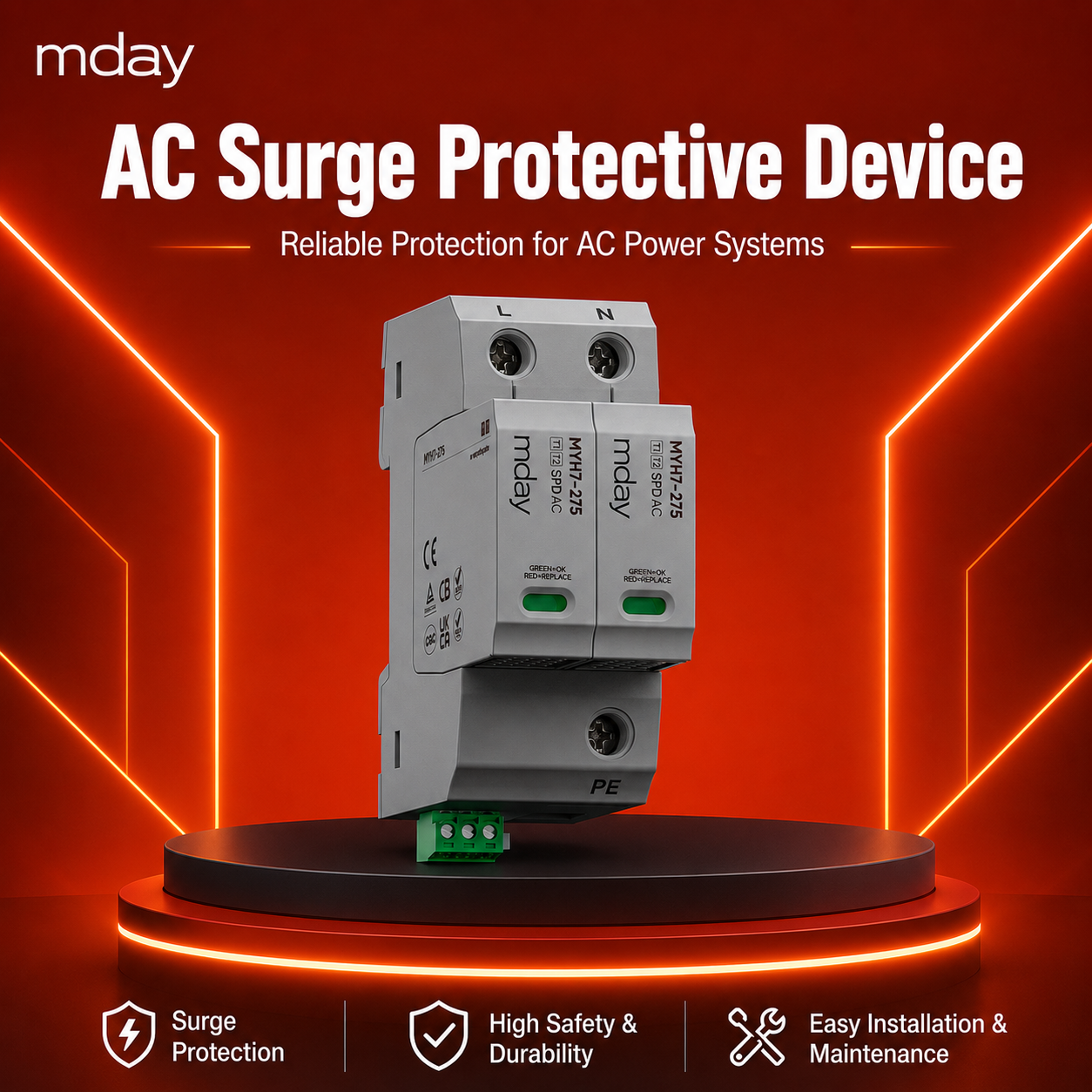
Mday T1+T2 MYH7 4P 385V VDE-Certified AC SPD Surge Protector
View Details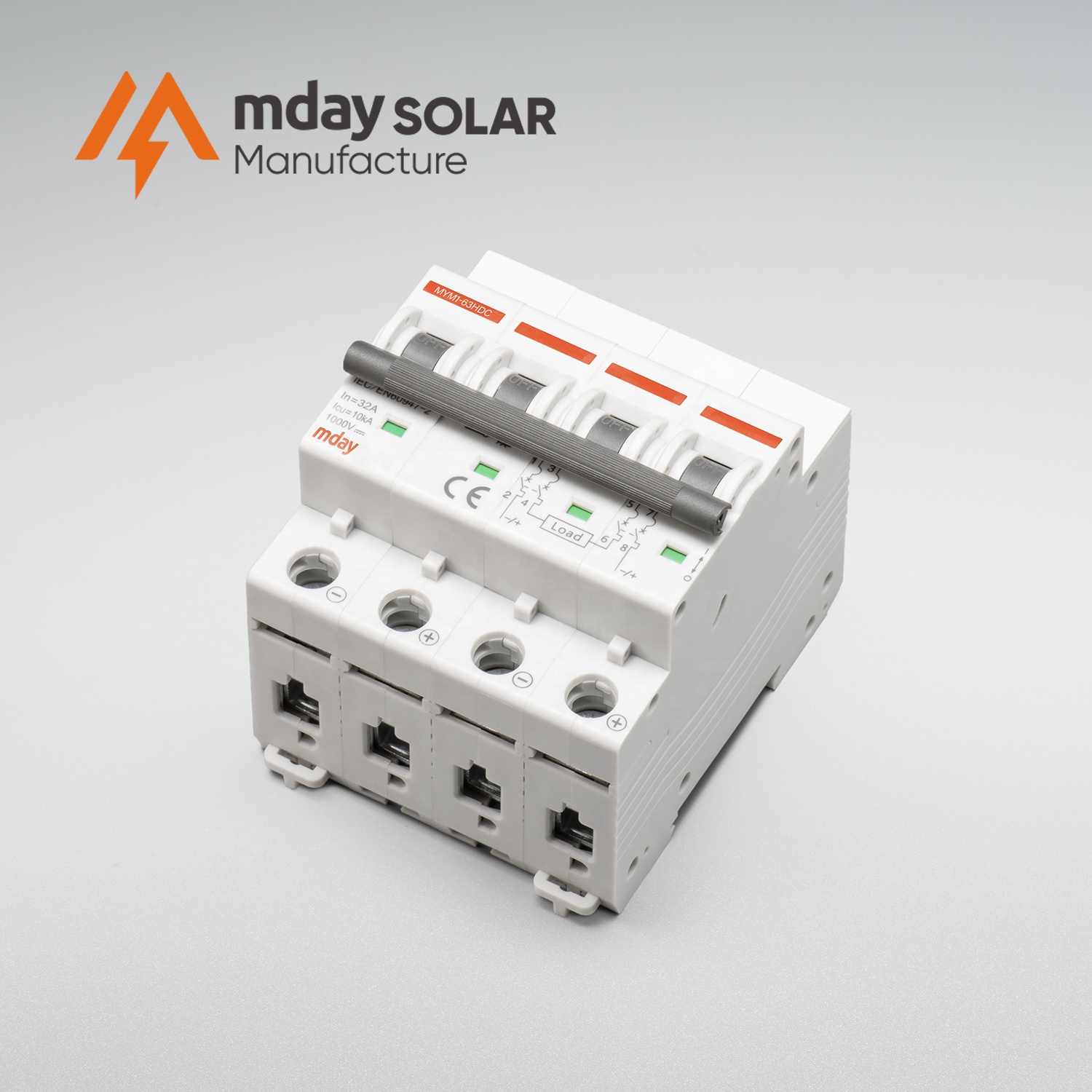
IEC CE Approved Solar PV MCB L7 4-Pole 50-63A 6kA 1000V DC Circuit Breaker
View Details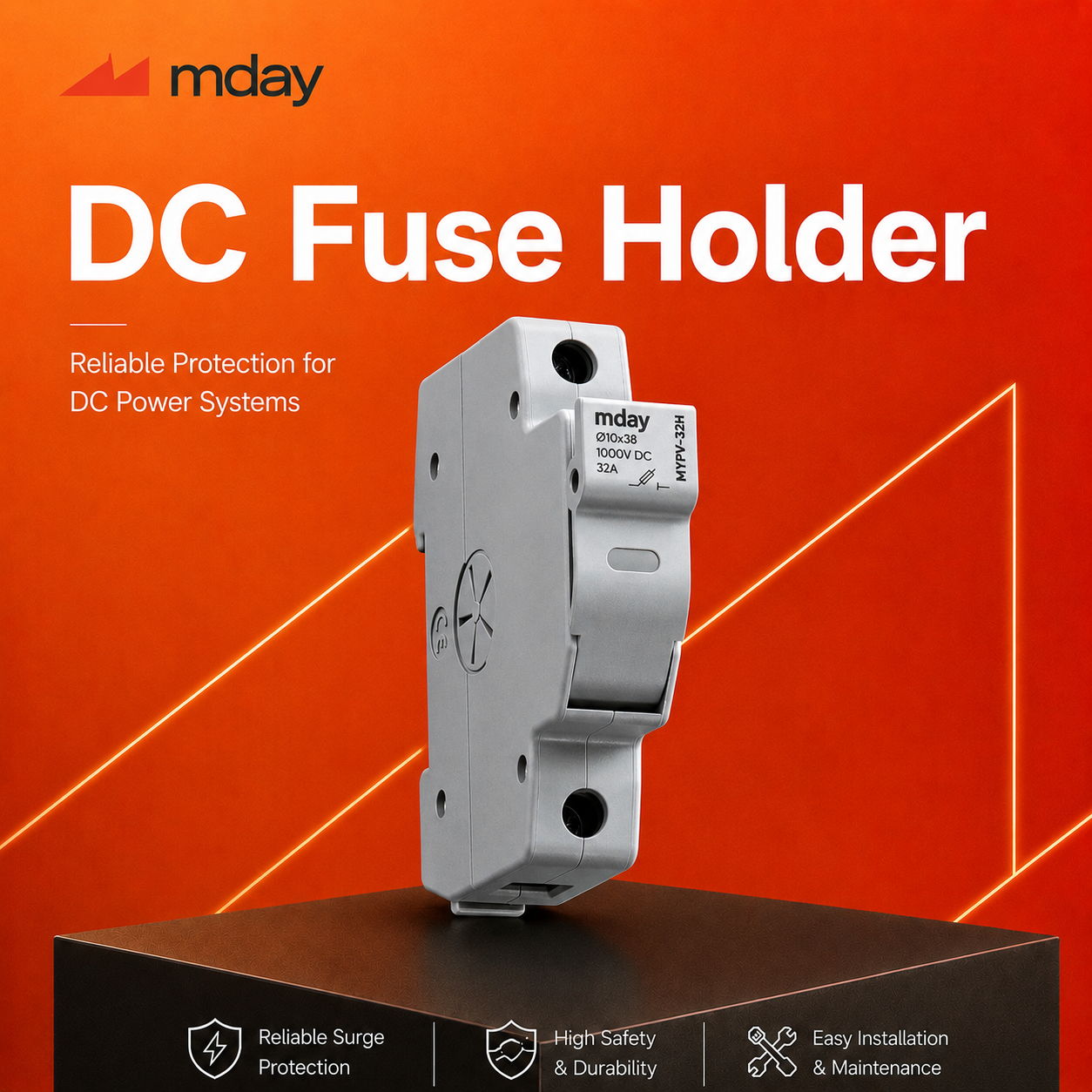
Mday MYPV-32H 1000VDC 32A 10x38mm Solar PV DC Copper Fuse Holder
View DetailsEngineering Principles of Direct Current (DC) Arc Extinction & Breaker Selection
Designing low-voltage power networks and solar photovoltaic (PV) arrays requires a fundamentally different engineering approach to current interruption than alternating current (AC) infrastructure. In AC circuits, the sinusoidal waveform naturally passes through a zero-current point twice per cycle (100 times per second at 50Hz). This natural "zero-crossing" allows the plasma arc generated during contact separation to cool, deionize, and extinguish relatively easily. Conversely, Direct Current (DC) maintains a continuous, unidirectional voltage and constant amperage. When contacts open under DC load, the arc does not extinguish naturally—it forms a sustained, high-temperature plasma stream capable of reaching temperatures over 4,000°C, causing catastrophic contact welding, housing destruction, and severe fire hazards if not mitigated by specialized electrical equipment.
Core Differences: AC vs. DC Circuit Breaker Engineering
| Technical Feature | AC Circuit Breaker (Standard) | DC Photovoltaic Circuit Breaker (Luck / Mday) |
|---|---|---|
| Current Zero-Crossing | Natural zero-crossing every 10ms (at 50Hz) | No natural zero-crossing; continuous electrical discharge |
| Arc Extinguishing System | Standard metal splitter plates (arc chute) | Permanent magnet blowout fields + multi-stage ceramic chutes |
| Polarity Sensitivity | Non-polarized; symmetric contact wear | Polarized or Non-Polarized options with directional magnetic forces |
| Contact Material | Standard Silver-Cadmium Oxide (AgCdO) | High-refractory Silver-Tin Oxide (AgSnO2) with copper core terminals |
| Voltage Rating per Pole | 230V / 400V AC nominal | 250V DC per pole (Up to 1000V DC in 4-Pole series configuration) |
When sourcing DC miniature circuit breakers (MCBs) or DC moulded case circuit breakers (MCCBs) from China manufacturers for installation in regional hubs like Mosul, Iraq, electrical engineers and EPC contractors must evaluate the internal physics of the breaking mechanism. Luck (Zhejiang) New Energy Co., Ltd. integrates precise thermal-magnetic tripping mechanisms coupled with high-coercivity permanent magnets inside every Mday brand breaker to guarantee zero contact adhesion under severe short-circuit currents up to 20kA.
Localized Application Scenarios in Mosul & Northern Iraq
Mosul, located in the Nineveh Governorate of Northern Iraq, presents a distinct set of operational challenges for solar PV equipment and power distribution units. The combination of intense solar irradiance, extreme seasonal ambient temperatures, heavy sand and ambient dust accumulation, and an intermittent public power grid requires rigorous electrical component selection. Below are the primary deployment scenarios where Luck New Energy's DC protection components are actively utilized across Mosul's industrial, commercial, and agricultural sectors.
1. Agricultural Solar Water Pumping in the Nineveh Plains
Farming operations along the Tigris River basin and across the Nineveh plains heavily rely on solar-powered submersible pump VFDs (Variable Frequency Drives). These systems operate at high DC voltages (500V to 800V DC) directly from solar array strings without battery storage. Rapid cloud passage causes swift DC current fluctuations that induce severe inductive kickbacks.
- Protection Requirement: High-reliability 2-Pole and 4-Pole 1000V DC MCBs (such as the L7 Solar PV MCB) paired with MYPV-32H DC Fuse Holders for individual string overcurrent isolation.
- Local Benefit: Prevents drive inverter burnouts during voltage spikes and provides safe, physical isolation for agricultural maintenance technicians operating in remote rural locations.
2. Hybrid Solar-Diesel Microgrids in Mosul Commercial Hubs
Due to ongoing municipal grid rationing in Mosul City (such as in Al-Mothana, Danadan, and the Commercial Markets), commercial facilities utilize hybrid microgrids combining solar PV, battery banks, and automatic diesel generator back-ups. Switching between unsynchronized AC power sources and active DC battery buses generates harsh transient surge voltages.
- Protection Requirement: Implementation of Mday DIN Rail ATS (Automatic Transfer Switch) on the AC distribution side, working alongside Type 1+2 VDE-certified AC SPDs (MYH7 4P 385V) and Type 2 DC Surge Protectors (MYN40 2.8KV) on the inverter DC input busbar.
- Local Benefit: Guarantees seamless switching within milliseconds without exposing sensitive inverter microprocessors or modern battery management systems (BMS) to lethal grid spikes.
3. Residential Rooftop Solar Installations & Energy Storage Systems
Residential energy independence projects in Mosul frequently combine 5kW to 15kW hybrid inverters with 48V/51.2V LiFePO4 battery banks or 500V high-voltage storage strings. Space inside indoor consumer units is severely limited, demanding compact DIN-rail component layouts.
- Protection Requirement: Compact 1P/2P 63A 1000V DC Circuit Breakers and Mday IP65 2-In 2-Out Combiner Boxes pre-wired with 10x38mm gPV fuses.
- Local Benefit: Provides clean, standardized installation aesthetics for electrical contractors in Mosul while providing reliable thermal-magnetic overload protection.
Localized Energy Trends & Procurement Drivers in Northern Iraq
The renewable energy landscape in Mosul and the wider Iraqi market is undergoing rapid evolution driven by government energy initiatives, post-reconstruction infrastructure investment, and economic necessity. Understanding these macro trends helps Mosul-based importers, panel builders, and electrical wholesalers select future-proof equipment from Chinese manufacturers:
Transition to 1500V DC Architecture
Commercial & industrial installations in Nineveh are transitioning from legacy 1000V DC systems to 1500V DC string topologies. Higher voltage reduces balance-of-system (BOS) cabling costs and transmission losses, requiring specialized 1500V rated DC fuses, disconnect switches, and circuit breakers.
Thermal Derating Compliance
In Mosul, outdoor metal enclosures exposed to direct sunlight routinely exceed internal ambient temperatures of +65°C. Uncertified circuit breakers suffer from premature thermal tripping (nuisance tripping). Procurement teams now demand factory thermal derating curves and high-grade V0 flame-retardant polycarbonate housings.
Strict Adherence to IEC Standards
The Iraqi Ministry of Electricity and regional engineering consultants are increasingly enforcing compliance with IEC/EN 60947-2 (for low-voltage switchgear) and IEC 60269-6 (for PV protection). Importers require verified test certificates from internationally recognized laboratories like TÜV Rheinland and VDE.
Why Mosul Importers & Global EPCs Partner with Luck (Zhejiang) New Energy Co., Ltd.
Selecting a Chinese manufacturing partner requires complete transparency into production capacity, testing infrastructure, and quality assurance protocols. Luck (Zhejiang) New Energy Co., Ltd. operates a specialized manufacturing facility located in the Yueqing Economic Development Zone, Wenzhou—the world's hub for electrical equipment manufacturing.
TÜV Rheinland Onsite Verified
Our factory facilities, personnel count (55 verified staff), and automated assembly lines undergo strict onsite audit and verification by TÜV Rheinland, providing complete peace of mind for B2B importers.
In-House Moulding & Tooling
We operate dedicated automatic plastic injection molding workshops, manufacturing precision flame-retardant housings for SPDs, MCBs, and fuse holders in-house to maintain strict dimensional tolerance.
9 In-House Testing Instruments
100% finished-product inspection. Every batch undergoes thermal-magnetic tripping calibration, high-voltage dielectric withstand tests, contact resistance checks, and surge discharge verification before shipment.
7+ Years Full OEM/ODM Service
We support customized voltage ratings, private label printing, custom housing colors, tailored laser markings, and pre-wired IP65 solar combiner boxes designed precisely to your project BOM.
Frequently Asked Questions by Importers & Contractors in Mosul
Clear engineering and commercial answers to simplify your supply chain procurement from China to Iraq.
How do Luck DC circuit breakers perform under Mosul's extreme summer temperatures (+50°C)?
All Mday DC circuit breakers are engineered using temperature-compensated thermal bimetallic strips and high-grade silver-alloy contacts. Standard breakers are calibrated at a reference ambient temperature of +30°C. For Mosul installations where internal combiner box temperatures reach +55°C to +60°C, we supply precise engineering derating tables (e.g., applying a 0.85 to 0.90 correction factor to rated current $I_n$) to ensure zero nuisance tripping while maintaining reliable magnetic short-circuit protection.
What certification documents are provided for customs clearance in Iraq?
We provide complete export documentation packages required for Iraqi customs clearance (via Um Qasr port or northern entry points like Ibrahim Khalil / Erbil). This includes CE Certificates, IEC/EN 60947-2 test reports for DC MCBs/MCCBs, UL 248-19 / IEC 60269-6 compliance documents for DC fuses, VDE certificates for SPDs, Certificate of Origin (CO), and TÜV Rheinland factory assessment reports.
Can I order custom-branded (OEM) DC components with my company logo in Mosul?
Yes. With over 7 years of dedicated OEM/ODM experience, we offer full custom laser printing, branded front-face stickers, customized packaging boxes, and bespoke housing color moulding. Minimum order quantities (MOQ) for custom private labeling start as low as 200 units depending on the product series.
What is the difference between non-polarized and polarized DC circuit breakers for solar arrays?
Polarized DC breakers require current to flow strictly in one direction (marked '+' and '-') to direct the electric arc into the magnetic arc chute. If wired backwards (e.g., during battery discharge or reverse string current), the breaker can fail to extinguish the arc. Luck New Energy manufactures both non-polarized and polarized DC circuit breakers. For systems with potential reverse currents—such as solar battery energy storage systems (BESS)—we recommend our non-polarized DC MCB series which extinguishes arcs safely regardless of current flow direction.
What is the typical shipping lead time from China to Mosul, Iraq?
Factory manufacturing lead time for standard products is 2 to 7 days. For custom OEM orders or pre-assembled IP65 combiner boxes, production takes approximately 10 to 15 days following sample approval. Air freight to Erbil or Baghdad international airports takes 5 to 8 days, while sea freight to Umm Qasr followed by overland transport to Mosul typically takes 28 to 35 days.
How do I choose between a DC Fuse and a DC Circuit Breaker for PV string protection?
DC Fuses (such as our 10x38mm 1000V/1500V gPV fuses) offer fast, low-cost current-limiting protection with high breaking capacity (up to 33kA) for individual PV strings. However, they must be replaced once blown. DC Circuit Breakers (such as the L7 1000V DC MCB) serve as re-settable protective devices that also function as manual load-break switches for maintenance. Modern PV system designs in Mosul combine both: DC fuses for individual string inputs, and a main DC MCB or MCCB before the inverter input.
Request Factory-Direct Pricing & Technical Datasheets
Partner directly with China's leading manufacturer of solar PV surge protection, DC fuses, circuit breakers, and IP65 combiner boxes. Send us your project bill of materials (BOM) or distribution requirements for immediate support.
