Featured DC & AC Electrical Protection Equipment
Engineered specifically to handle the thermal demands, lightning surge frequencies, and continuous direct current load profiles of Cebu's tropical solar farms and industrial distribution panels.

1. Executive Technical Overview: DC Arc Physics and Circuit Breaker Engineering in Tropical Microclimates
In high-voltage Direct Current (DC) photovoltaic solar energy installations, commercial battery energy storage systems (BESS), and heavy industrial infrastructure, circuit protection presents fundamentally distinct physical challenges compared to standard Alternating Current (AC) systems. While an AC waveform continuously passes through a natural voltage zero-point twice per electrical cycle (100 or 120 times per second), Direct Current maintains a continuous, uninterrupted magnitude. Consequently, when an electrical overload or short-circuit fault forces a DC circuit breaker's contacts open, the resulting electric arc does not extinguish naturally. Instead, it forms a high-temperature plasma channel that can reach upward of 5,000 to 12,000 Kelvin, generating destructive thermal energy if not quenched instantly.
For engineering procurement managers, electrical EPC contractors, and solar installation specialists operating across Cebu City, Mandaue, Lapu-Lapu, and the broader Visayas region, selecting an appropriately certified DC Moulded Case Circuit Breaker (DC MCCB) is a safety-critical engineering decision. Cebu’s geographical profile combines an intense tropical maritime atmosphere with elevated humidity levels (frequently exceeding 85% RH), salt spray corrosion from surrounding sea breezes, and ambient operating temperatures inside field combiner boxes that consistently reach 45°C to 55°C under full solar irradiance.
Engineering Distinction: Our CE Certified DC MCCBs are custom-engineered with permanent magnet arc-extinguishing chambers, special silver-alloy contact bridges, and flame-retardant glass-fiber reinforced housings. This design forcibly stretches and drives the DC electrical arc into specialized de-ionizing arc chutes, snuffing out fault currents in less than 10 milliseconds even under high ambient tropical heat.
Without robust DC arc suppression and precise thermal-magnetic tripping calibration, standard AC-adapted breakers or non-certified imported components installed in Cebu industrial parks—such as the Mactan Economic Zone (MEZ) or Cebu Business Park—face rapid contact erosion, thermal runaway, insulation carbonization, and severe catastrophic arc-flash hazards. As a premier manufacturer, Luck (Zhejiang) New Energy Co., Ltd. provides Cebu engineering teams with field-proven, CE-marked, and TÜV-tested DC MCCB protection units designed specifically for rugged tropical and maritime microclimates.
2. Cebu Solar & Industrial Development Trends: Grid Challenges & Localized Application Scenarios
Cebu has rapidly solidified its position as the premier economic engine of the Central Visayas region in the Philippines. Driven by expanding manufacturing hubs, shipbuilding facilities in Balamban, commercial megamalls, data centers, and massive rooftop solar PV integrations across Cebu City, energy demand has skyrocketed. However, the Visayas regional grid faces well-documented stability pressures, including voltage fluctuations, frequency variations during peak demand hours, and severe seasonal lightning activity during the typhoon monsoon months.
To counteract high electricity tariffs and grid vulnerability, Cebu’s commercial and industrial (C&I) sectors are turning massively toward clean energy self-generation. Key local application scenarios demanding CE Certified DC MCCBs include:
- Rooftop C&I Solar Array Combiner Boxes & Inverter Stations: Large-scale rooftop solar installations atop factories and commercial hubs in Mandaue and Cebu City utilize high-string voltage architectures (1000V DC to 1500V DC). Our 2-pole, 3-pole, and 4-pole DC MCCBs serve as primary array disconnects and short-circuit protection devices before the central or string inverters.
- Island Microgrids & Battery Energy Storage Systems (BESS): Across off-grid and island destinations adjacent to Cebu—such as Bantayan Island, Camotes Islands, and Olango Island—hybrid solar-plus-storage projects rely on massive lithium-ion battery banks. The extremely low internal resistance of lithium battery storage can unleash short-circuit fault currents exceeding 20,000 Amperes in microseconds. Luck New Energy’s DC MCCBs provide high breaking capacity (Icu up to 25kA at 500V/1000V DC) to isolate battery faults cleanly.
- Marine Port Facilities & EV Charging Infrastructure: Port terminals along the Cebu Strait and rapid electric vehicle (EV) DC fast-charging depots require ruggedized DC circuit protection capable of resisting saline-laden air and high switching frequencies.
| Parameter / Specification | Standard Commercial DC MCCB | Luck New Energy Cebu-Tropicalized Series |
|---|---|---|
| Rated Operational Voltage (Ue) | 250V – 800V DC | Up to 1000V / 1500V DC |
| Ultimate Breaking Capacity (Icu) | 10kA – 15kA | 20kA – 25kA (IEC/EN 60947-2 Standard) |
| Arc Quenching Technology | Standard Passive Arc Splitter | Permanent Magnet Magnetic Blowout + Ceramic Arc Chute |
| Thermal Derating (At 50°C Ambient) | Derates by 15% - 20% | Optimized Calibration (Derates < 5% with tropicalized alloy) |
| Enclosure Flame Rating | UL94-V1 Plastic | UL94-V0 High-Molecular Flame Retardant Plastic |
3. Complete Cascaded Protection: Integrating DC MCCBs, SPDs, Fuses & Isolator Switches
Achieving total operational resilience for photovoltaic assets in Cebu requires a holistic, cascaded electrical protection strategy. A single protective component cannot guard against all electrical fault modes. A professional engineering bill-of-materials (BOM) deployed for Philippines solar systems typically incorporates a four-layer defence line:
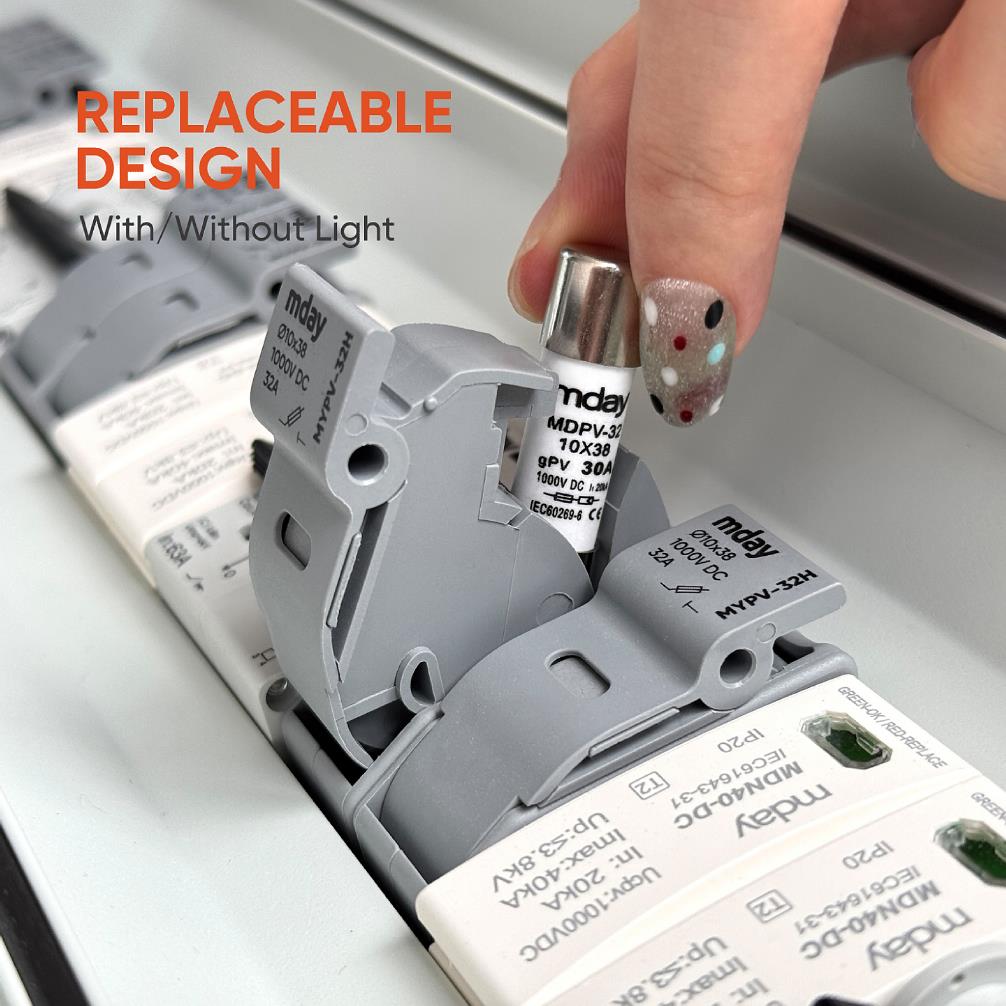
Layer 1: Overcurrent & Short-Circuit Isolation (DC MCCB & gPV Fuses): Individual solar PV strings are protected by high-capacity 10x38mm 1000V/1500V gPV DC fuses mounted in DIN-rail holders. Downstream at the master collection bus, our heavy-duty CE Certified DC Moulded Case Circuit Breaker (such as the MDM3DC-250 series) provides main system isolation and high-current fault clearing.
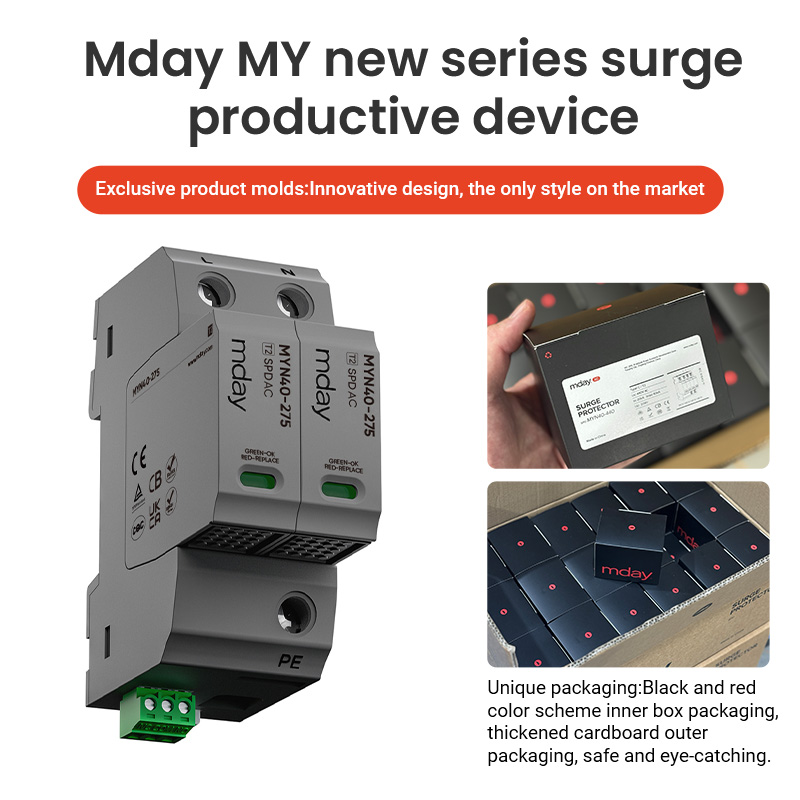
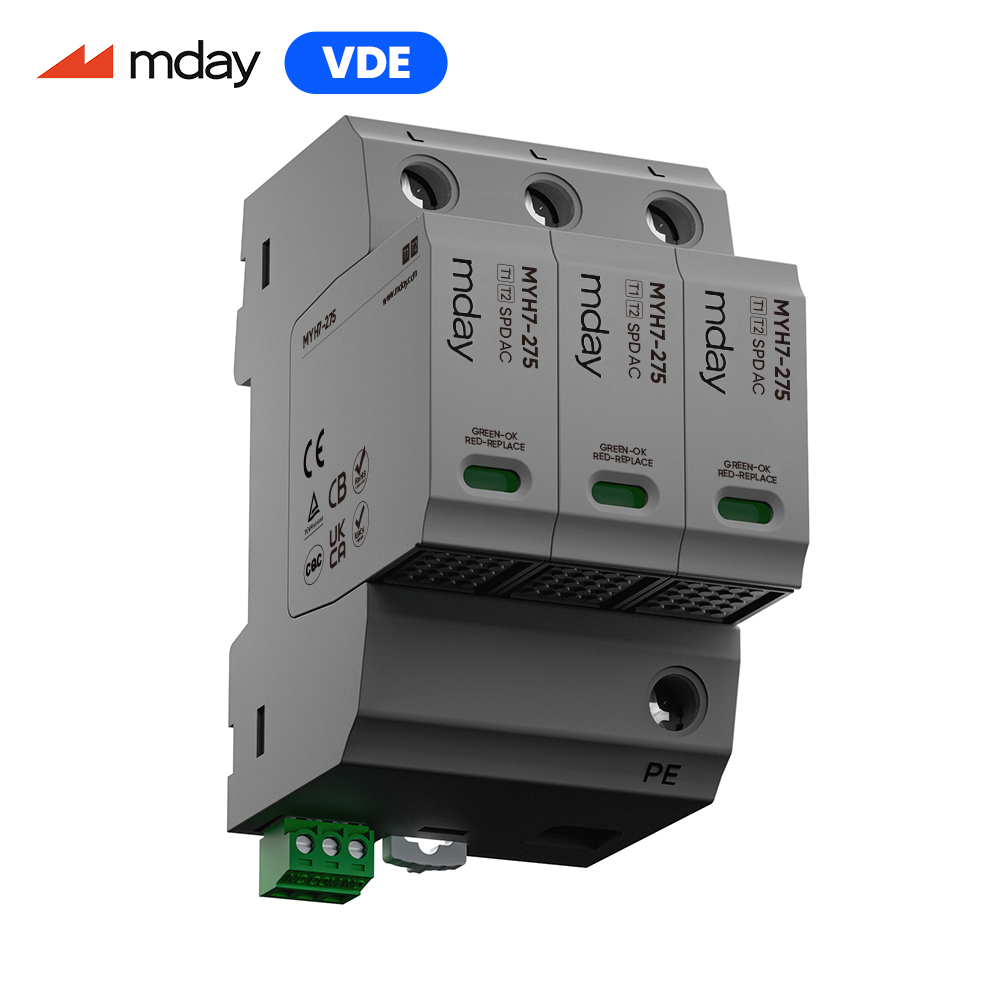
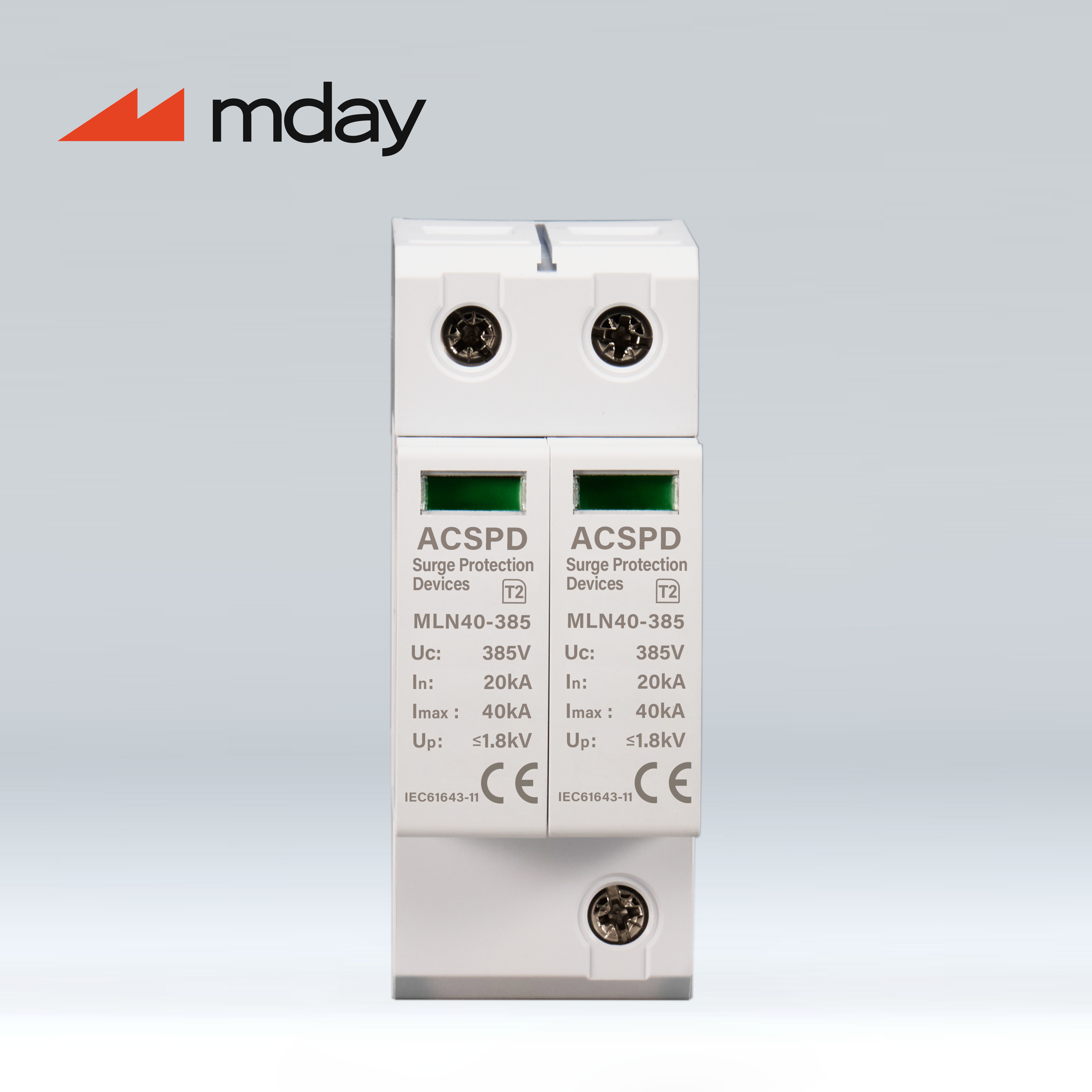
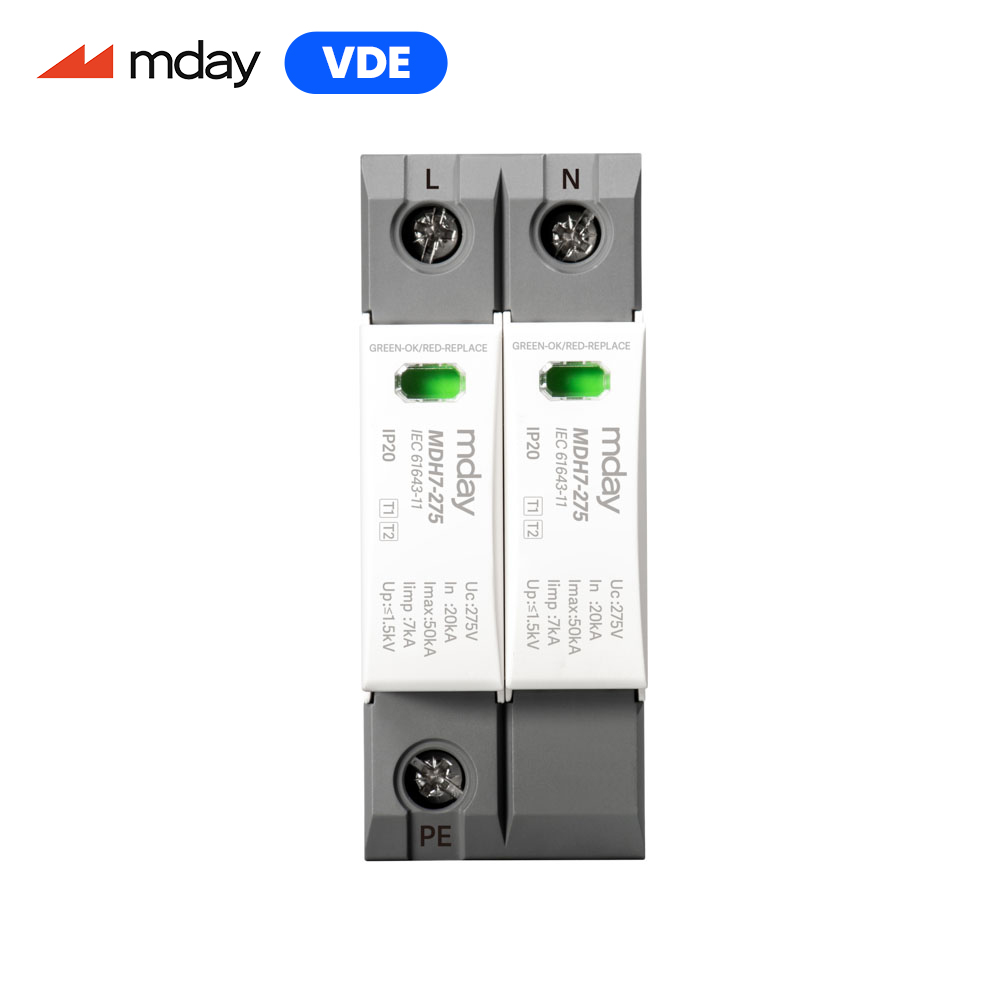
Layer 2: Transient Surge & Lightning Protection (DC & AC Surge Protective Devices): Cebu experiences intense tropical thunderstorms. Direct and indirect lightning strikes induce severe transient overvoltages on DC solar arrays and AC grid feeds. Installing Type 1+2 or Type 2 VDE-certified Surge Protective Devices (SPD) with high-energy Metal Oxide Varistors (MOV)—like the Mday MYN40 and MYH7 series—clamps voltage spikes down to safe residual levels (Up < 2.8kV) in nanoseconds, protecting sensitive solar inverter electronics.
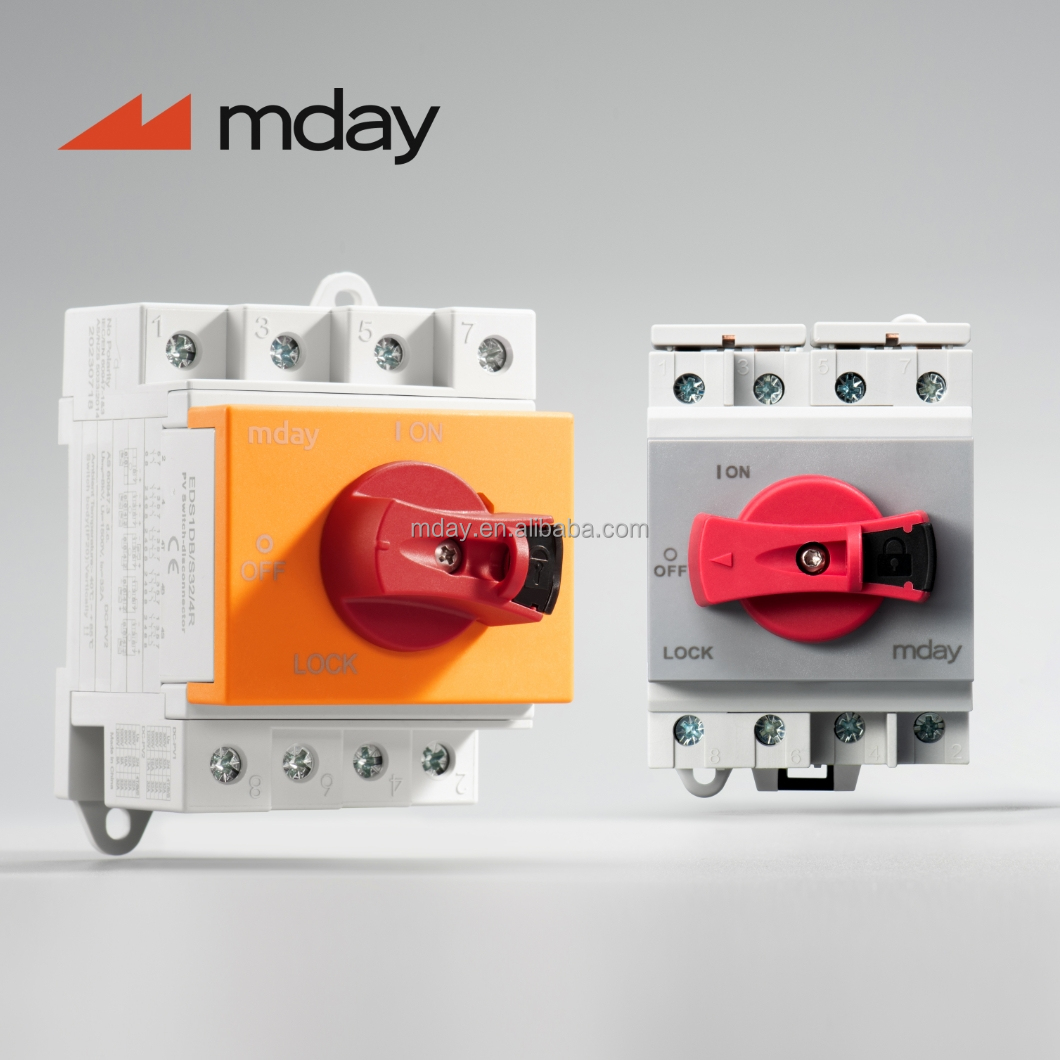
Layer 3: Safe Manual Load Disconnection (IP66 Rotary Isolator Switches): For routine maintenance, firefighter emergency cut-off, or inverter inspection, IP66 waterproof 4-Pole 1200V DC isolator switches placed outdoor near the solar panels guarantee clear visual break points and arc-free manual disconnection under full load conditions.
Layer 4: Automated Power Source Switching (Dual Power ATS): To bridge frequent Visayas power outages, PC Class Dual Power Automatic Transfer Switches (ATS) ensure seamless switching between main grid power and diesel generator / BESS solar backup power within milliseconds, guaranteeing zero downtime for critical Cebu businesses.
4. Enterprise Advantage: Why Cebu Importers & EPCs Partner with Luck Zhejiang New Energy
When sourcing low-voltage electrical components from China for high-stakes projects in the Philippines, engineering teams must evaluate manufacturing authenticity, testing rigor, and global standard compliance. Luck (Zhejiang) New Energy Co., Ltd. stands out as a world-class OEM/ODM manufacturer with verified credentials:
TÜV Rheinland Onsite Verified Factory: Our manufacturing facilities located in the Yueqing Economic Development Zone, Wenzhou, Zhejiang, have undergone rigorous onsite physical audits by TÜV Rheinland. We operate 3 advanced production lines, maintain 9 precision testing instruments, and enforce 100% finished-product screening prior to packaging.
- Deep Customization & OEM Experience: Backed by over 7 years of dedicated OEM/ODM export history, we provide custom current ratings, private labeling, modified trip curves, specialized housing colors, and pre-wired IP65 PV combiner box configurations tailored to Philippine Electrical Code (PEC) requirements.
- International Certification Portfolio: Our product ecosystem holds authentic VDE certifications, CE marks, TÜV assessment reports, and conforms strictly to IEC/EN 60947-2, IEC 60269-6, UL 248-19, and IEC 61643 standards.
- Rapid Lead Times & Reliable Freight Logistics: Standard DC MCCB, SPD, and DC fuse orders are produced and dispatched within 2 to 7 days. Our export logistics desk handles complete export documentation, certificate of origin issuing, and direct sea/air freight shipping to the Port of Cebu.
5. Localized FAQ for Cebu Electrical Contractors & Buyers
Why is a CE Certified DC MCCB required instead of a standard AC breaker for solar projects in Cebu?
Direct current (DC) does not have a natural zero-voltage crossing point like AC. Attempting to use a standard AC circuit breaker in a DC application like a 1000V solar array in Cebu will cause sustained electrical arcing during a fault, destroying the breaker, melting surrounding enclosures, and creating fire hazards. CE Certified DC MCCBs feature specialized permanent magnets that physically blow the DC arc into de-ionizing arc chutes to safely extinguish fault currents up to 25kA.
How does Cebu’s high humidity and ambient temperature affect DC MCCB selection?
Field enclosures installed on rooftops in Cebu City or Mandaue can easily reach interior ambient temperatures of 50°C to 60°C under direct tropical sunlight. High temperatures reduce the heat-dissipation capacity of standard thermal-magnetic trip units, causing premature "nuisance" tripping. Luck New Energy’s DC MCCBs utilize tropicalized thermal calibration curves and high-grade silver-alloy contacts designed to maintain nominal current ratings without excessive derating under harsh ambient conditions.
What breaking capacity (Icu) should I specify for BESS installations in Visayas?
Battery Energy Storage Systems (BESS) using lithium-iron-phosphate (LFP) chemistry have extremely low internal resistance and can discharge massive short-circuit currents during a fault. For central battery cabinets or master DC distribution, we recommend selecting our DC MCCBs rated at an Ultimate Short-Circuit Breaking Capacity (Icu) of at least 20kA to 25kA at 500V/1000V DC.
Can Luck Zhejiang New Energy supply pre-wired IP65 combiner boxes directly to the Port of Cebu?
Yes. We manufacture customized IP65/IP66 waterproof solar combiner boxes pre-fitted with our CE certified DC MCCBs, VDE surge protectors, and 1000V/1500V DC fuses according to your single-line diagram (SLD). We ship directly to the Port of Cebu with full export documentation, customs invoices, and test certificates.
What is the typical shipping lead time from your factory to Cebu City?
Standard DC MCCB and SPD orders are manufactured and undergo 100% factory inspection in 2 to 7 days. Sea freight shipping from Ningbo/Shanghai Port directly to the Port of Cebu typically takes 10 to 14 days, providing Cebu contractors with fast, efficient project delivery schedules.
Do your products conform to the Philippine Electrical Code (PEC)?
Yes. The Philippine Electrical Code (PEC) heavily aligns with standard International Electrotechnical Commission (IEC) norms. Our DC MCCBs meet IEC/EN 60947-2, our surge protectors strictly comply with IEC 61643-11/31, and our DC fuse systems conform to IEC 60269-6 / UL 248-19, ensuring smooth approval by local building officials and electrical inspectors across Cebu.
Request a Technical Datasheet & Direct Quotation for Cebu Projects
Partner directly with a TÜV Rheinland-verified Chinese manufacturer. Send us your project electrical single-line diagram (SLD) or BOM specifications for custom pricing and immediate technical support.
Send an Inquiry