Featured Surge Protection & Distribution Components
Directly sourced from our TÜV-verified manufacturing plant. Engineered for extreme solar PV DC strings, heavy industrial AC boards, and transient voltage suppression applications.

Zinc Oxide Varistor Physics & Dynamic Transient Suppression
An authoritative technical analysis for procurement engineers, panel builders, and OEM equipment manufacturers evaluating transient overvoltage components.
Microstructural Grain Boundary Dynamics in Zinc Oxide (ZnO)
At the core of modern Surge Suppression Varistors (MOV) is a highly complex polycrystalline semiconductor matrix consisting primarily of Zinc Oxide ($ZnO$) doped with trace bismuth, cobalt, manganese, and chromium oxides. During normal continuous operating voltage ($U_c$), the grain-to-grain boundary interfaces exhibit exceptionally high resistance, maintaining leakage currents ($I_c$) well below 20 microamperes ($\mu A$).
When subjected to fast-front transient overvoltages—such as direct or indirect lightning strokes ($8/20\mu s$ or $10/350\mu s$ waveforms)—the potential barrier at the grain boundaries collapses via avalanche breakdown. The varistor switches dynamically from an insulating state to a highly conductive state in less than 25 nanoseconds, clamping peak voltage spikes to a safe protection level ($U_p$).
Key Engineering Metric: Clamping Ratio ($K_c$)
A lower clamping ratio ($U_p / U_c$) guarantees superior overvoltage suppression, reducing thermal stress on downstream sensitive electronics like PV microinverters, battery management systems (BMS), and industrial PLCs.
Thermal Runaway Prevention & Internal Disconnect Disks
Standard raw MOV disks are susceptible to degradation due to cumulative impulse stress or sustained temporary overvoltages (TOV). Aging varistors develop localized hot spots, leading to thermal runaway—a failure mode capable of igniting housing materials if unmanaged.
Our engineering team integrates patented thermal disconnection mechanisms directly within our Thermally Protected Varistor (TPMOV) assemblies and DIN-rail surge protective devices (SPD). When internal temperatures exceed $136^\circ C$, a low-melting-point alloy solder bridge opens instantly, isolating the degraded MOV disk from the supply network while activating a visual status indicator and remote signal contact (NO/NC).
Technology Development Trends in Surge Suppression Components
As global power grids shift toward renewable energy integration and high-voltage DC architectures, varistor technology is undergoing a major transformation.
1. High-Voltage DC (1500V) String Optimization
Utility-scale photovoltaic generation has standardized on 1500V DC architectures to decrease $I^2R$ copper losses. Modern MOVs must now deliver stable clamping voltage up to 1500V DC without thermal degradation under harsh ambient temperatures ($+85^\circ C$).
2. Smart IoT-Integrated Predictive Monitoring
The next generation of surge protection devices incorporates IoT sensor arrays to track impulse strike frequency, leakage current creepage, and internal temperature rise, streaming real-time diagnostics to central SCADA platforms.
3. Compact High-Energy Density Blocks
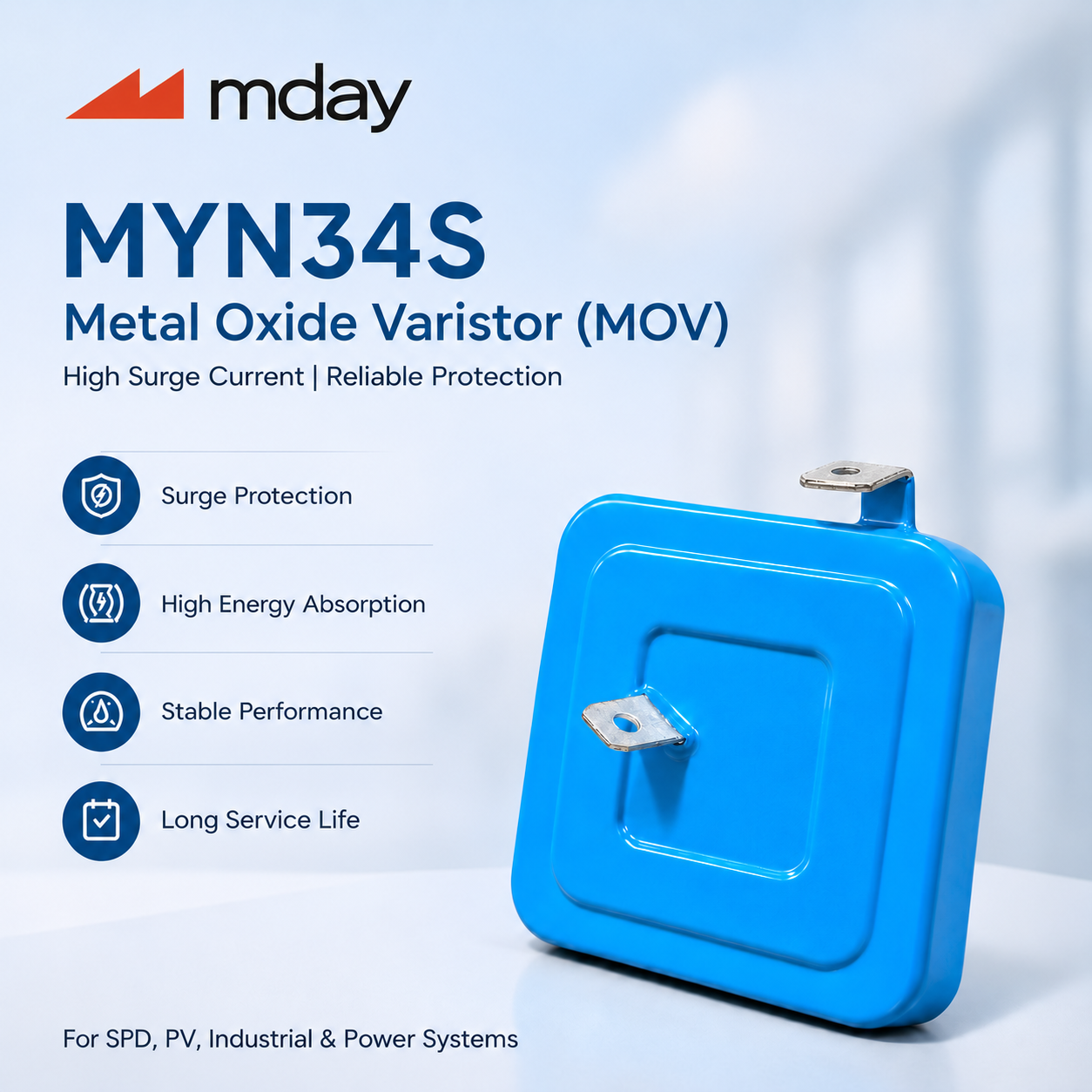
Demands for miniaturized enclosure footprints in industrial machinery have driven suppliers to develop square varistors (such as 34mm and 40mm formats) capable of matching the peak surge capacity ($40kA-80kA$) previously limited to bulky heavy-duty ceramic blocks.
Global Procurement Trends for Surge Protection Components
Key shifts shaping how electrical engineering procurement managers, OEM buyers, and regional distributors select varistor suppliers.
Mandatory Multi-Standard Compliance & Traceability
Procurement teams no longer accept self-declared factory test sheets. Institutional buyers require third-party verification from bodies such as VDE, TÜV Rheinland, UL 1449 5th Edition, and IEC 61643-11. Full batch traceability from raw $ZnO$ powder composition to final impulse aging tests is now an absolute prerequisite for global export contracts.
Direct Factory Customization (OEM/ODM Shift)
Standard catalog products often fail to meet specific spatial or electrical parameters in customized PV combiner boxes or EV fast-charging stations. Importers are bypassing trading intermediaries to partner directly with manufacturers offering tailor-made clamping voltages, custom pin configurations, and private-label packaging.
| Component Type | Primary Application | Standard Surge Waveform | Key Selection Parameters | Compliance Standards |
|---|---|---|---|---|
| 34mm Square Varistor (MYN34S) | Industrial Heavy SPD Modules, Power Strip PCB | 8/20 μs ($I_{max}$ up to 40kA) | $V_{1mA}$ (Clamping Voltage), Energy Absorption (Joules) | TÜV, UL 1449, RoHS |
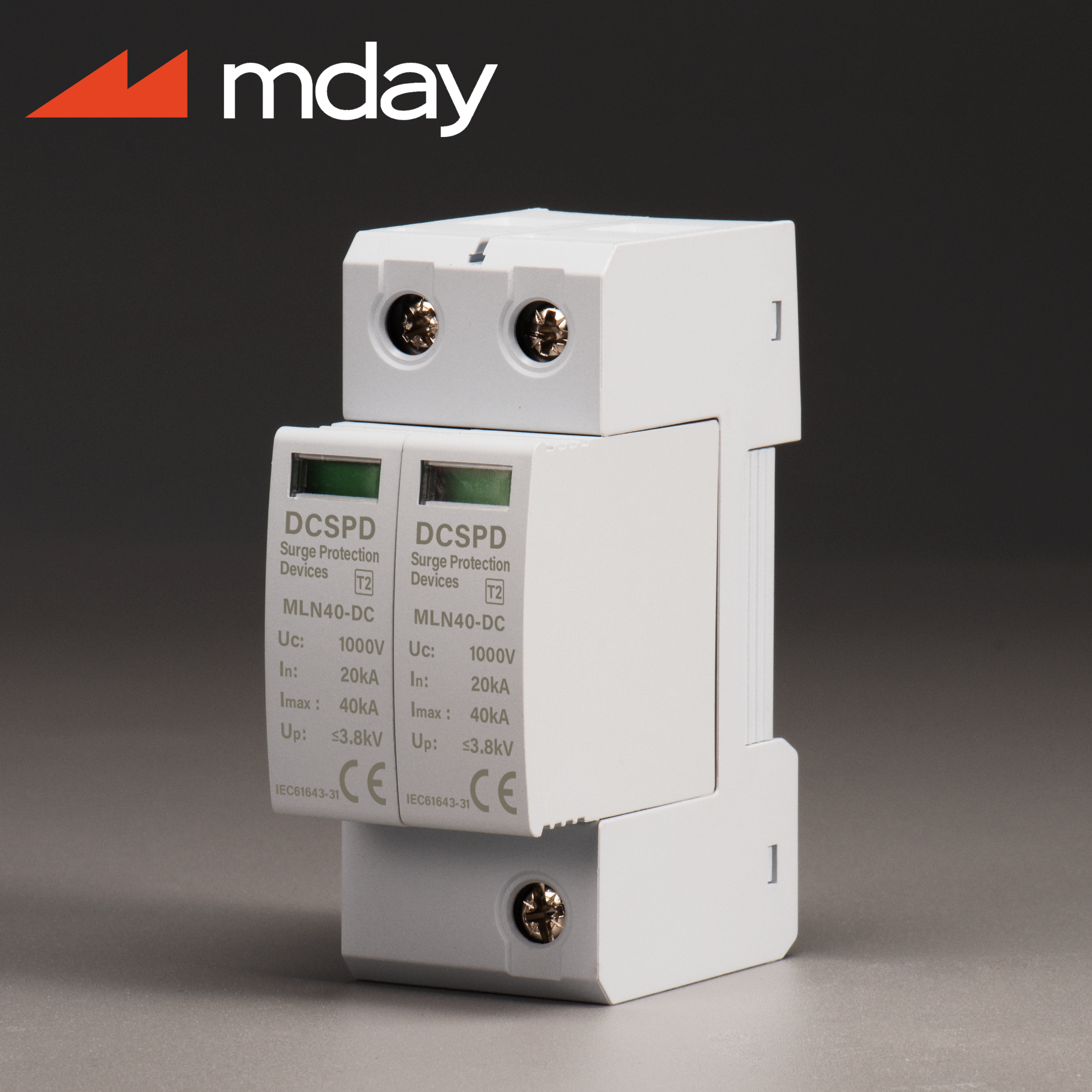
| Type 2 DC PV SPD (MLN40-DC) | Solar PV Inverter DC Input, String Combiner Boxes | 8/20 μs ($I_{n}$ 20kA, $I_{max}$ 40kA) | Maximum Continuous Voltage ($U_{cpv}$ up to 1500V DC) | EN 50539-11, IEC 61643-31 |
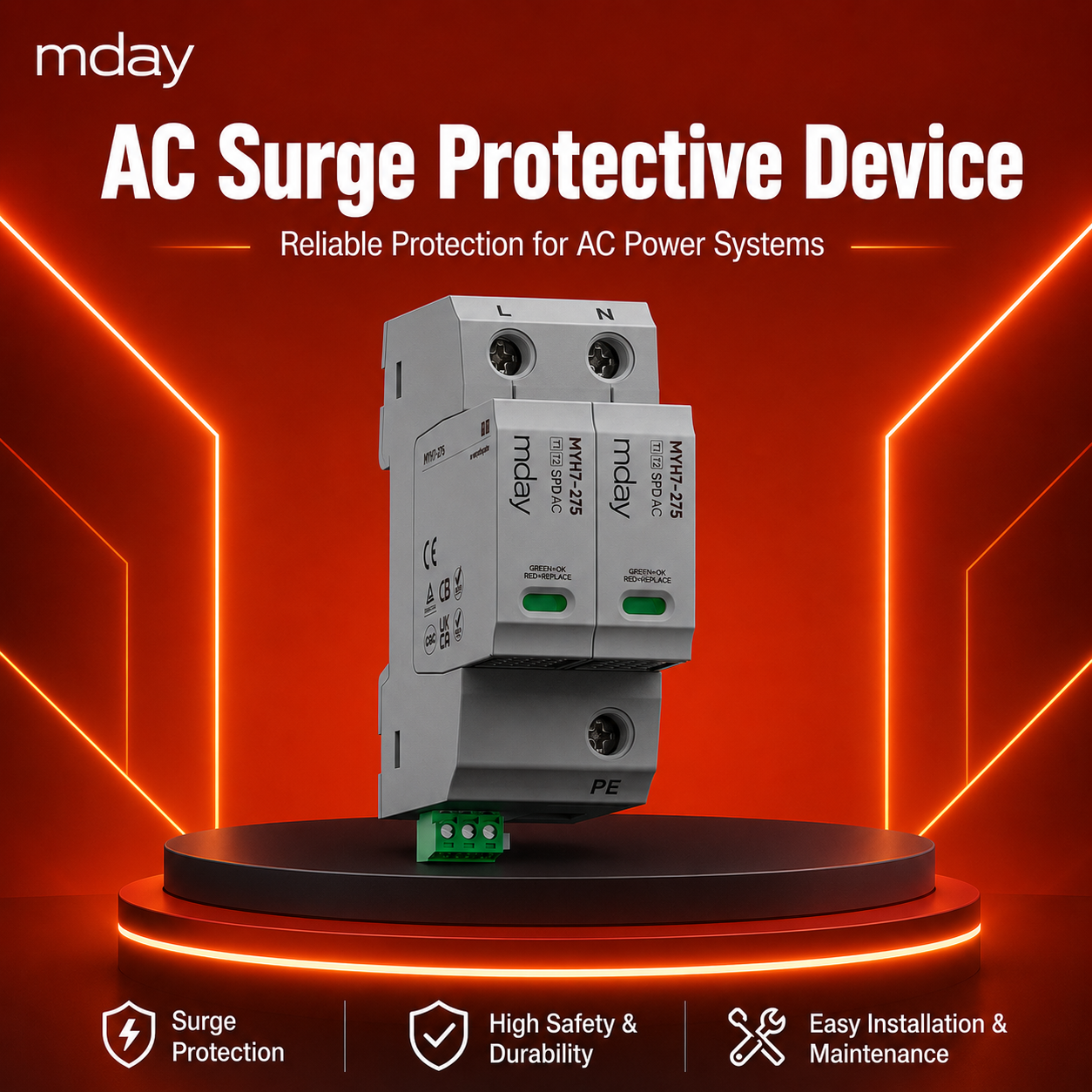
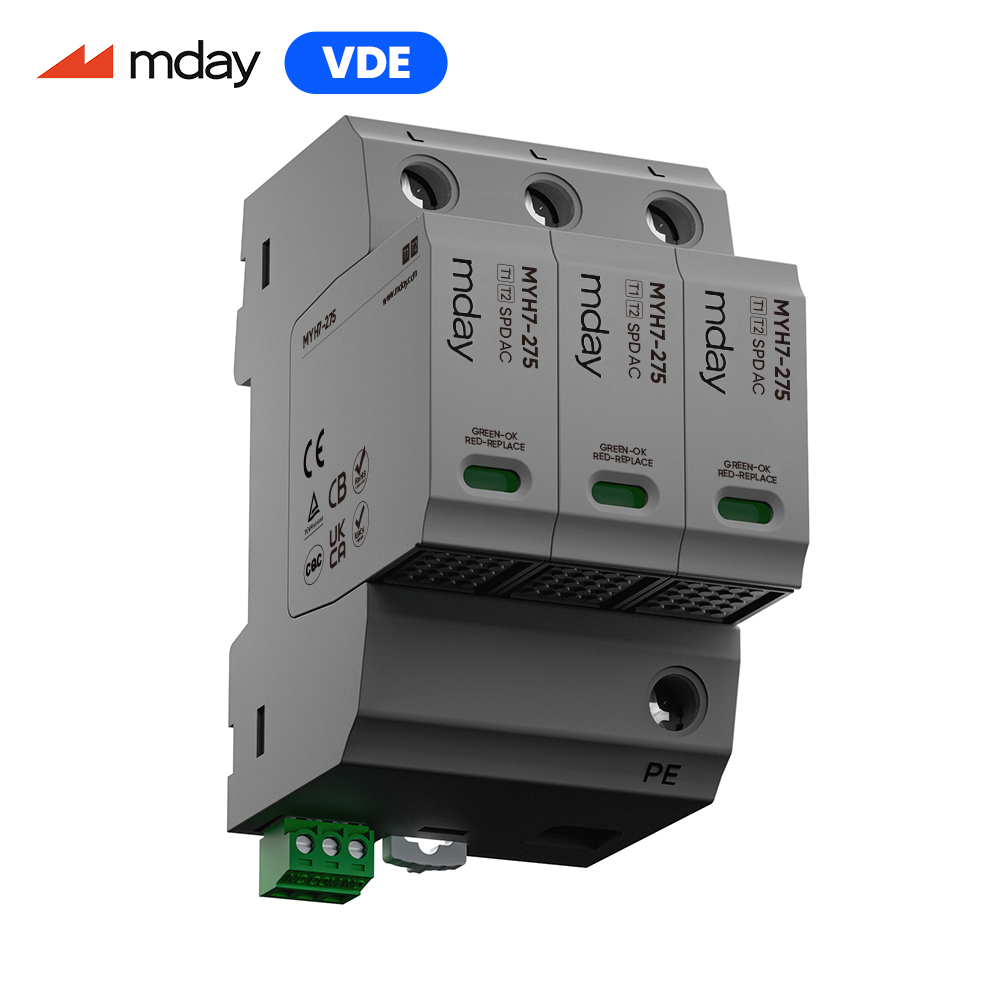
| Type 1+2 AC SPD (MYH7) | Main Service Entrance Switchboards, Lightning Prone Areas | 10/350 μs ($I_{imp}$ 7kA-12.5kA) | Impulse Current ($I_{imp}$), Voltage Protection Level ($U_p$) | VDE, IEC 61643-11 |
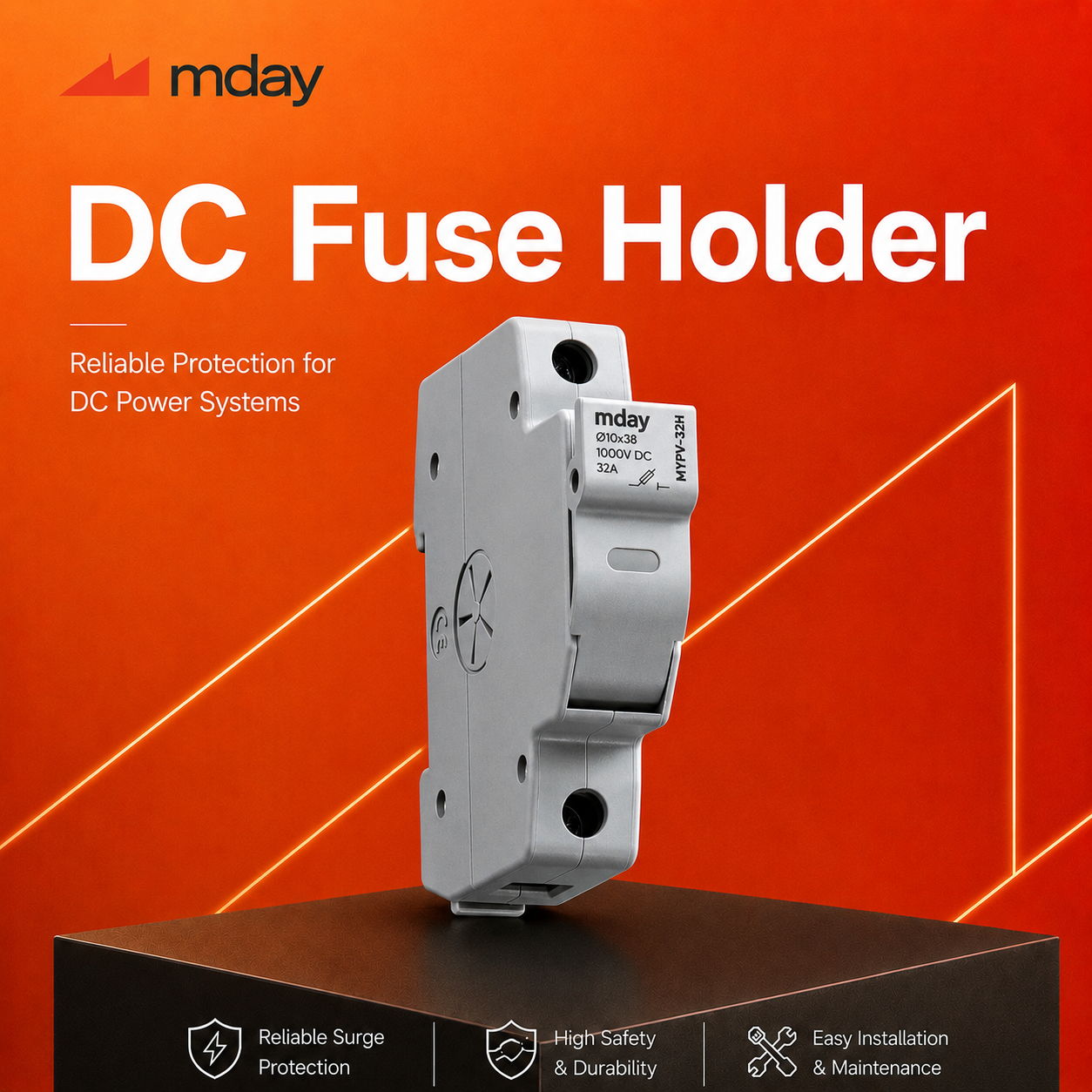
| 10x38mm Solar PV DC Fuse | String Overcurrent & Reverse Current Protection | DC Short Circuit Current | Breaking Capacity (20kA at 1000V/1500V DC) | UL 248-19, IEC 60269-6 |
Why Luck (Zhejiang) New Energy is Your Trusted Exporter
Headquartered in the Yueqing Economic Development Zone, Wenzhou—the world's hub for low-voltage electrical apparatus—we deliver end-to-end protection solutions backed by rigorous quality engineering.
Onsite TÜV Rheinland Verification
Our manufacturing infrastructure, quality management systems, and export capabilities are audited onsite by TÜV Rheinland, providing complete transparency for foreign buyers.
In-House Injection Molding & Tooling
We operate custom plastic injection machinery to manufacture flame-retardant thermoplastics (PA66, PC) for SPD and fuse housings in-house, ensuring absolute structural consistency.
100% Quality Control & Testing Lab
Equipped with 9 high-precision testing instruments, every single batch undergoes 100% inspection for varistor voltage ($V_{1mA}$), leakage current, dielectric strength, and thermal trips.
Varistor & SPD Procurement FAQ
Detailed answers to the technical and commercial questions most frequently asked by international importers, engineers, and supply chain directors.
Request Factory Direct Pricing & Technical Samples
Partner with a TÜV-verified manufacturer. Share your project specifications, target clamping voltages, or OEM packaging requirements with our engineering team today.
