Core Photovoltaic Protection Product Series
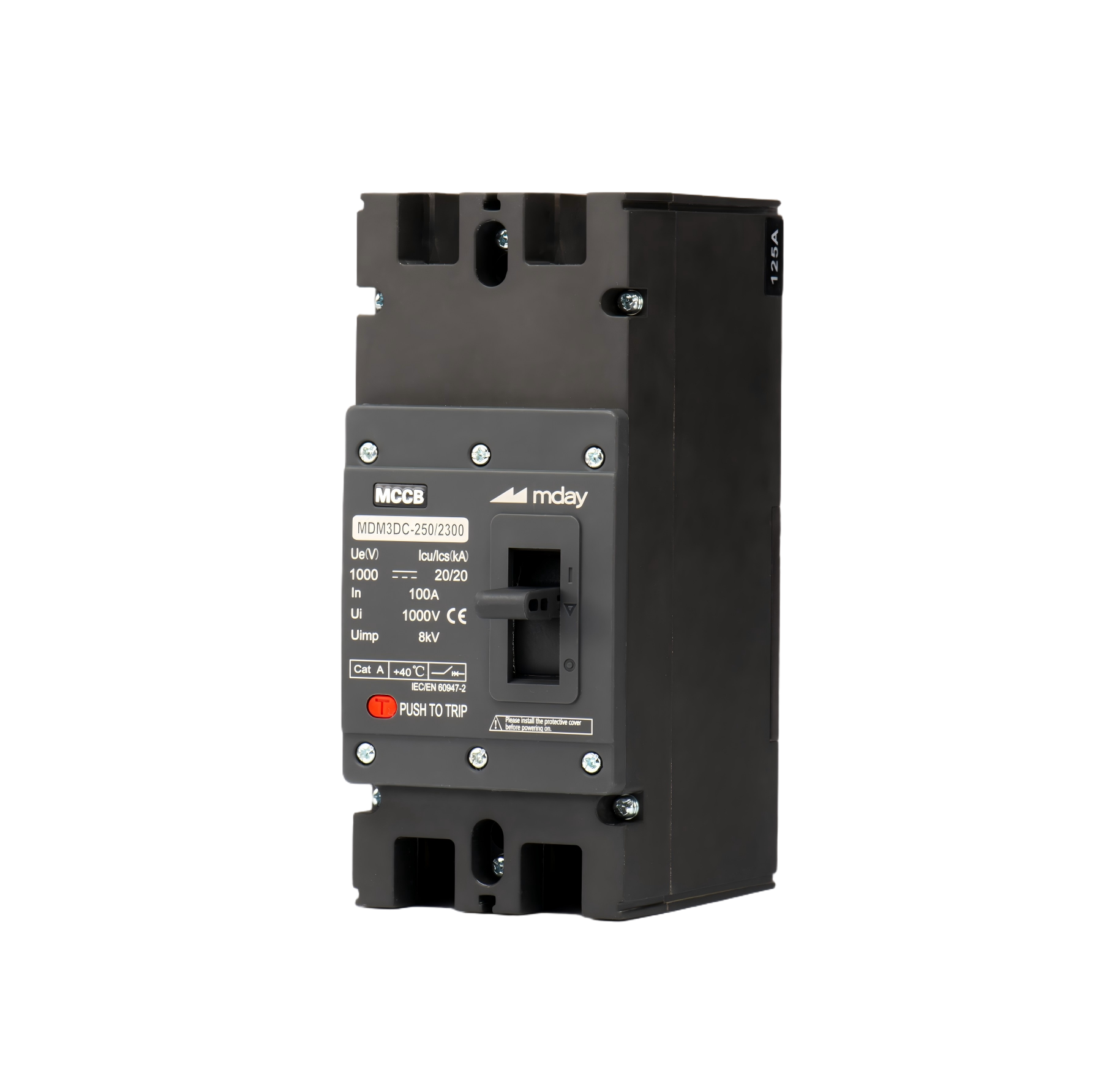
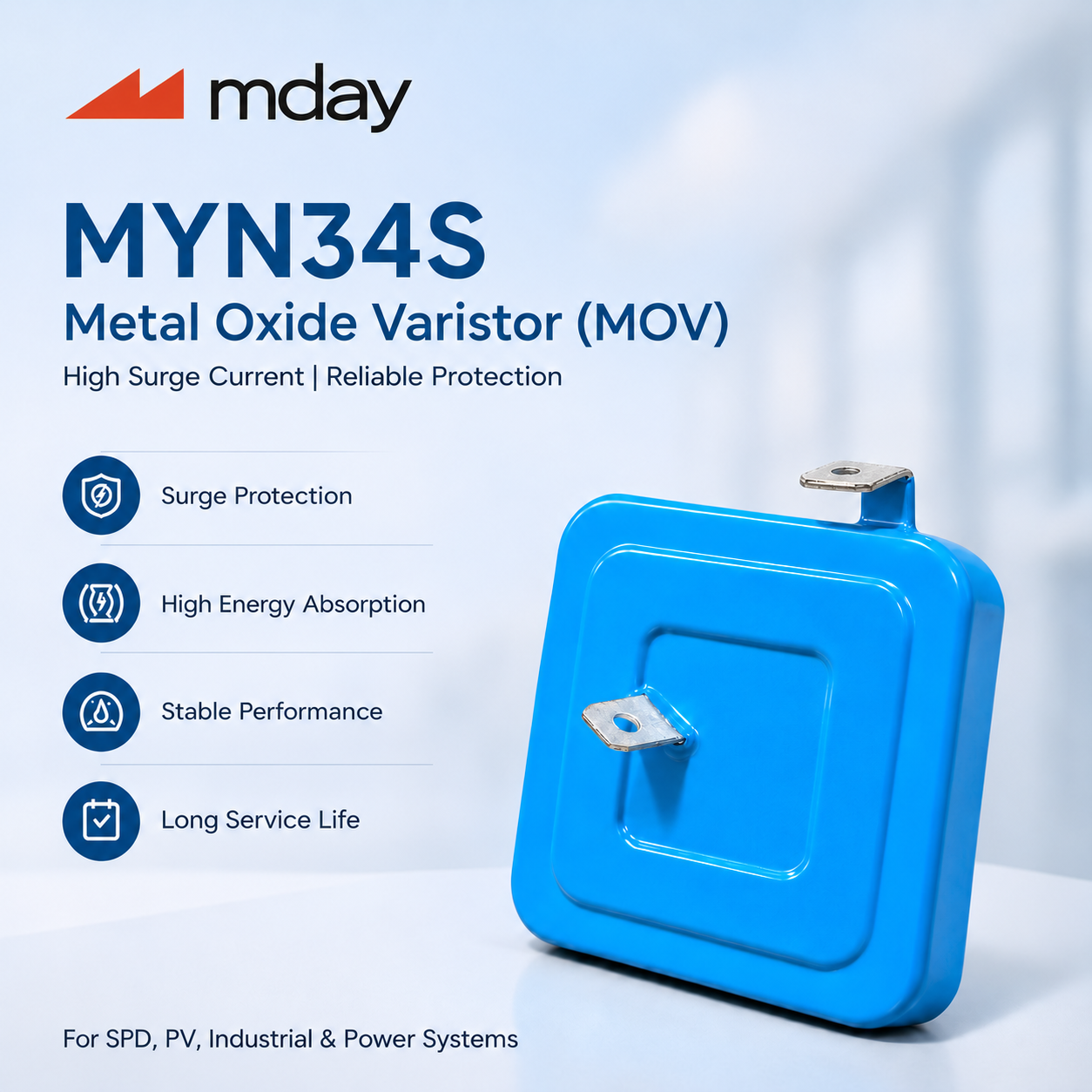
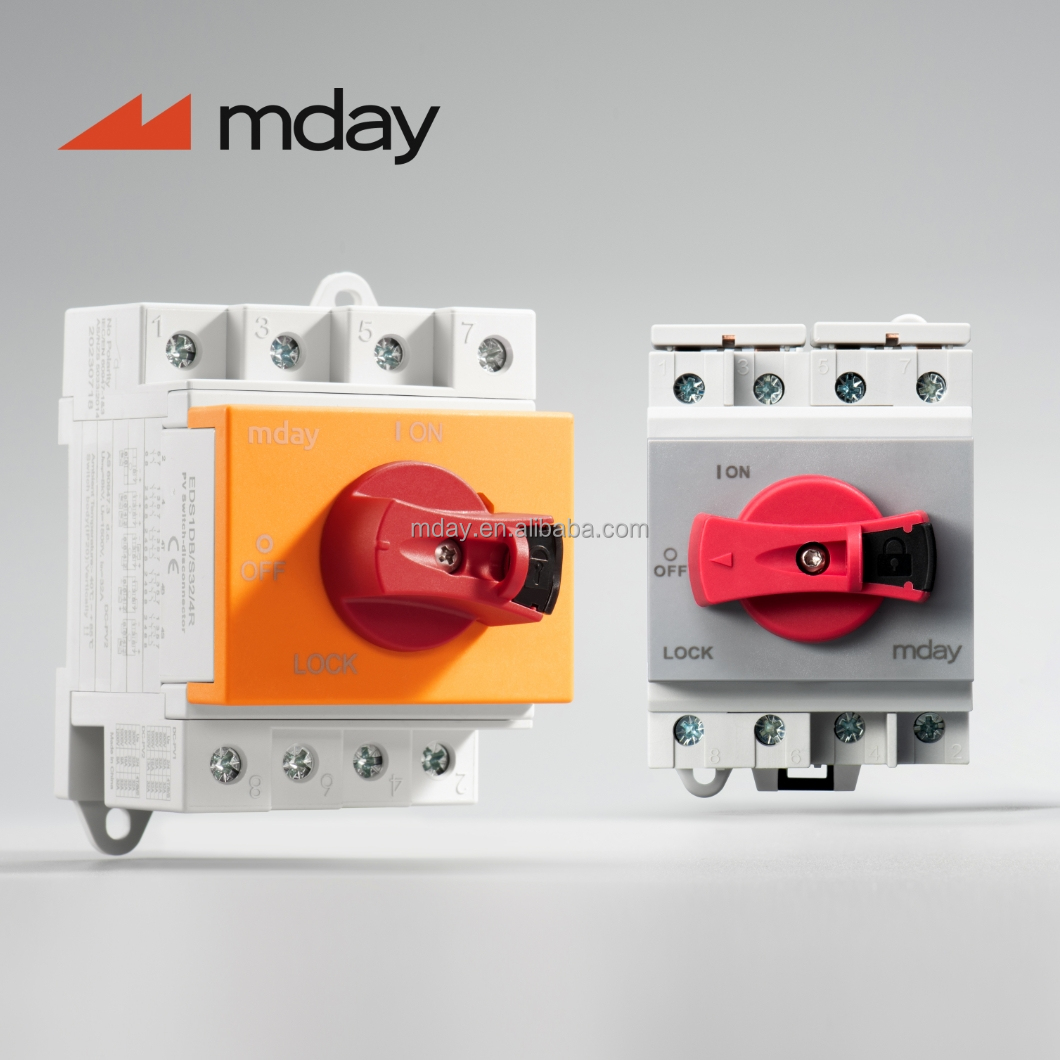
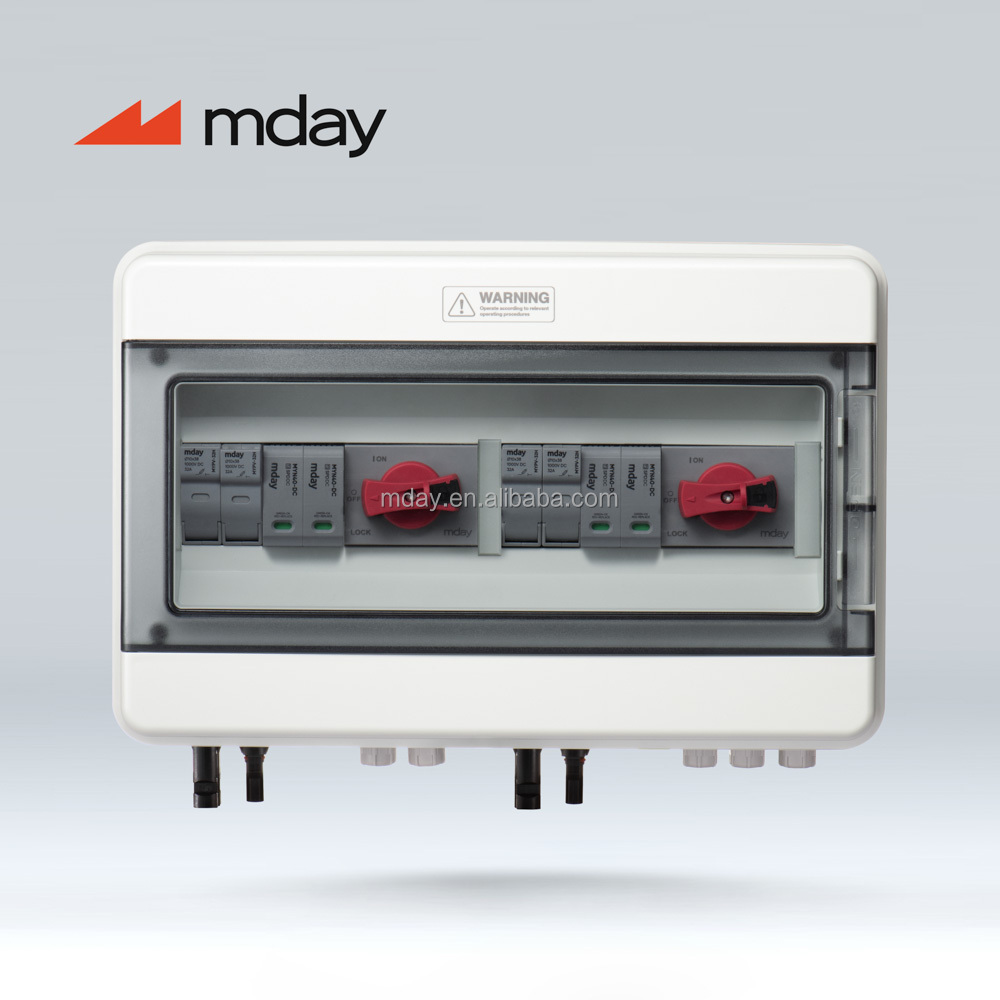
Direct from TÜV-Verified Factory: High-Voltage DC Circuit Breakers, SPDs, Fuses, Combiner Boxes & MOV Components

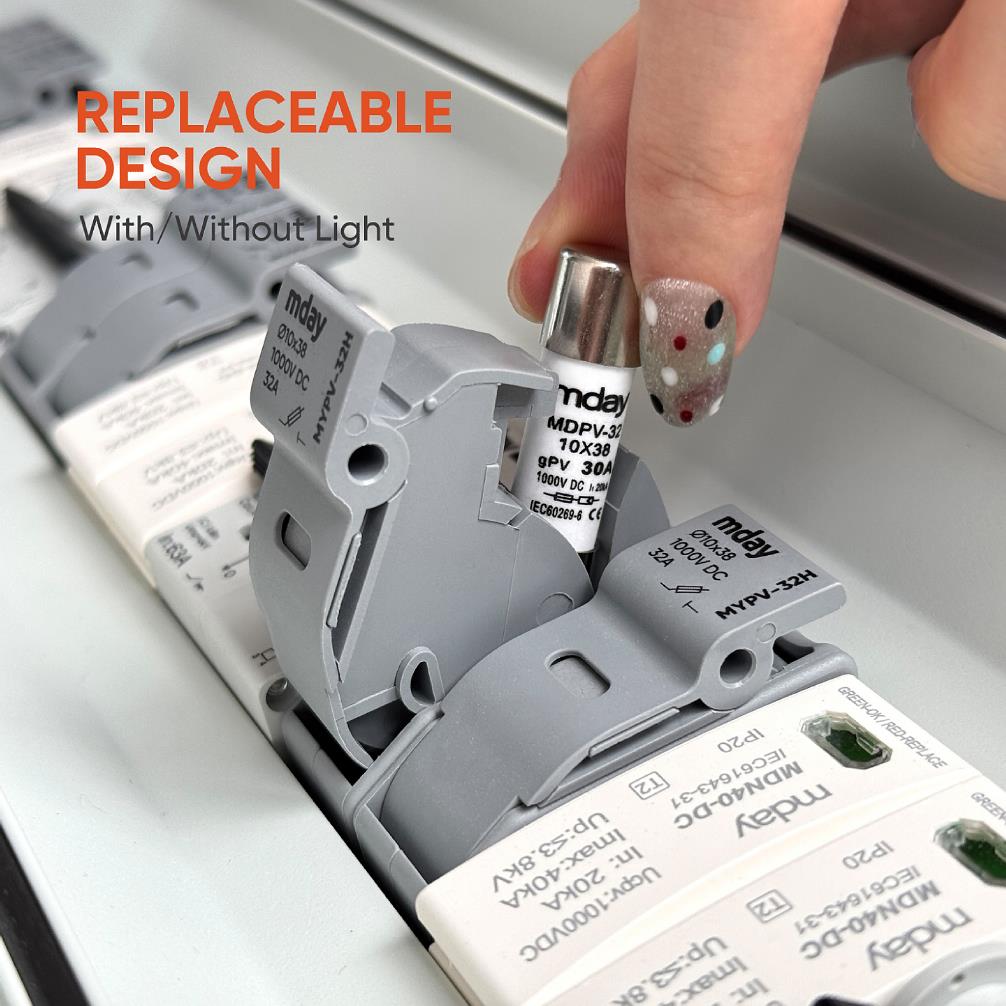
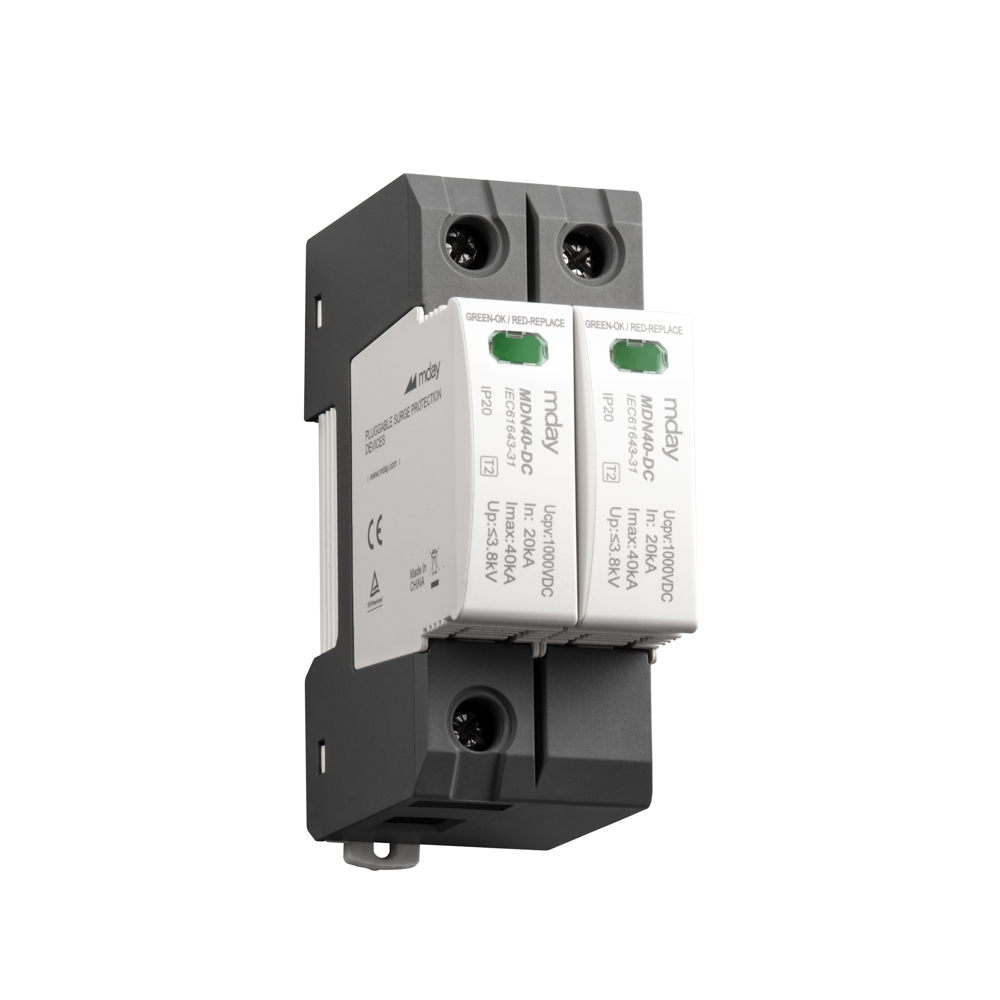
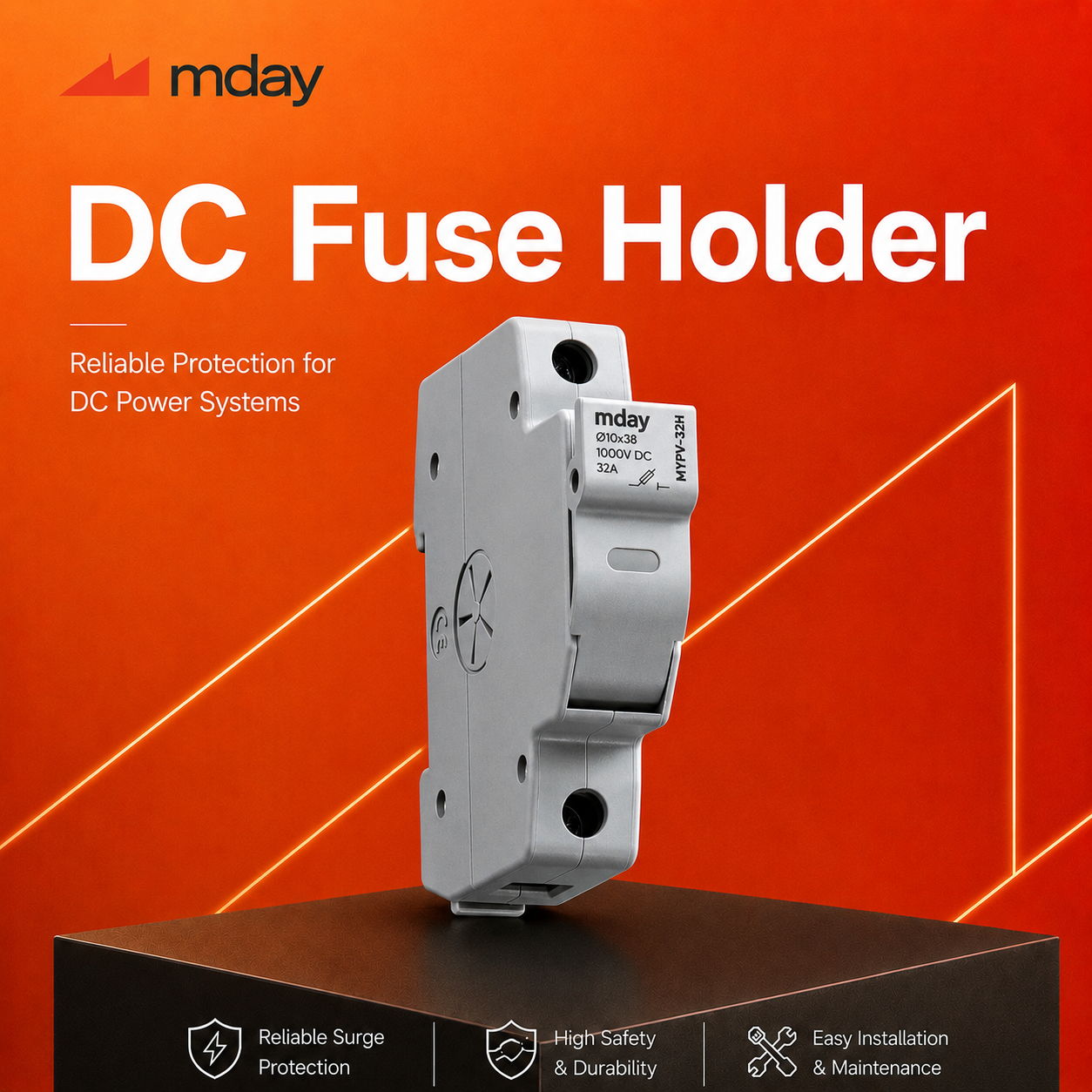
Engineering Whitepaper: Overvoltage Mechanics & Surge Protection Dynamics in Photovoltaic Systems
A rigorous examination of electrical stress factors, transient voltage phenomena, and component selection criteria for utility and commercial PV installations.
1. Electromagnetic Transient Vulnerabilities in Modern Solar Arrays
Photovoltaic (PV) plants, characteristically spanning expansive geographic areas, present unique vulnerabilities to transient overvoltages induced by atmospheric discharges (lightning strikes) and grid switching surges. Unlike conventional AC power distribution networks, the DC side of a solar installation operates under continuous direct current voltage without natural current zero-crossings. This fundamental physical distinction exacerbates electric arc duration and thermal dissipation requirements during overvoltage breakdown events.
When an indirect lightning strike strikes near a solar array, large magnetic field variations ($\Delta B / \Delta t$) couple into long DC loop conductors formed between module strings, junction boxes, and central or string inverters. This electromagnetic induction produces transient surges with peak currents ($I_{imp}$) exceeding tens of kiloamperes and voltage rise times ($dv/dt$) measured in microseconds. Without robust, high-speed DC Surge Protective Devices (SPDs) deployed at strategically calculated protection boundaries, these overvoltages bypass semiconductor insulation, triggering catastrophic dielectric breakdown in inverter MPPT stages, monitoring equipment, and transformer interfaces.
2. Standards Compliance Matrix: IEC 61643-31 vs. UL 1449 5th Edition
Global procurement teams must navigate complex international regulatory frameworks to ensure grid compliance, insurance approval, and operational reliability. Solar DC surge protectors fall specifically under specialized domain standards distinct from general low-voltage AC protection equipment.
| Evaluation Parameter | IEC 61643-31 (International / EU) | UL 1449 5th Edition (North America) | Engineering Impact on System Design |
|---|---|---|---|
| Scope & Application | Low-voltage surge protective devices connected to Photovoltaic installations | Surge Protective Devices installed on 50/60Hz AC & DC systems | Ensures SPDs are rated for high-voltage DC ambient stresses up to 1500VDC. |
| Class Test Categories | Type 1 ($I_{imp}$ 10/350$\mu s$) / Type 2 ($I_{n}$/$I_{max}$ 8/20$\mu s$) | Type 1, Type 2, Type 3 & Component Assembly SPDs | Type 1 handles direct lightning currents; Type 2 clamps induced switching transients. |
| Short-Circuit Current Rating (ISCPV / SCCR) | Mandatory testing up to rated short-circuit current without fire risk | SCCR test mandatory up to designated system fault current | Prevents explosive enclosure rupture during end-of-life MOV short-circuit failure. |
| Thermal Disconnector Safety | Requires verified physical isolation during low-current thermal runaway | Requires intermediate thermal cutoff verification under overvoltage conditions | Eliminates continuous DC arcing and fire hazards when MOVs degrade over time. |
3. Microstructural Varistor Physics & Thermal Disconnect Technology
At the technological heart of modern DC surge arresters lies the Metal Oxide Varistor (MOV), primarily composed of Zinc Oxide ($\text{ZnO}$) grains ceramic-sintered with bismuth, cobalt, and manganese additives. The polycrystalline boundary layers form microscopic Schottky-like potential barriers that exhibit extreme non-linear voltage-current ($V-I$) characteristics:
$I = k \cdot V^\alpha$ (where non-linearity coefficient $\alpha$ exceeds 30 to 50 in premium-grade MOV ceramics)
Under normal operational voltage ($U_{cpv}$), leakage current through the MOV remains below microampere levels ($<20\,\mu\text{A}$). When a high-energy transient enters the system, the potential barriers collapse instantaneously ($<25\text{ nanoseconds}$), transitioning the MOV from an insulating state to a highly conductive channel that clamps the overvoltage to a safe Voltage Protection Level ($U_p$).
However, repeated surge exposure causes micro-structural lattice degradation in $\text{ZnO}$ grain boundaries, resulting in increased continuous leakage current. In DC circuits, this leakage current generates localized ohmic heating ($\text{P} = \text{V}_{\text{DC}} \cdot \text{I}_{\text{leak}}$). Because direct current does not cross zero voltage, standard thermal disconnectors can fail to extinguish the resulting micro-arc. Advanced OEM manufacturers like Luck (Zhejiang) New Energy Co., Ltd. implement patented dual-spring mechanical thermal disconnectors equipped with arc-extinguish chambers and high-temperature solder alloys, guaranteeing galvanic isolation prior to thermal runaway.
Future Solar PV Protection Procurement & Technological Trends (2025–2030)
Strategic Insights for Utility Procurement Directors, Component OEM Buyers, and System Integrators
1. Transition to 1500V & 2000V DC Utility Architectures
Global utility-scale solar projects are rapidly standardizing on 1500V DC system voltages to minimize $I^2R$ copper conductor losses, increase string length by up to 30%, and aggregate power capacity per inverter block. Looking toward 2030, experimental 2000V DC architectures are moving from concept to pilot testing.
Procurement Trend Impact: Buyers can no longer rely on repurposed 1000V DC components. Protection hardware—including 1500V DC Fuse Holders, high breaking-capacity DC MCCBs, and Type 1+2 SPDs—must maintain enhanced creepage distances ($>16\text{ mm}$), robust creepage-tracking resistance (CTI $\ge 600$), and elevated Maximum Continuous Operating Voltages ($U_{cpv} \ge 1500\text{V DC}$).
2. Co-Location of Battery Energy Storage Systems (BESS)
The integration of utility-scale Lithium-Ion BESS alongside solar farms introduces bidirectional transient surge profiles and high prospective short-circuit fault currents ($\ge 50\text{ kA}$). Energy storage DC buses demand ultrafast overcurrent protection coupled with non-degrading surge arresters.
Procurement Trend Impact: High demand for hybrid surge protection topologies combining heavy-duty MOVs with Gas Discharge Tubes (GDT) to eliminate continuous leakage currents, alongside high-interrupting capacity gPV solar fuses certified under IEC 60269-6 and UL 248-19 standards.
3. Smart Monitoring & IoT-Enabled Status Reporting
Unplanned downtime in multi-megawatt PV installations directly degrades power purchase agreement (PPA) revenues. Traditional visual window indicators (green/red) on SPDs require manual physical field inspections, which are costly for remotely located solar fields.
Procurement Trend Impact: EPC buyers now prioritize SPDs integrated with auxiliary dry-contact remote signal contacts (NO/NC) and Modbus/RS485 communication protocols. These enable real-time telemetry into SCADA systems, alerting plant managers immediately upon varistor degradation or disconnector actuation.
4. Demand for Fully Pre-Wired OEM IP65 Combiner Enclosures
Field wiring errors, moisture ingress, and labor costs represent significant execution risks for solar contractors. Sourcing loose components requires extensive field assembly and testing.
Procurement Trend Impact: Growth in factory-assembled, factory-tested custom IP65 Waterproof Combiner Boxes featuring customized string counts (2-in-2-out up to 18-way), pre-integrated DC isolator switches, fuses, and plug-in surge arresters matching explicit client Bill of Materials (BOM).
Enterprise Advantage: Why Global Brands Partner with Luck (Zhejiang) New Energy Co., Ltd.
A Authoritative, Onsite TÜV-Verified Manufacturer Delivers Vertical Integration, Regulatory Rigor, and OEM Flexibility
Prime Industrial Location & Infrastructure
Situated in the Yueqing Economic Development Zone, Wenzhou, Zhejiang, China—the global hub for low-voltage electrical engineering—Luck (Zhejiang) New Energy Co., Ltd. spans modern production facilities staffed by over 55 verified electrical professionals and engineers.
Vertical Production & Automated Precision
Operating 3 specialized automated production lines alongside in-house plastic injection moulding workshops. From shaping flame-retardant polyamide enclosures to assembly of 34mm Square MOVs and circuit breakers, complete process control ensures batch consistency.
Rigorously Equipped Quality Control Testing Lab
Our onsite testing laboratory houses 9 precision testing instruments, conducting 100% finished-product inspections. Instruments perform $8/20\,\mu\text{s}$ surge current impulses, thermal stability breakdown testing, temperature rise evaluations, and high-voltage dielectric withstand checks.
International Standards & Certifications
Validated by third-party auditor TÜV Rheinland. Products hold VDE, TÜV, CE, and ISO9001 certifications, complying explicitly with IEC 61643-31, IEC 60269-6, UL 248-19, and IEC/EN 60947-2 specifications.
7+ Years OEM / ODM Customization
Offering complete custom engineering: full drawing design, custom voltage/current calibration, private label printing, laser etching, custom housing coloration, and tailor-made packaging for international brand owners.
Rapid Fulfillment & Global Logistics Capability
Maintaining high raw material inventories allows standard models to ship within 2 to 7 days. Serving major solar markets across Europe, Southeast Asia, South America, North America, and the Middle East.
Frequently Asked Questions (FAQ) for B2B Procurement Teams
Technical, Commercial, and Quality Assurance Clarifications for Global Importers & Distributors
Partner with a Verified OEM Solar Protection Manufacturer
Request factory-direct pricing, customized OEM technical drawings, or certified product evaluation samples today. Our engineering team responds within 24 hours.
Inquire Now